
Turkey Buying & Roasting Guide: Learn how to choose the right turkey size, how much turkey to buy per person, how long to thaw it, and how long to roast it.
Are you wondering what kind of turkey to buy, how big it should be, or how long it will take to cook? This Turkey Buying and Roasting Guide walks you through choosing and buying a turkey, safely thawing it, preparing it for the oven, and roasting it until perfectly cooked.

You'll also find easy reference charts for turkey size, thawing times, roasting times, and temperatures, so you can plan your turkey dinner from shopping day to serving time.
So... let's talk turkey!
🔍 Quick Look: Turkey Buying & Roasting Guide
- Covers: Choosing, buying, thawing, preparing, and roasting a turkey
- Includes: Turkey size, thawing, and roasting time and temperature charts
- Discover: How much turkey to buy, how to safely thaw it, and how to roast it to the proper temperature
- Best For: Thanksgiving, Christmas, holiday dinners, and anytime you're roasting a whole turkey or turkey breast
- Why You'll Love It: This practical guide takes the guesswork out of buying and roasting a turkey with easy charts and step-by-step guidance from shopping to serving.
Jump to:
- 🔍 Quick Look: Turkey Buying & Roasting Guide
- Turkey Buying Guide
- Types of Turkeys
- How Much Turkey Do I Need Per Person?
- When to Purchase a Whole Turkey
- Oven Size and Roasting Pans
- Turkey Roasting Guide
- Preparing the Turkey for Roasting
- How to Safely Thaw a Turkey
- Turkey Thawing Time Chart
- Need to Thaw Your Turkey Faster?
- To Brine or Not to Brine?
- 14-Pound Frozen Turkey Preparation Timeline
- Roasting Day Overview
- Why do I need to tent the turkey?
- Using a Meat Thermometer
- Turkey Roasting Chart
- At what temperature do I roast my turkey?
- When is my turkey done?
- Carving a Turkey
- Need More Turkey Help?
- The Perfect Turkey Dinner
- Favorite Side Dishes for a Turkey Dinner
- 💬 Comments
Turkey Buying Guide
Choosing the right turkey starts with knowing how many people you are serving and whether they prefer white meat, dark meat, or both. You'll also need to decide between a whole turkey or turkey breast and fresh or frozen.
Types of Turkeys
Whole turkeys are sold as either hens or toms. Hens are female turkeys and are generally smaller, while toms are male turkeys and are generally larger. There is no significant difference in taste, tenderness, or moistness, so choose your turkey based primarily on the size you need.
You can also buy turkey breasts, legs, thighs, and wings separately. This can be a good option for smaller gatherings or when your guests strongly prefer white or dark meat.
Turkey breast is white meat with a mild, delicate flavor, while the legs and thighs are dark meat with a richer flavor. If your guests primarily prefer white meat, consider roasting a whole turkey breast. For dark-meat lovers, turkey legs or thighs are an easy alternative that also cooks more quickly than a whole turkey.
How Much Turkey Do I Need Per Person?
Plan on 1¼ pounds of uncooked whole turkey per person. This allows for the weight of the bones and gives you a little extra for generous servings or leftovers.
6 x 1.25 = 7.5
Round up to the next available turkey size, so you would look for approximately an 8-pound turkey.
Hens are generally smaller, while toms are larger. If you need a smaller whole turkey, look for a hen; for a larger gathering, a tom may be the better choice.
| Number of People | Approx. Weight Needed | Best Turkey Choice |
|---|---|---|
| 2 People | 3 Pounds | Whole Breast or Legs & Thighs |
| 3 People | 4 Pounds | Whole Breast or Legs & Thighs |
| 4 People | 5 Pounds | Whole Breast |
| 5 People | 6 Pounds | Whole Breast |
| 6 People | 8 Pounds | Whole Breast OR Whole Hen |
| 7 People | 9 Pounds | Whole Hen |
| 8 People | 10 Pounds | Whole Hen |
| 9 People | 12 Pounds | Whole Hen |
| 10 People | 13 Pounds | Whole Hen |
| 11 People | 14 Pounds | Tom Turkey |
| 12 People | 15 Pounds | Tom Turkey |
| 13 People | 17 Pounds | Tom Turkey |
| 14 People | 18 Pounds | Tom Turkey |
| 15 People | 19 Pounds | Tom Turkey |
| 16 People | 20 Pounds | Tom Turkey |
| 17 People | 22 Pounds | Tom Turkey |
| 18 People | 23 Pounds | Tom Turkey |
| 19 People | 24 Pounds | Tom Turkey |
| 20 People | 24 Pounds | Tom Turkey |
Cooking for a crowd? For larger gatherings, consider roasting two smaller turkeys instead of one very large bird. Smaller turkeys can be easier to handle, thaw, and roast evenly, and two birds also give you more breast and dark meat to serve.
When to Purchase a Whole Turkey
Frozen Whole Turkey - You can purchase a frozen turkey well in advance and keep it frozen until you are ready to thaw it. When planning your purchase, allow enough time to safely thaw the turkey in the refrigerator. A frozen turkey needs approximately 24 hours of thawing time for every 4 to 5 pounds. See the Turkey Thawing Time Chart below for specific times.
Fresh Whole Turkey - Purchase a fresh turkey 1 to 2 days before you plan to cook it, unless the package has a manufacturer's use-by or best-by date that allows for longer refrigerated storage. Keep the turkey refrigerated at 40°F or below until you are ready to prepare it.
Whether buying fresh or frozen, always check the date and storage instructions on the package before purchasing.
Oven Size and Roasting Pans
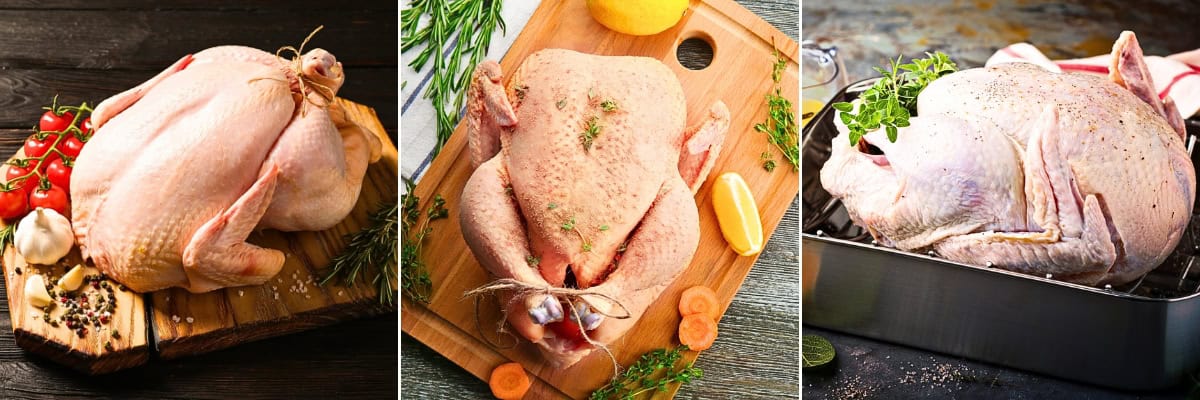
Before buying your turkey, consider the size of your oven and the roasting pan you will use. A large turkey may fit in your oven, but the turkey and roasting pan together need enough space to roast properly.
Roasting Pan - Choose a roasting pan large enough to hold the turkey without crowding it. For a whole turkey, use a roasting rack to elevate the bird above the bottom of the pan and allow hot air to circulate around it.
If you are roasting turkey breasts, legs, thighs, or wings instead of a whole bird, a roasting pan or rimmed sheet pan may be a better choice.
Oven Size - Not all ovens are full-sized, so check the available space before buying a large turkey. Remember to allow for the height and width of the roasting pan as well as the turkey itself.
Turkey Roasting Guide
Once you've chosen the right turkey, the next step is planning how to prepare and roast it. This guide walks you through safely thawing and brining your turkey, preparing it for the oven, roasting it to the proper temperature, and resting and carving it for serving.
Preparing the Turkey for Roasting
How to Safely Thaw a Turkey
The safest and easiest way to thaw a frozen turkey is in the refrigerator. Leave the turkey in its original wrapping and place it on a rimmed pan or tray to catch any juices that may leak.
Allow approximately 24 hours of refrigerator thawing time for every 4 to 5 pounds of turkey. Keep the refrigerator at 40°F or below while the turkey thaws.
Turkey Thawing Time Chart
| Turkey Weight | Refrigerator Thawing Time |
|---|---|
| 4 to 12 Pounds | 1 to 3 Days |
| 12 to 16 Pounds | 3 to 4 Days |
| 16 to 20 Pounds | 4 to 5 Days |
| 20 to 24 Pounds | 5 to 6 Days |
Need to Thaw Your Turkey Faster?
You can also safely thaw a frozen turkey in cold water. Keep the turkey in its original wrapping or a leak-proof plastic bag and completely submerge it in cold tap water. Allow about 30 minutes per pound, changing the water every 30 minutes. A turkey thawed using the cold-water method should be cooked immediately.
| Turkey Weight | Cold-Water Thawing Time |
|---|---|
| 4 to 12 Pounds | 2 to 6 Hours |
| 12 to 16 Pounds | 6 to 8 Hours |
| 16 to 20 Pounds | 8 to 10 Hours |
| 20 to 24 Pounds | 10 to 12 Hours |
♡ My Top Tip: Give yourself an extra day when planning refrigerator thawing. A turkey thawed in the refrigerator can safely remain refrigerated for 1 to 2 days before cooking, so finishing the thaw a little early is much better than discovering Thanksgiving morning that the center is still frozen.
To Brine or Not to Brine?
Brining a turkey has two main benefits: flavor and moisture. A salt and sugar brine adds flavor, but it also helps keep the lean breast meat tender and moist.
Before brining a turkey, always check the package label. Some turkeys are already brined or injected with a solution containing salt, water, and other ingredients. Brining an already enhanced turkey can make it overly salty.
If you plan to brine your turkey yourself, build the brining time into your preparation schedule. Depending on the brining method and recipe you use, you may need to begin the day before roasting.
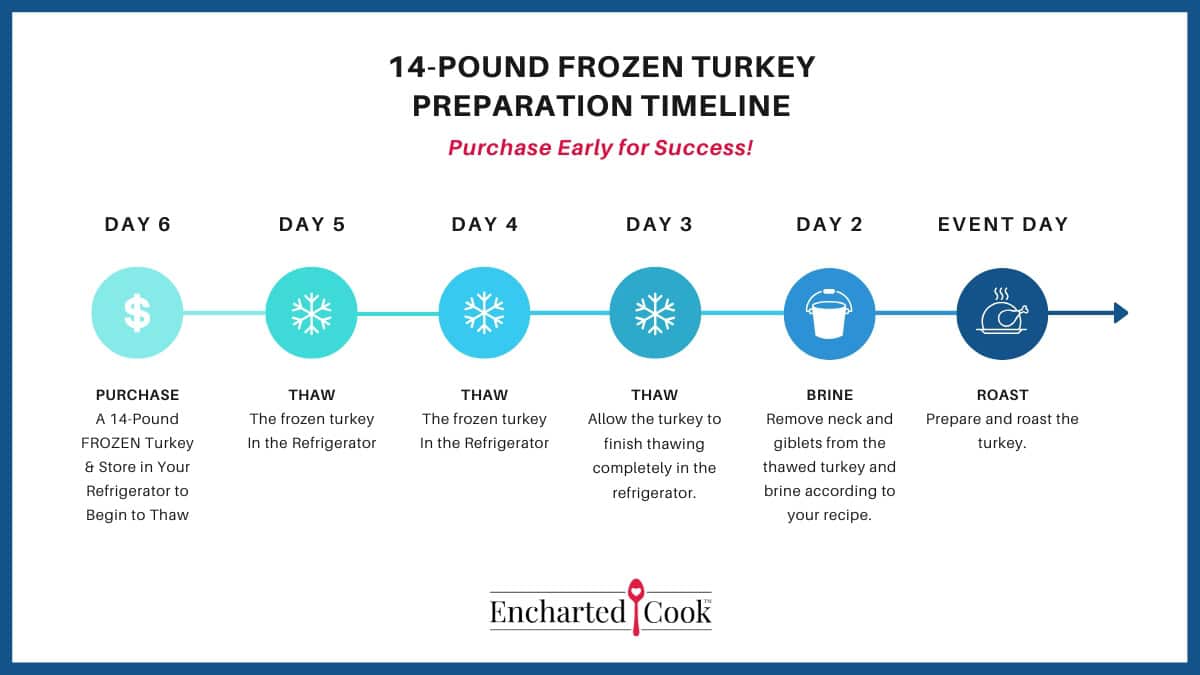
14-Pound Frozen Turkey Preparation Timeline
Here is an example timeline for purchasing, thawing, brining, and roasting a frozen 14-pound turkey:
Roasting Day Overview
Once your turkey is completely thawed and any brining is finished, you're ready for roasting day. Here's a quick overview of the steps from preparing the turkey for the oven through resting it before carving:
- Preheat the oven and prepare your roasting pan and rack.
- Remove the turkey from the refrigerator and take it out of its packaging. Remove the neck and giblets from the cavities.
- Pat the turkey dry inside and out with paper towels. Do not rinse the turkey.
- Season the turkey as desired and place it breast-side up on the roasting rack.
- Insert an oven-safe meat thermometer, if using one, into the thickest part of the thigh without touching the bone.
- Tent the turkey loosely with aluminum foil to protect the breast during the early part of roasting.
- Roast the turkey, removing the foil later so the skin can brown.
- Check the internal temperature in the breast, innermost thigh, and innermost wing before removing the turkey from the oven.
- Rest the turkey before carving.
Why do I need to tent the turkey?
Tenting the turkey with aluminum foil helps protect the breast meat from cooking too quickly and drying out while the darker leg and thigh meat continues to cook.
To properly tent a turkey with aluminum foil, use enough foil to go over the bird without touching it. Crimp the foil to the longer sides of the roasting pan to hold it in place.
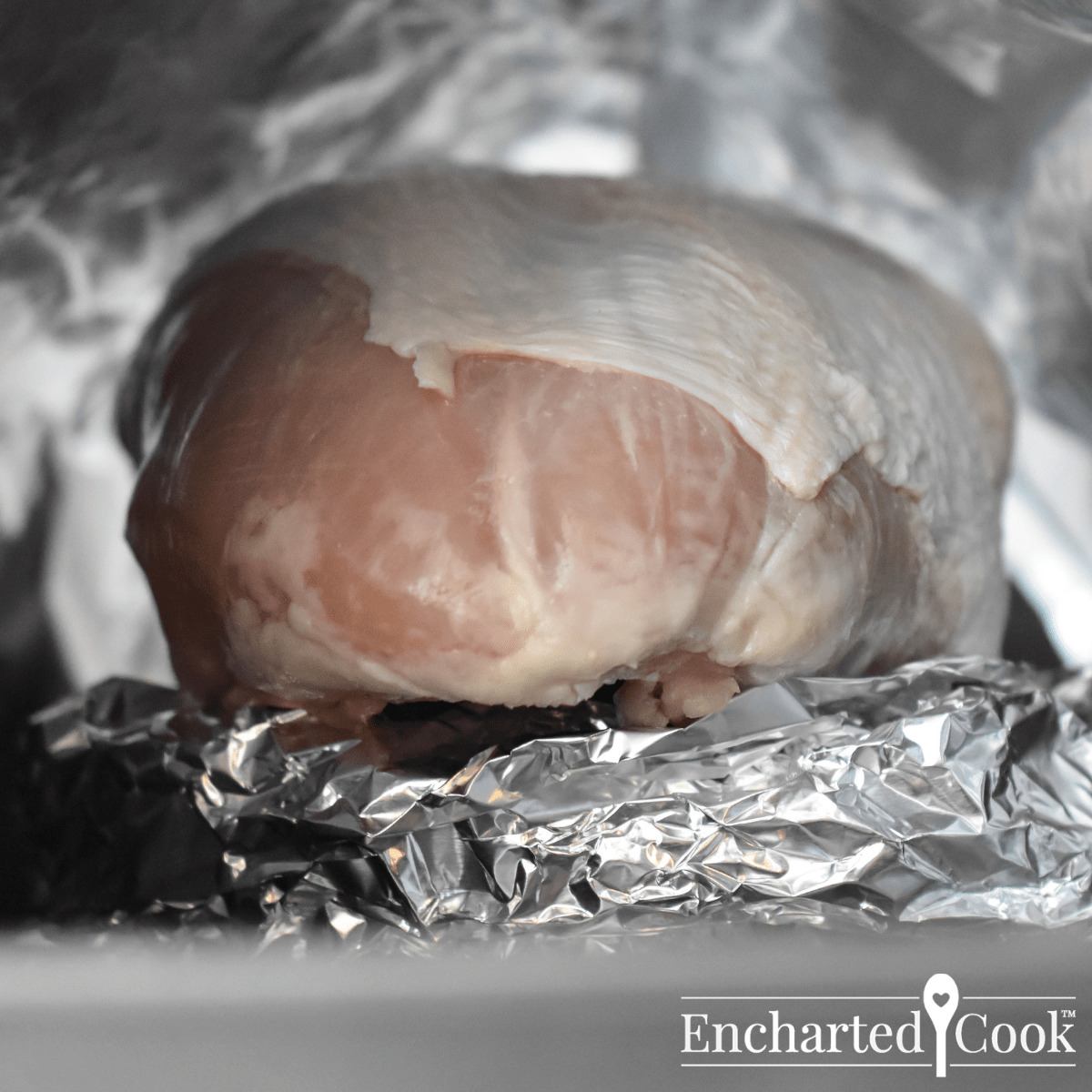
Don't completely seal the foil around the roasting pan. The foil should shield the breast while still allowing hot air to circulate around the turkey. Completely sealing the pan traps steam, which prevents the skin from browning and developing the rich roasted flavor you want.
Using a Meat Thermometer
A meat thermometer is the most reliable way to know when your turkey is safely cooked. Even if your turkey comes with a pop-up timer, use a meat thermometer to verify the internal temperature before removing the turkey from the oven.
For a whole turkey, check the temperature in three places:
- Breast - Insert the thermometer into the thickest part of the breast.
- Thigh - Insert it into the innermost part of the thigh.
- Wing - Check the innermost part of the wing.
Avoid touching bone with the thermometer, which can give you an inaccurate reading. The turkey is safely cooked when all three areas reach at least 165°F.
For a turkey breast, check the thickest part of the breast without touching bone. For turkey legs, thighs, or wings, an instant-read thermometer is especially useful because the pieces are smaller.
Turkey Roasting Chart
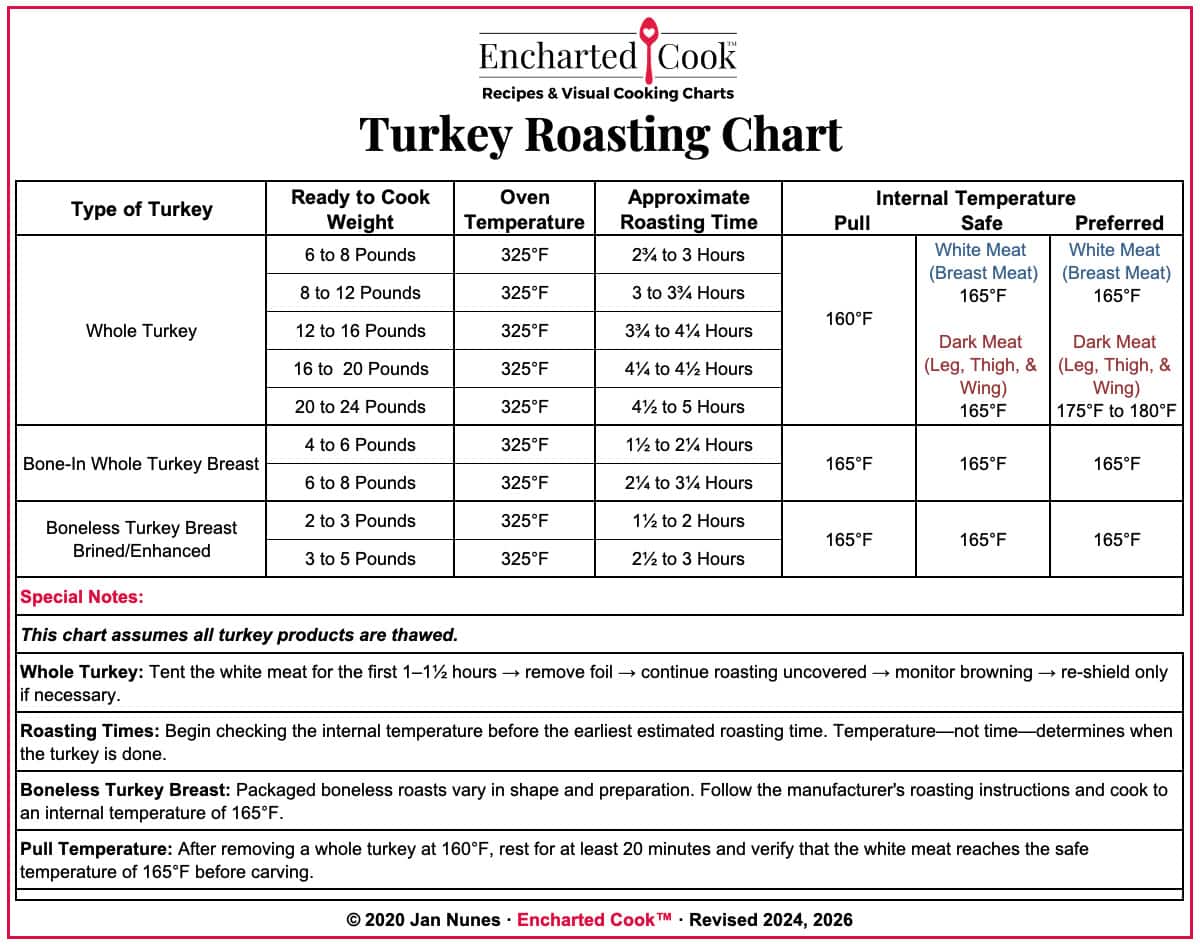
Roasting times are helpful for planning when to put your turkey in the oven, but they are only estimates. The most reliable way to know when your turkey is done is to check its internal temperature with a meat thermometer.
The chart below gives approximate roasting times for whole turkeys and turkey breasts, along with the temperatures to pull the turkey from the oven, reach a food-safe temperature, and achieve the preferred doneness for white and dark meat.
Whole turkeys require a little extra attention because white and dark meat cook differently. White meat is best when cooked just to a safe temperature, while dark meat becomes more tender when cooked to a higher temperature.
At what temperature do I roast my turkey?
Roast whole turkeys and turkey breasts in a 325°F oven. This moderate oven temperature allows the turkey to roast steadily while developing good flavor and browning without exposing the outside to excessively high heat.
For food safety, the USDA recommends roasting turkey at an oven temperature no lower than 325°F. Use a meat thermometer to determine doneness rather than relying on roasting time alone.
For more information about safely preparing and roasting turkey, please see the Centers for Disease Control guidelines, "Food Safety Tips for your Holiday Turkey".
When is my turkey done?
The most reliable way to know when your turkey is done is to check its internal temperature with a meat thermometer. Do not rely on the color of the meat or juices to determine doneness.
For food safety, turkey must reach a minimum internal temperature of 165°F. For a whole turkey, check the temperature in the thickest part of the white meat and the innermost parts of the thigh and wing, without touching the bone.
Although dark meat is safe at 165°F, it becomes more tender when cooked to a higher temperature. I prefer the legs, thighs, and wings cooked to 175°F to 180°F for better texture.
If roasting a whole turkey using the chart above, pull the turkey from the oven when the white meat reaches 160°F, then rest it for at least 20 minutes. During the rest, verify that the white meat reaches the safe temperature of 165°F before carving.
Carving a Turkey
The very best tool I've found for carving a whole turkey or turkey breast is an electric knife. Yes, that old throwback kitchen tool of the '60s and '70s turns out to be excellent for carving turkey. It makes clean, even slices of white meat with very little effort.
If you don't have an electric knife, use a long, sharp carving or slicing knife for the white meat and a smaller sharp knife for separating the legs, thighs, and wings.
For a whole turkey, remove the legs and thighs first, followed by the wings. Then remove each side of the white meat from the breastbone in one large piece and slice it crosswise into even slices. Arrange the sliced white and dark meat on a platter for serving.
♡ My Top Tip: Let a whole turkey rest for at least 20 minutes before carving. Resting allows the juices to redistribute through the meat and makes the turkey easier to carve.
Need More Turkey Help?
Buying, prepping, and roasting a turkey doesn't have to be difficult. If you have a last-minute turkey question, the Butterball TurkeyTalk-Line is another great resource. Their turkey experts can help with questions about choosing, thawing, preparing, and cooking your turkey.
You can call 1-800-BUTTERBALL (1-800-288-8372), text 844-877-3456, or use their online chat during the holiday season.
Do you have a favorite turkey tip or tried-and-true roasting method? Let me know in the comments. I'd love to hear how you cook your turkey!
The Perfect Turkey Dinner
Everyone has their own idea of the perfect turkey dinner, and often it's the dinner that Mom or Grandma made.
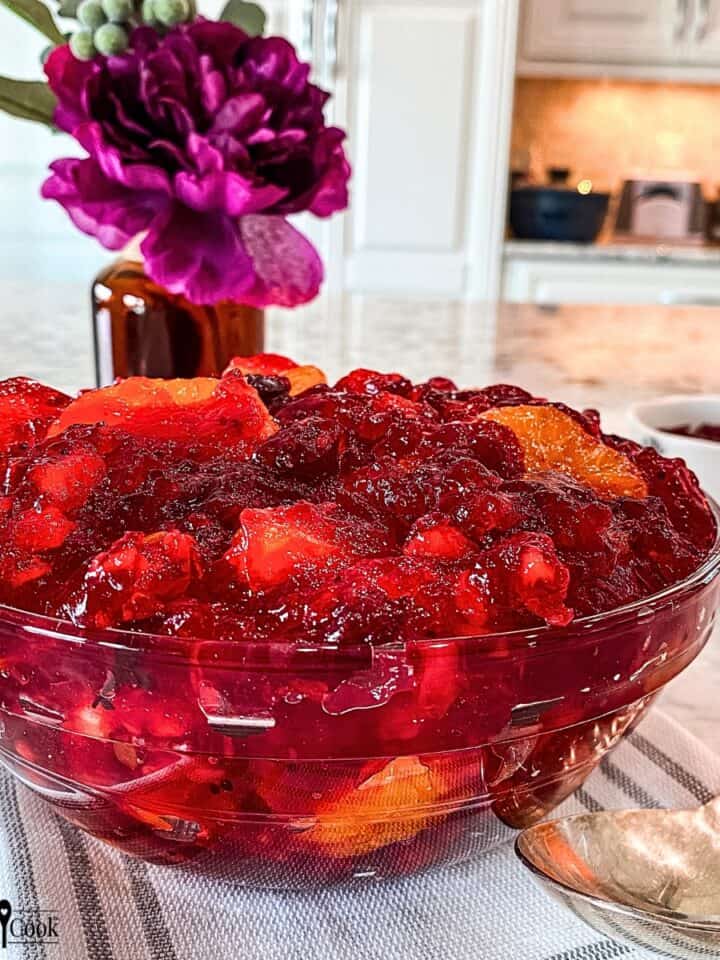
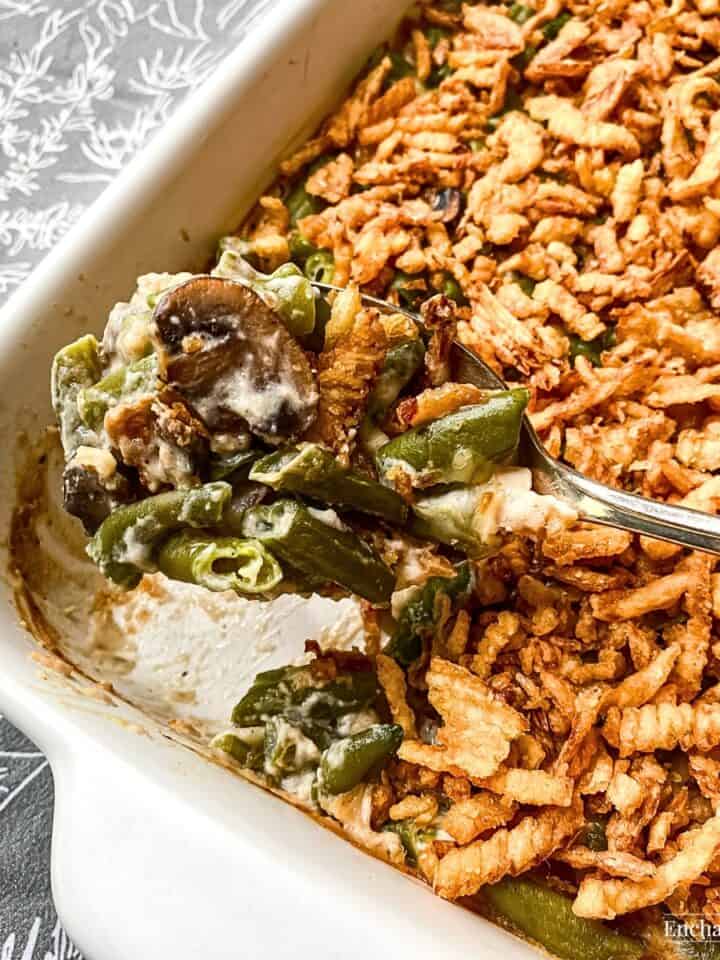
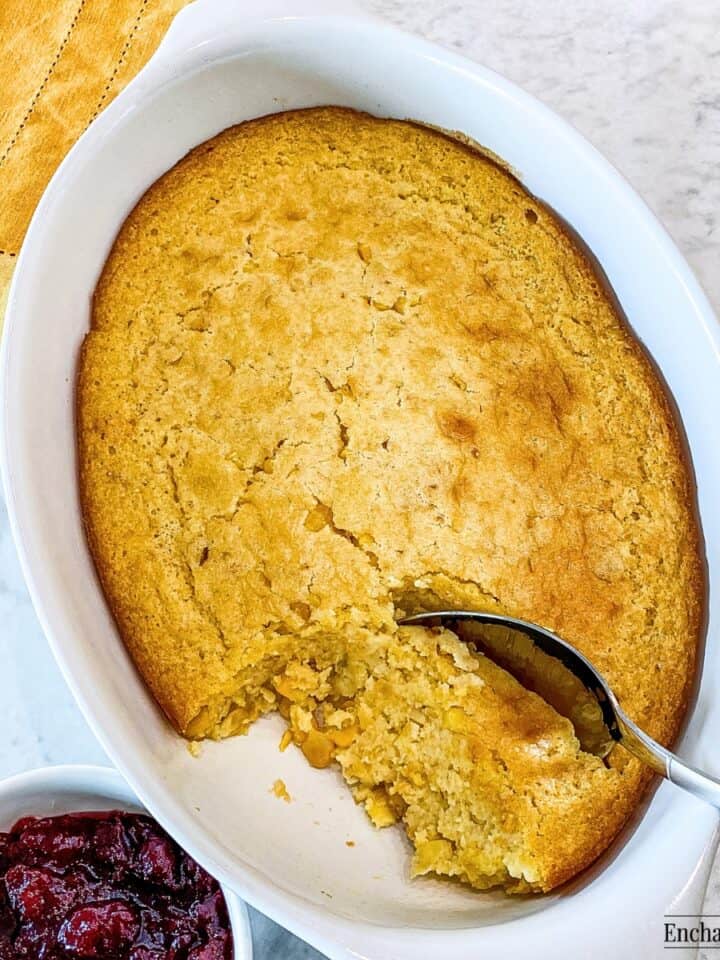
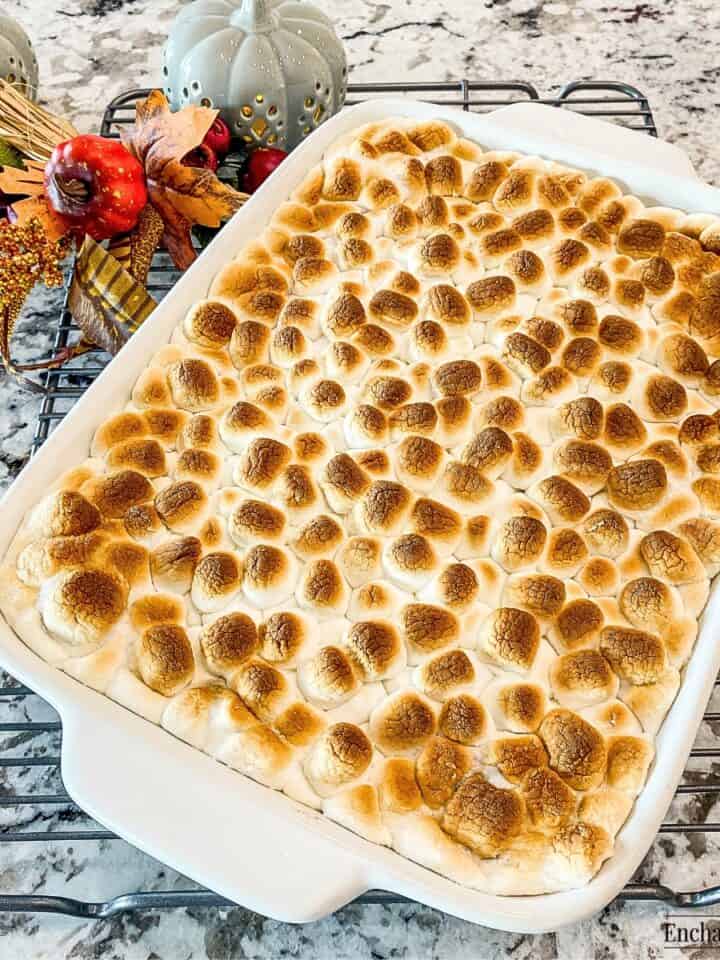
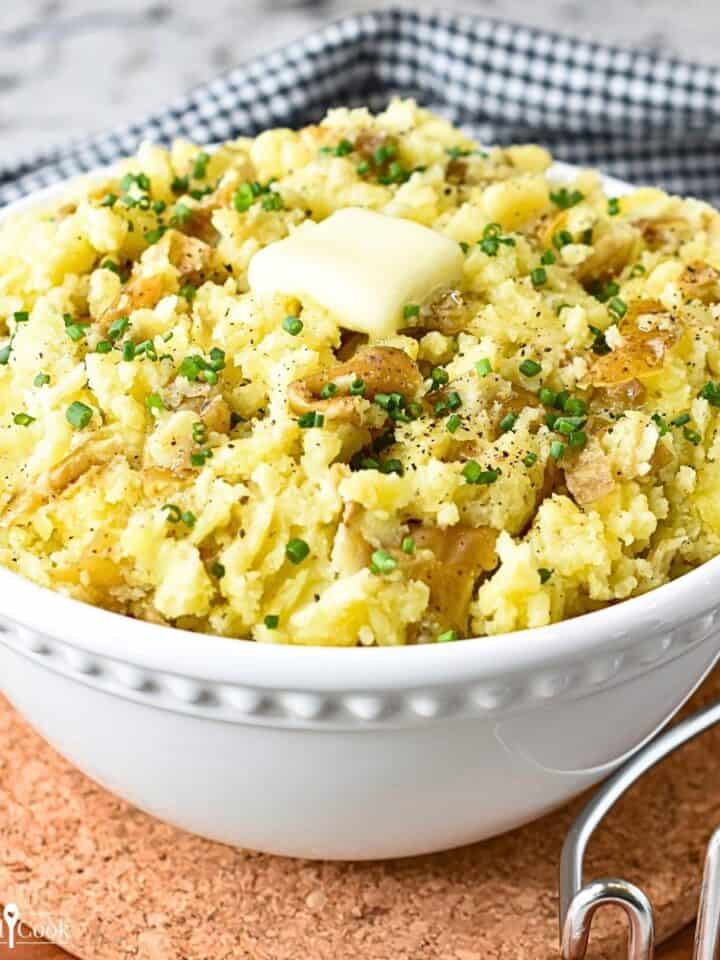
For many Americans, a traditional Thanksgiving dinner means a whole roasted turkey with gravy, dinner rolls, cranberry sauce, their own favorite side dishes, and a pumpkin pie topped with whipped cream for dessert.
If you're cooking for a smaller gathering or want to simplify dinner, my One Pan Turkey Dinner cooks a whole turkey breast and the side dishes together in one pan. And if you have leftover turkey, my Tuscan Turkey Divan turns it into an easy dinner for another day.



Comments
No Comments