
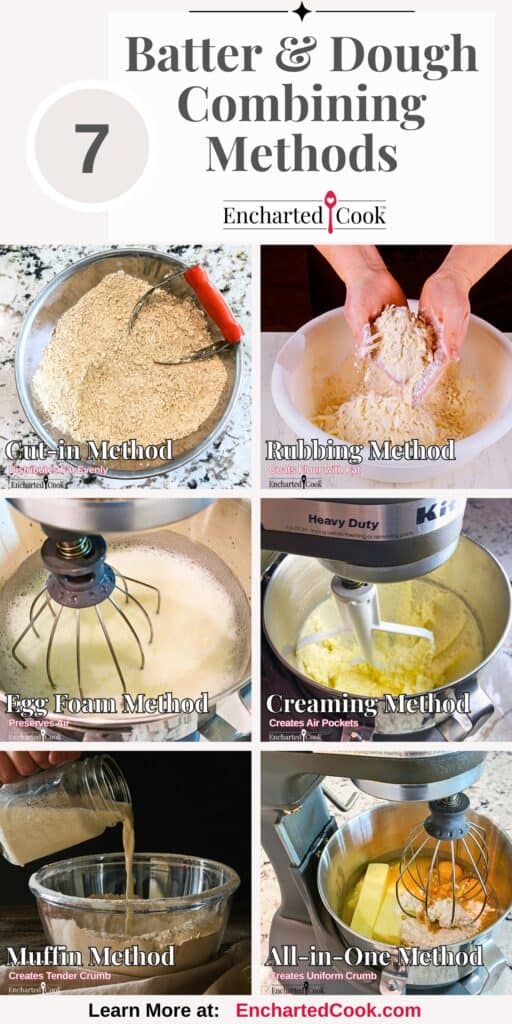
Many baked goods begin with the same basic ingredients-flour, fat, liquid, eggs, and leavening-but the way those ingredients are combined determines whether a baked good becomes flaky, tender, light, or layered.
Understanding batter and dough combining methods helps you choose the right technique for the texture you want. Once you know why each method works, recipes become easier to understand-and easier to adapt and change with confidence.
No matter which combining method you use, the finished texture also depends on leavening. Air, steam, yeast, baking powder, and baking soda all help baked goods rise, but each combining method works with those leaveners in a different way.
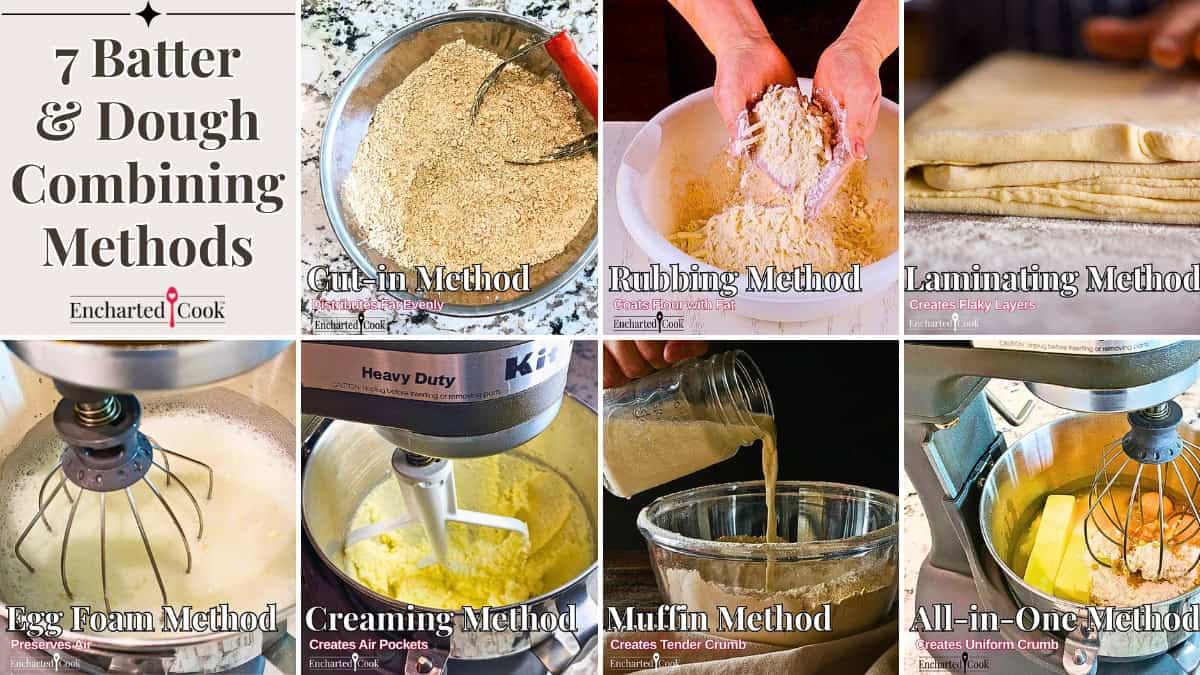
🔍 Quick Look: Batter & Dough Combining Methods
- Learn: How ingredients combine into batters and doughs
- Includes: Cut-In Method, Rubbing Method, Laminating Method, Egg Foam Method, Creaming Method, Muffin Method, and All-in-One Method
- Discover: When to use each method, the best tools, common mistakes, and how each method transforms ingredients
- Best For: Learning why baked goods have different textures
- Why You'll Love It: The same ingredients. Different methods. Different results. Learn when to use each combining method and how it transforms ingredients into flaky pastries, tender muffins, airy cakes, and more.
Jump to:
- 🔍 Quick Look: Batter & Dough Combining Methods
- Helpful Definitions for Baking Evaluations
- Batter & Dough Combining Methods By Category
- Batter & Dough Methods at a Glance
- Cut-In Method
- 🔍 Quick Guide for The Cut-In Method
- Rubbing Method
- 🔍 Quick Guide for The Rubbing Method
- Laminating Method
- 🔍 Quick Guide for The Laminating Method
- Egg Foam Method
- 🔍 Quick Guide for The Egg Foam Method
- Creaming Method
- 🔍 Quick Guide for The Creaming Method
- Muffin Method
- 🔍 Quick Guide for The Muffin Method
- All-in-One Method
- 🔍 Quick Guide for The All-in-One Method
- Want to Know More? Keep Learning Now
- 💬 Comments
Helpful Definitions for Baking Evaluations
Crumb is the interior texture of a baked good-whether it's light and airy, soft and tender, or fine and uniform.
Crust is the exterior texture of a baked good. It can be dense, chewy, or flaky.
Color is an indicator of caramelization and whether a baked good is underbaked, done, or overbaked.
Batter & Dough Combining Methods By Category
Fat
- Cut-in Method
- Rubbing Method
- Laminating Method
Air
- Egg Foam Method
- Creaming Method
Crumb
- Muffin Method
- All-in-One Method
Batter & Dough Methods at a Glance
| Method Group | Combining Method | Primary Goal |
|---|---|---|
| Fat | Cut-in | Creates Flaky Layers |
| Fat | Rubbing | Creates Tender Crumb |
| Fat | Laminating | Creates Flaky Layers |
| Air | Egg Foam | Builds Structure with Air |
| Air | Creaming | Creates Air Pockets |
| Crumb | Muffin | Minimizes Gluten Development |
| Crumb | All-in-One | Creates Uniform Crumb |
🧈 Fat
Cut-In Method
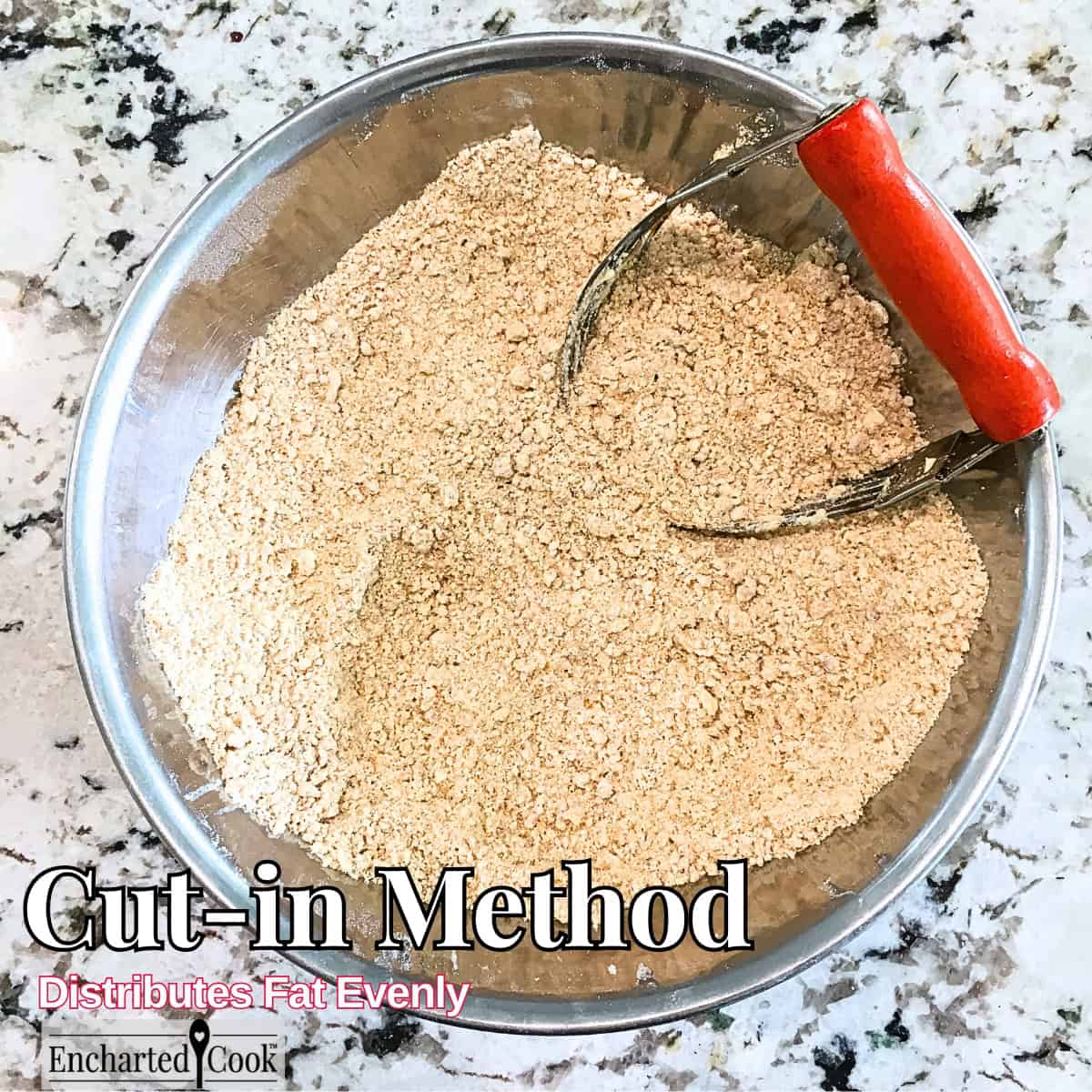
The Cut-in Method combines cold fat with flour before adding liquid to create tender, flaky baked goods. By leaving small pieces of fat intact, this method produces flaky layers and a delicate crumb. It is commonly used for biscuits, scones, pie crusts, and streusel toppings.
Common Uses for The Cut-in Method
- Biscuits
- Scones
- Pie Crust
- Cobbler Topping
- Streusel Toppings
🔍 Quick Guide for The Cut-In Method
- Best For: Tender pastries and quick breads that need a flaky texture.
- Equipment Needed: Pastry blender, Two knives, Fork, or Food processor (optional)
- Related Mixing Method: Cutting-In
- What Happens to Texture: Creates flaky layers and a tender crumb.
- Leavening: Usually baking powder. Some recipes rely on steam from the butter to enhance flakiness.
- Creates: Tender, flaky baked goods.
Why It Works:
Small pieces of cold butter remain throughout the dough. As the butter melts during baking, it releases steam that separates the surrounding dough into delicate layers. Because much of the flour is coated with fat before the liquid is added, less gluten develops, producing a tender, flaky texture.
Cut-in Method Technique Variations:
- Grated Frozen Butter - Grating frozen butter creates many small, evenly sized pieces that are easy to distribute throughout the flour while keeping the butter very cold. This shortcut works especially well for biscuits and scones.
- Food Processor - A food processor quickly cuts cold butter into flour with minimal handling. Pulse just until the mixture resembles coarse crumbs to avoid overprocessing.
- Two Knives - Using two table knives to cut butter into flour is a traditional technique that works well when a pastry blender isn't available.
- Pastry Blender - A pastry blender gives excellent control over the size of the butter pieces, making it one of the best tools for creating flaky pastries and biscuits.
Common Mistakes:
- Butter too warm - Warm butter blends into the flour instead of remaining in small pieces, reducing flakiness.
- Overworking the dough - Too much mixing develops gluten, making baked goods tougher.
- Adding too much liquid - Excess liquid encourages gluten development and can make the dough sticky.
- Skipping chilling - Warm dough causes the butter to soften before baking, reducing steam pockets and flaky layers.
Recipes That Use The Cut-in Method
- Buttermilk Biscuits
- Classic Pie Crust
- Peanut Butter Scones
- Apple Cobbler
- Blueberry Muffins with Streusel Crumb Topping
Rubbing Method
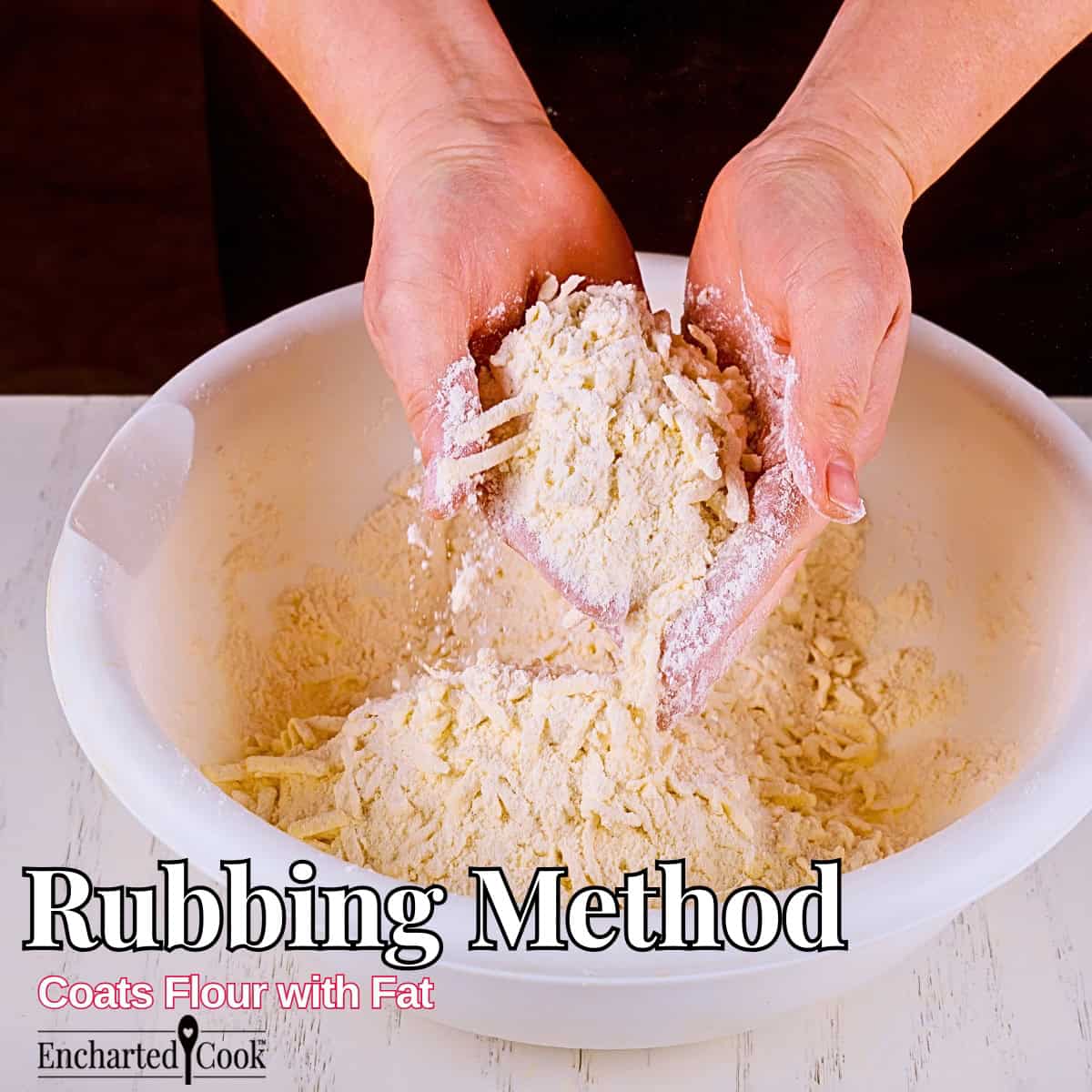
The Rubbing Method combines flour and cold fat by rubbing the fat into the flour with your fingertips until the mixture resembles fine breadcrumbs. Unlike the Cut-In Method, the fat is worked more thoroughly into the flour, creating a tender, crumbly texture instead of flaky layers. This method is commonly used for shortcrust pastry, some scones, southern biscuits, and crumble or crisp toppings.
Common Uses for The Rubbing Method
- Southern Biscuits
- Shortcrust Pastry
- Fruit Crisps & Crumbles
- Shortcake and some Scones
- Sweet Pastry
🔍 Quick Guide for The Rubbing Method
- Best For: Tender pastries and crumb toppings with a delicate texture.
- Equipment Needed: Mixing bowl, fingertips, pastry cutter (optional)
- Related Mixing Method: Mixing by Hand
- What Happens to Texture: Creates a fine, tender, crumbly texture.
- Leavening: Usually baking powder for scones; many pastries and crumb toppings use no leavening.
- Creates: A tender crumb by coating much of the flour with fat.
Why It Works:
As the fat is rubbed into the flour, it coats many of the flour particles before liquid is added. This coating limits gluten development, producing a tender texture. Because the fat is distributed more evenly than in the Cut-In Method, the finished baked good is delicate and crumbly rather than flaky.
Rubbing Method Technique Variations:
- Using Your Fingertips - The traditional method. Lift and rub the flour and fat lightly between your fingertips to avoid warming the butter.
- Pastry Cutter - Can be used to begin combining the fat before finishing by hand.
- Food Processor - Pulse briefly until the mixture resembles coarse or fine crumbs. Avoid overprocessing into a paste.
Common Mistakes:
- Using Warm Butter - Warm butter blends into the flour instead of creating a light crumb.
- Overworking the Mixture - Handling the mixture too long warms the fat and can produce a heavier texture.
- Adding Too Much Liquid - Too much liquid encourages gluten development and makes the dough tougher.
- Skipping Chilling - For pastry dough, chilling helps firm the fat and relax the gluten before rolling.
Recipes That Use The Rubbing Method
- Southern Buttermilk Biscuits
- Old Fashioned Strawberry Shortcake
- Blackberry Crumble
- Easy Old Fashioned Apple Crisp
Laminating Method
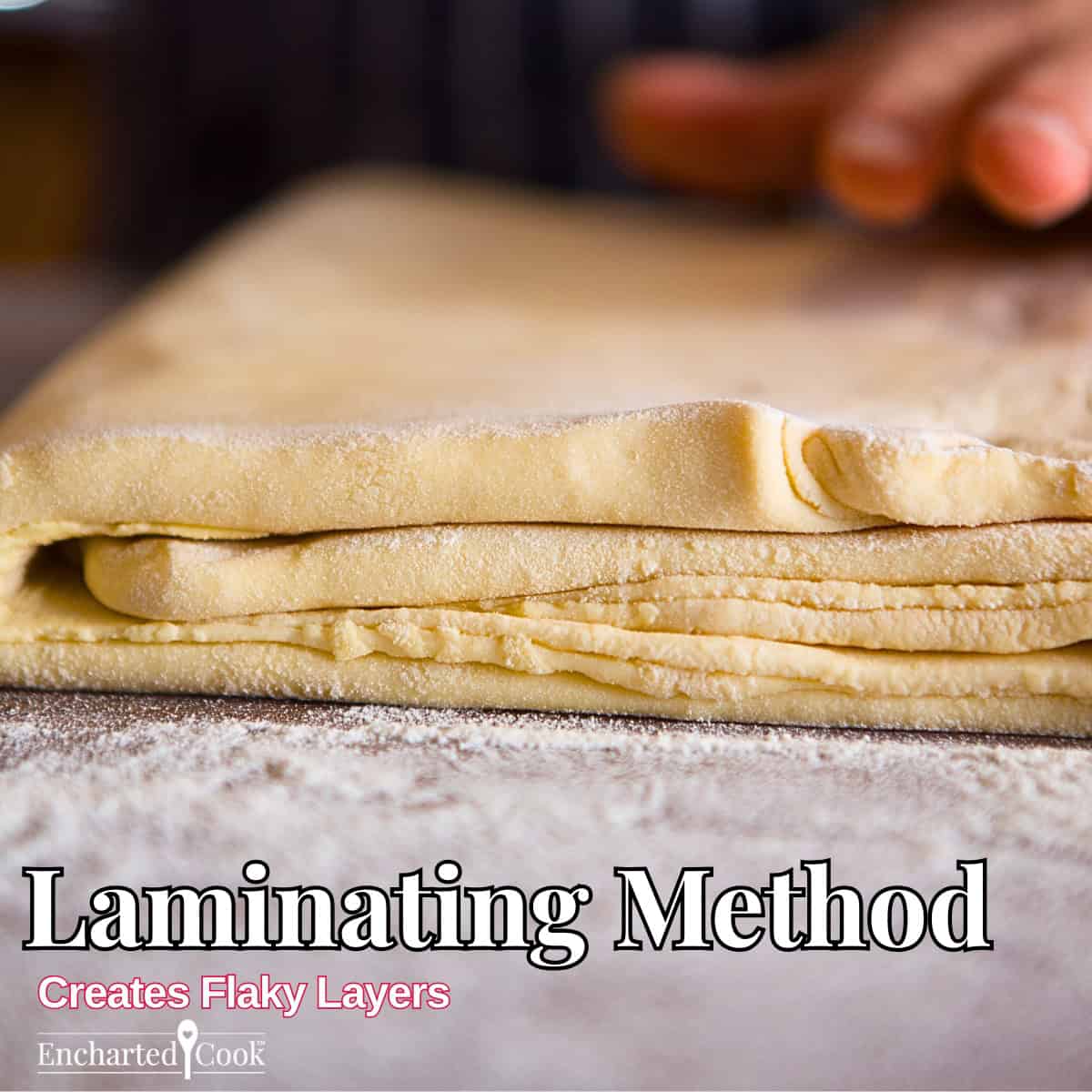
The Laminating Method creates multiple layers of dough and fat by repeatedly folding and rolling the dough. While laminating is the defining technique for pastries like croissants and puff pastry, it can also be used with biscuit doughs to create lighter, flakier layers.
Common Uses for The Laminating Method
- Croissants
- Puff Pastry
- Danish Pastry
- Southern Biscuits
- Buttermilk Biscuits (optional)
🔍 Quick Guide for The Laminating Method
- Best For: Pastries and biscuits that benefit from distinct flaky layers.
- Equipment Needed: Rolling pin, bench scraper (optional), pastry brush (optional)
- Related Mixing Method: Folding
- What Happens to Texture: Creates thin, flaky layers.
- Leavening: Steam from the butter; croissants also use yeast.
- Creates: Hundreds of delicate layers.
Why It Works:
Each fold creates alternating layers of dough and fat. During baking, the water in the butter turns to steam, pushing the layers apart while the dough sets. The result is a light, flaky texture with distinct layers.
Laminating Method Technique Variations:
- Three-fold (letter fold) - Flatten the dough into a rectangle and fold it into thirds like a business letter. This is the most common laminating fold and creates multiple even layers with each turn.
- Book Fold - Flatten the dough into a rectangle, then fold both ends toward the center before folding the dough in half like a book. This creates more layers with each fold than a traditional letter fold.
- Biscuit Laminating (3-6 folds) - Flatten the dough into a rectangle, then fold both ends toward the center before folding the dough in half like a book. This creates more layers with each fold than a traditional letter fold.
- Croissant Lamination - A sheet of butter is enclosed within the dough, which is then rolled and folded multiple times to create hundreds of delicate layers that become light and flaky during baking.
- Puff Pastry Turns - Butter is enclosed within the dough, which is repeatedly rolled and folded into thirds. Each turn multiplies the layers, producing the signature flaky texture of puff pastry.
Common Mistakes:
- Butter too warm
- Rolling too aggressively
- Skipping chilling
- Too many folds
- Pressing the edges together
Recipes That Use The Laminating Method
- Buttermilk Biscuits
- Southern Buttermilk Biscuits
- Apple Turnovers
- Rough Puff Pastry
🫧 Air
Egg Foam Method
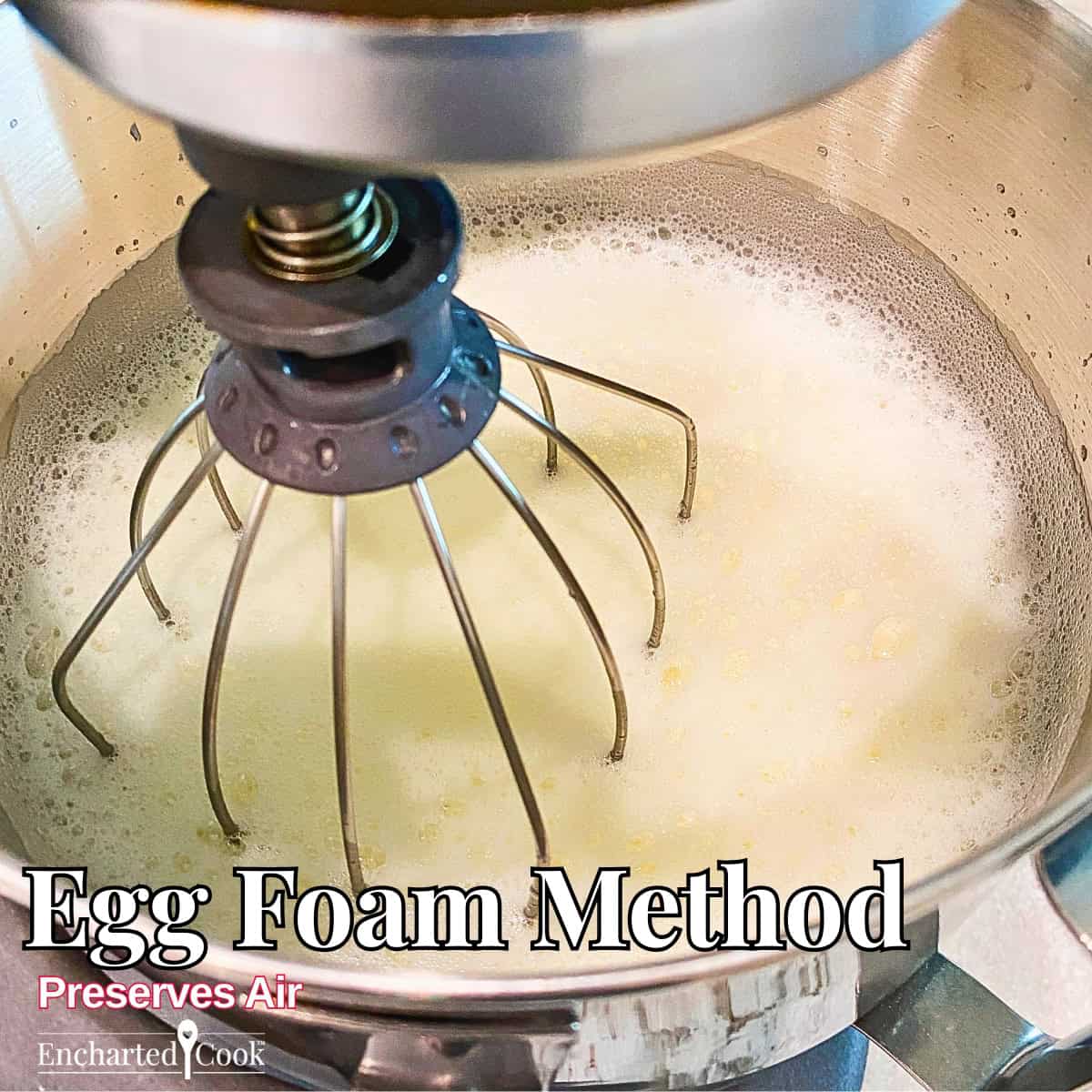
The Egg Foam Method builds structure by whipping whole eggs, egg whites, or egg yolks to incorporate air before gently folding in the remaining ingredients. During baking, the trapped air expands while the egg proteins set, creating light, airy cakes and desserts. This method is commonly used for sponge cakes, angel food cakes, chiffon cakes, soufflés, and some meringue-based desserts.
Common Uses for The Egg Foam Method
- Angel Food Cake
- Sponge Cake
- Chiffon Cake
- Swiss Roll or Jelly Roll
- Soufflés
- Meringues
- Ladyfingers
🔍 Quick Guide for The Egg Foam Method
- Best For: Light, airy cakes and delicate desserts.
- Equipment Needed: Stand mixer, hand mixer, or balloon whisk.
- Related Mixing Method: Whipping • Folding
- What Happens to Texture: Creates a light, airy structure.
- Leavening: Mechanical leavening from whipped eggs. Some recipes also include baking powder for additional lift.
- Creates: A stable foam that provides volume and structure.
Why It Works:
Whipping eggs traps thousands of tiny air bubbles within the egg proteins. As the batter bakes, these air bubbles expand while the proteins coagulate and set, creating a light, delicate structure. Folding the dry ingredients into the foam gently helps preserve the trapped air that gives these baked goods their volume.
Egg Foam Method Technique Variations:
- Whole Eggs - Create a tender, flexible foam often used in sponge cakes.
- Egg Whites Only - Produce the lightest, most stable foam for angel food cake and meringues.
- Separated Eggs - Whipped whites are folded into the batter to combine richness with exceptional lift, as in chiffon cakes.
- Warm Eggs - Room-temperature eggs whip more quickly and achieve greater volume than cold eggs.
Common Mistakes:
- Underwhipping the Eggs - Produces insufficient volume.
- Overwhipping the Eggs - Creates a dry, unstable foam that is difficult to fold.
- Folding Too Aggressively - Deflates the air bubbles and reduces volume.
- Adding Ingredients Too Quickly - Heavy ingredients can collapse the foam before baking.
Recipes That Use The Egg Foam Method
- Mile High Angel Food Cake
- Sponge Cake
- Strawberry Almond Chiffon Cake
Creaming Method
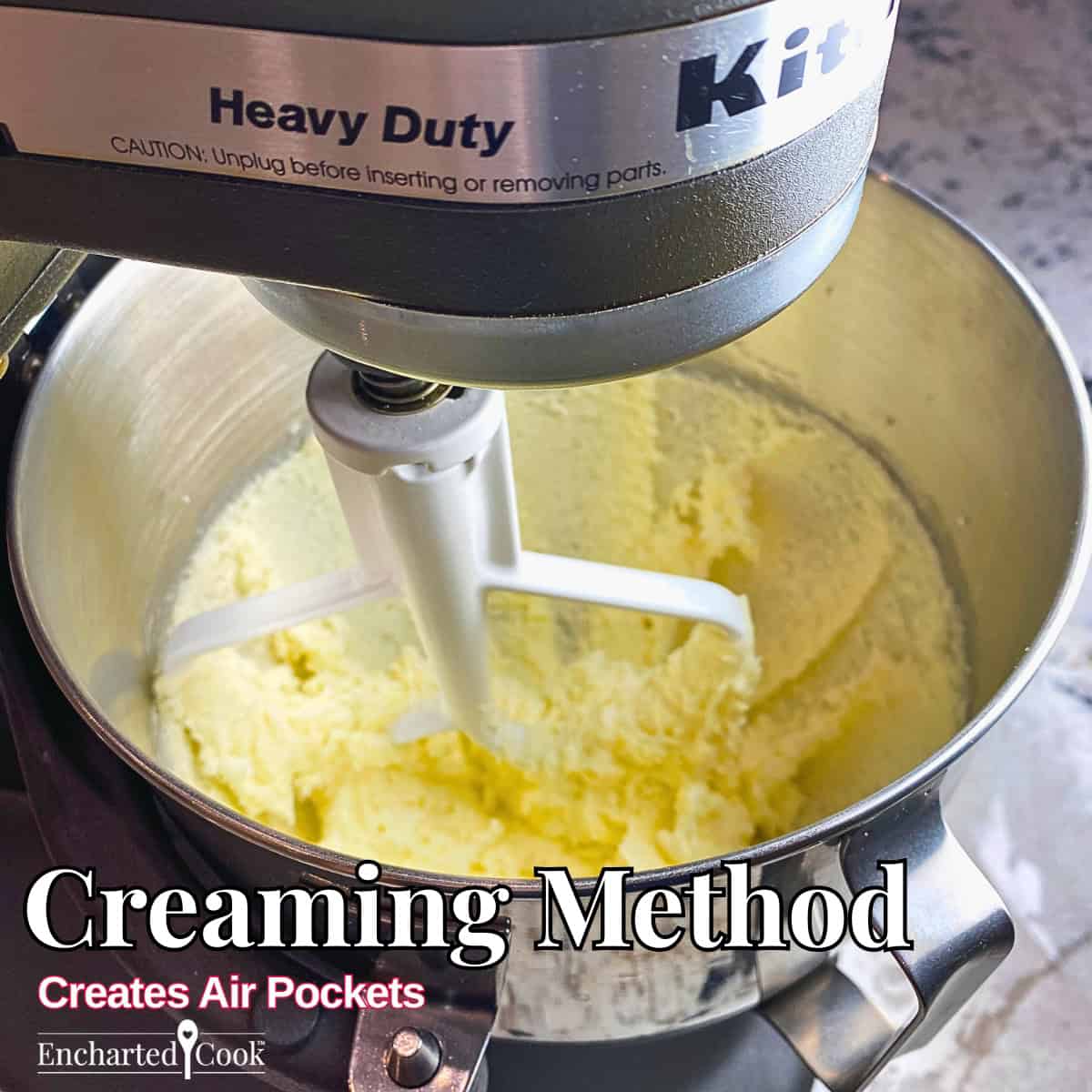
The Creaming Method incorporates tiny air pockets into butter and sugar before the remaining ingredients are added. These air pockets expand during baking, helping produce cakes and cookies with a lighter texture and a finer crumb. It is one of the most common combining methods used in baking. While creaming refers to beating butter and sugar together, the Creaming Method includes the complete process of incorporating the remaining ingredients in the proper order to produce a light, tender baked good.
Common Uses for The Creaming Method
- Butter Cakes
- Pound Cakes
- Cupcakes
- Cookies
- Brownies & Blondies
- Buttercream Frosting
🔍 Quick Guide for The Creaming Method
- Best For: Butter-based cakes, cookies, and frostings.
- Equipment Needed: Stand mixer, hand mixer, mixing bowl, wooden spoon (optional)
- Related Mixing Method: Creaming
- What Happens to Texture: Creates a fine, tender crumb.
- Leavening: Mechanical leavening from incorporated air, usually combined with baking powder or baking soda.
- Creates: Tiny air pockets that expand during baking.
Why It Works:
Beating butter and sugar together creates thousands of tiny air pockets throughout the fat. As the remaining ingredients are added, these air pockets become trapped within the batter. During baking, the air expands while chemical leaveners produce additional gas, resulting in a lighter texture and a finer crumb.
Creaming Method Technique Variations:
- Butter Temperature - Butter should be cool room temperature and soft enough to press with a finger but not melted.
- Mixer Speed - Medium speed generally produces the best incorporation of air without overheating the butter.
- Mixing by Hand - Although slower and more labor-intensive, a wooden spoon can successfully cream butter and sugar with enough time and effort.
- Reverse Creaming - Some recipes use reverse creaming, where the butter is mixed into the dry ingredients before the liquid is added. This produces a finer, tighter crumb.
Common Mistakes:
- Butter too cold
- Butter too warm
- Under-creaming
- Over-creaming
- Adding eggs too quickly
- Not scraping the bowl
Recipes That Use The Creaming Method
🍞 Crumb
Muffin Method
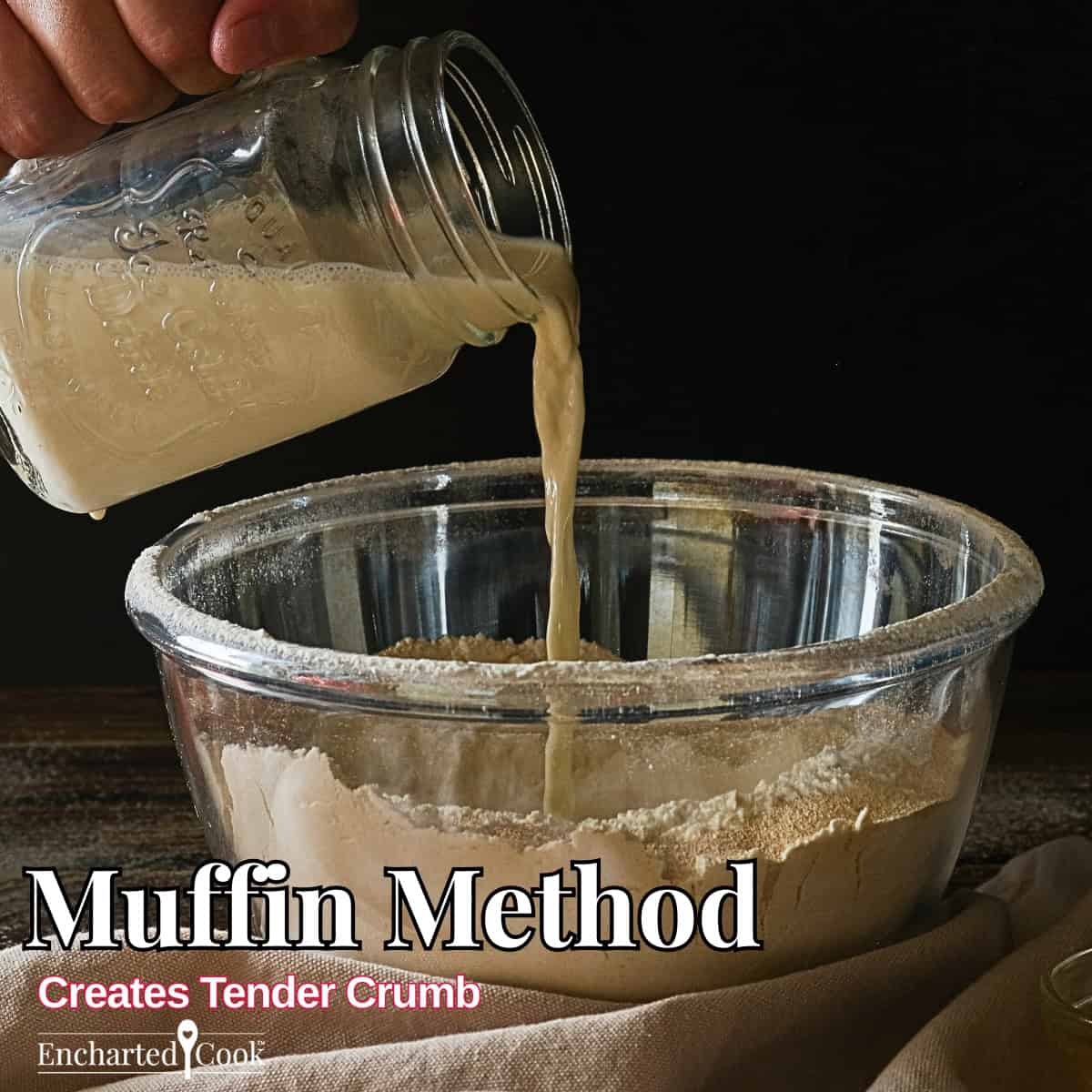
The Muffin Method, also called the Wet into Dry Method, or Fork Method, combines the wet ingredients separately from the dry ingredients before gently stirring them together just until combined. Unlike the Creaming Method, the goal is not to incorporate air but to minimize gluten development and create a tender crumb.
Common Uses for The Muffin Method
- Muffins
- Quick Breads
- Pancakes
- Waffles
- Some Coffee Cakes
🔍 Quick Guide for The Muffin Method
- Best For: Quick breads and batters that should be soft and tender.
- Equipment Needed: Two mixing bowls, whisk, rubber spatula or wooden spoon.
- Related Mixing Method: Stirring • Folding
- What Happens to Texture: Creates a soft, tender crumb.
- Leavening: Usually baking powder, baking soda, or both.
- Creates: A moist, tender crumb with minimal gluten development.
Why It Works:
Mixing the wet and dry ingredients separately allows the leavening and other dry ingredients to be evenly distributed before they are combined. Once the wet ingredients are added, the batter is stirred only until the flour is moistened, so a few lumps are normal. This minimizes gluten development, producing muffins and quick breads that are soft and tender instead of tough.
Muffin Method Technique Variations:
- Fold in Mix-ins Last - Blueberries, nuts, chocolate chips, and dried fruit are added after the batter is mixed.
- Rest the Batter - Some recipes benefit from a short rest before baking to hydrate the flour.
- Use a Fork - Many bakers prefer a fork or spatula instead of an electric mixer to avoid overmixing.
Common Mistakes:
- Overmixing the batter
- Trying to remove every lump
- Adding too many mix-ins
- Using expired baking powder
- Filling muffin cups unevenly
Recipes That Use The Muffin Method
- Cranberry Chocolate Chip Bread
- Zucchini Bread
- Snickerdoodle Muffins
All-in-One Method
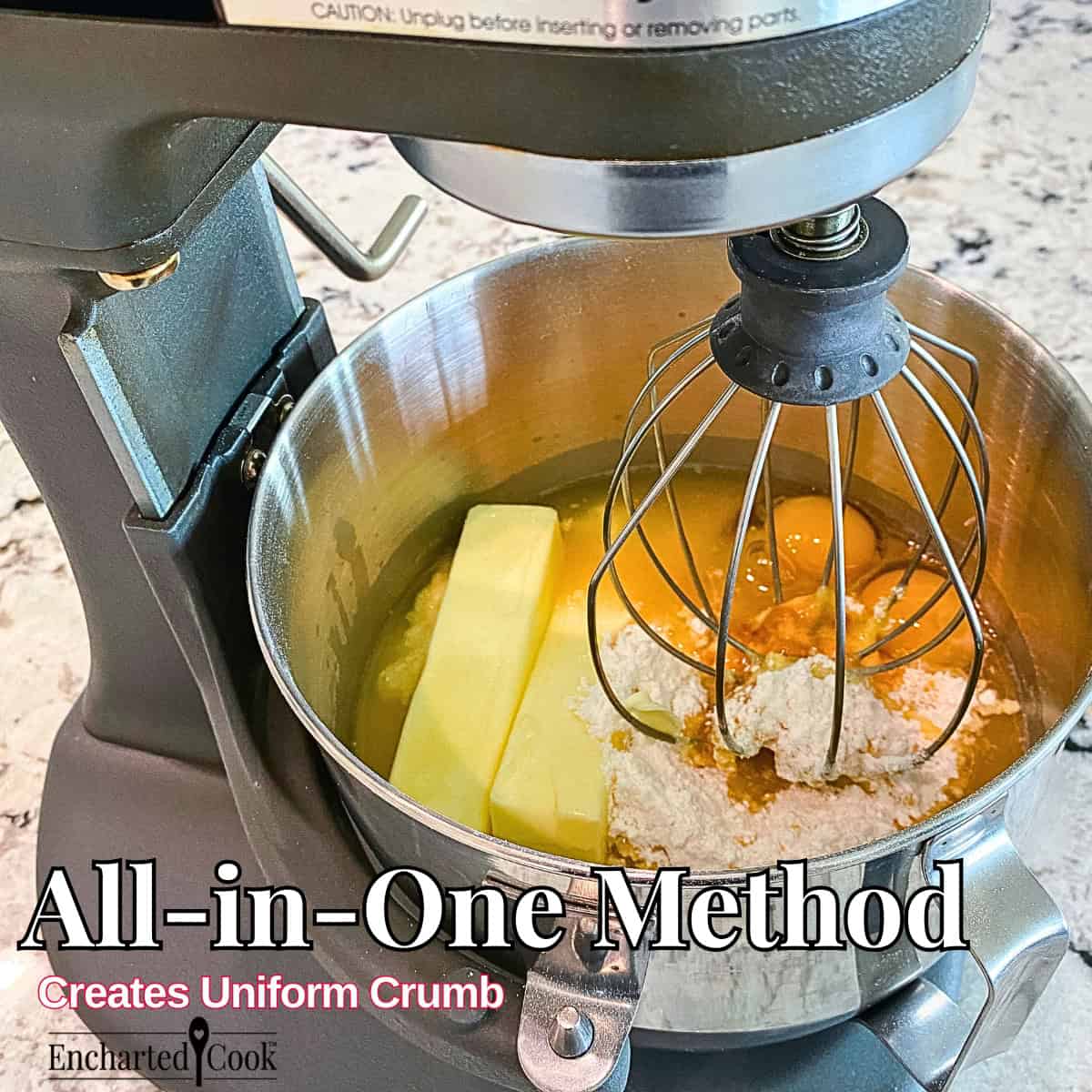
The All-in-One Method, also called the One-Bowl Method, combines most or all of the ingredients at the beginning of mixing. Rather than building the batter in stages, the ingredients are mixed together until smooth, creating a consistent batter with minimal preparation. This method is commonly used for snack cakes, sheet cakes, loaf cakes, and some butter cakes.
Common Uses for The All-in-One Method
- Snack Cakes
- Loaf Cakes
- Sheet Cakes
- Some Butter Cakes
- Everyday Cakes
🔍 Quick Guide for The All-in-One Method
- Best For: Simple cakes with a soft, even crumb.
- Equipment Needed: Mixing bowl, stand mixer, or hand mixer.
- Related Mixing Method: Mixing
- What Happens to Texture: Creates a soft, uniform crumb.
- Leavening: Usually baking powder or baking soda.
- Creates: A consistent batter with minimal mixing steps.
Why It Works:
Unlike the Creaming Method, the All-In-One Method does not rely on incorporating air into butter before adding the remaining ingredients. Instead, chemical leaveners provide most of the lift while the ingredients are mixed together into a smooth, even batter. The result is a tender cake with a uniform crumb and less time spent mixing.
All-In-One Method Technique Variations:
- Softened Butter - Most recipes require softened butter so it blends smoothly.
- Room Temperature Ingredients - Help create a smooth batter.
- Mix Until Smooth - Unlike the Muffin Method, this batter should become smooth before baking.
Common Mistakes:
- Butter Too Cold
- Overmixing After the Batter is Smooth
- Cold Ingredients
- Not Scraping the Bowl
- Incorrect Ingredient Measurements




katherine brooks says
WOW!!!!!! That is a ton of invaluable information! I can't imagine all the work you put in to put this together. Thank you for doing this. It will be so helpful anytime I want to make any type of bread or crust. Thank you for compiling all of this in one place for easy reference!
Jan Nunes says
Hi Kathy,
I am so glad you find this article helpful! It was a great deal of work, but essential to explain why simple flour, fat, and liquid can turn out so differently depending on the way it is combined. I've tried to explain this before in various recipes, but this article puts all that info in one place.
Have a wonderful day! ~Jan 😊