

This quick-reference Leavening Methods and Agents Chart explains leavening methods and agents in baking. Learn when to use baking soda, baking powder, yeast, and more.
Leavening is what makes baked goods rise, creating the light, airy textures we love in breads, cakes, and pastries. Whether that rise comes from air, steam, yeast, or chemical reactions, every recipe depends on the correct leavening method to succeed.
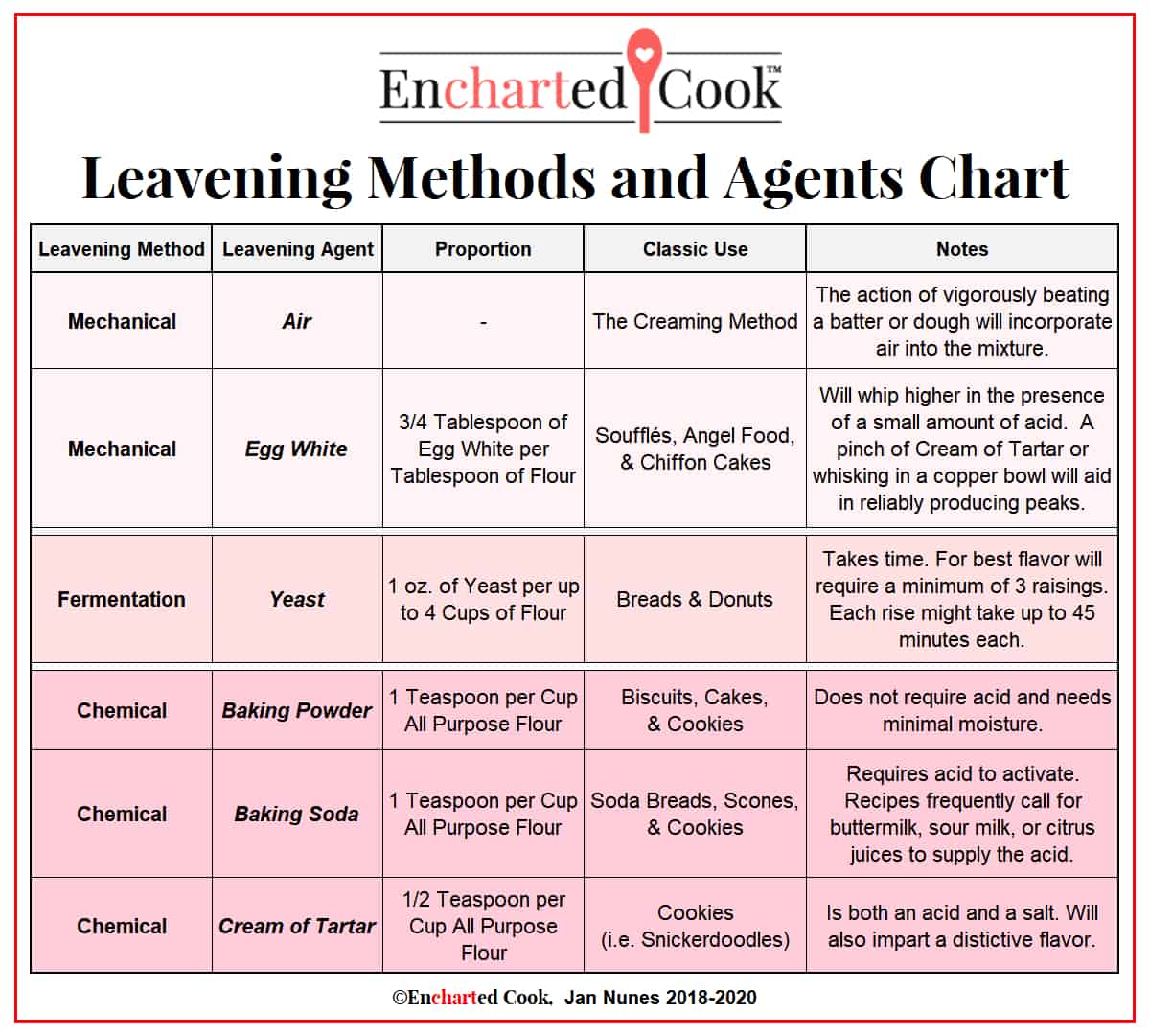
This Leavening Methods and Agents Chart is designed as a quick-reference baking guide - a visual tool you can use to identify which leavening method or agent a recipe uses, how it works, and when to use it. If you're looking for a fast, at-a-glance answer in the kitchen, this chart is for you.
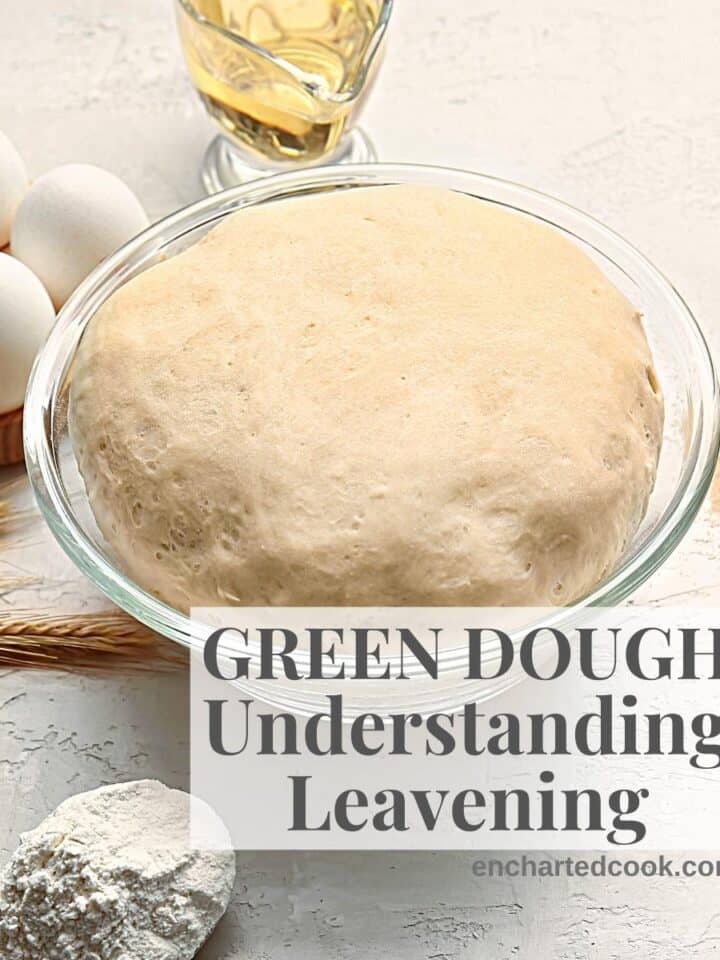
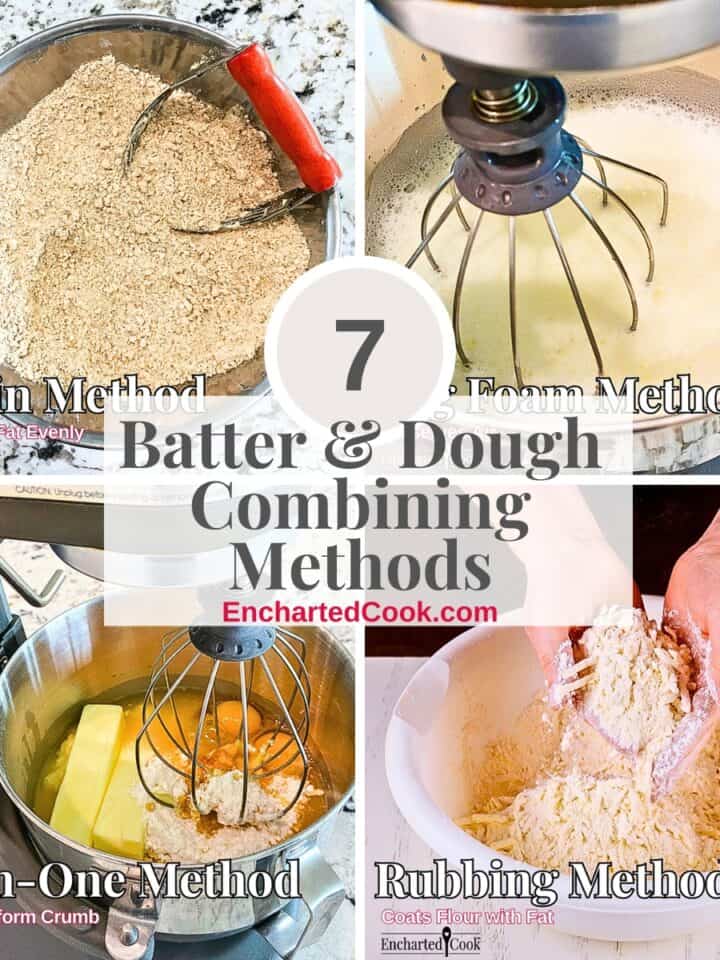
For a full explanation of how each method works and the science behind leavening, see my in-depth guides, Green Dough and 7 Batter & Dough Combining Methods.
Jump to:
How to Use This Leavening Methods and Agents Chart
Use this chart to:
- Identify whether a recipe relies on mechanical, fermentation, or chemical leavening.
- Compare leavening agents (baking soda, baking powder, yeast, etc.).
- Quickly troubleshoot why a recipe may not be rising properly.
- Choose substitutions when needed.
This is especially helpful when adapting recipes, scaling batches, or developing your own baked goods.
Begin by following the color coding for each method to determine which agents are associated with each method.
- The three leavening methods -mechanical, fermentation, and chemical -are listed in Column 1 of this chart.
- Column 2 contains the six leavening agents -air, egg white, yeast, baking powder, baking soda, and cream of tartar -that are related to each leavening method.
- The amount needed of an agent is listed in Column 3, "Proportion".
- The "Classic Use" for each method/agent is listed in Column 4.
- Specific notes for each method/agent are in Column 5.
Quick Notes for Bakers
- Mechanical leavening relies on incorporating air or steam (e.g., whipped egg whites, creaming butter and sugar).
- Fermentation leavening uses fermentation (yeast or sourdough) to produce carbon dioxide.
- Chemical leavening uses acid-base reactions (baking soda, baking powder, cream of tartar).
If you'd like a deeper understanding of how these work and how to use them correctly, refer to the full breakdown in my articles Green Dough and 7 Batter & Dough Combining Methods.
My Top Tip
Understanding leavening can dramatically improve your baking results. Bookmark this chart so you can keep it handy whenever you bake.


Comments
No Comments