

What does 'Mix by Hand' really mean? Discover how old-school creaming with your hands works-and why it still matters in baking!
Do you know what the term mix by hand means? It might not mean what you think! To know exactly what it means in any particular recipe, it helps to know what the recipe is and when it was written, to really understand this term.
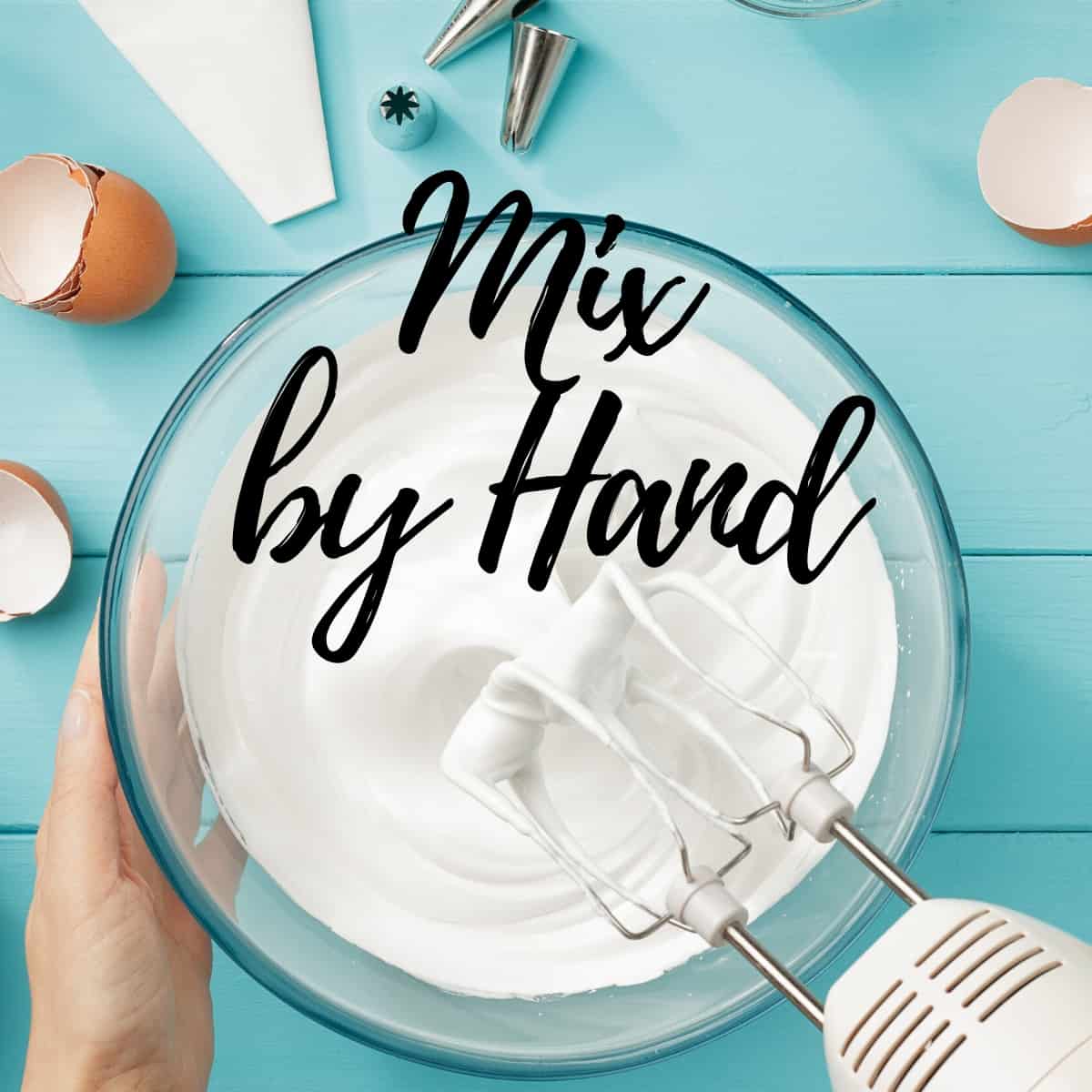
A few weeks ago, I was going through my Mom's handwritten cookbook that she began in the very early 1930s. As I read through the entries, I was reminded of the name, "Maude", a woman with great depth of baking knowledge and a big heart. Maude was the woman who taught my Mom about baking and proportions and often stated in her recipes that the butter and sugar were to be mixed "by hand".
Today, we would think those instructions meant that we would use a spoon to beat the butter and sugar. But, in days past, it really did mean to mix with your hands.
This term is scattered throughout my Mom's earliest recipes. It's found in several of her cakes, Apple Crisp, Scones, and Pie Crust. In each of these recipes it means the same thing but in a slightly different way. You will use your hands to mix, but use a different technique to get a different texture.
Jump to:
In some recipes, the warmth of your hand would melt together the fat and sugar as they were worked against the side and bottom of the bowl and in other recipes you rubbed the fat with the dry ingredients to make a sandy mixture.
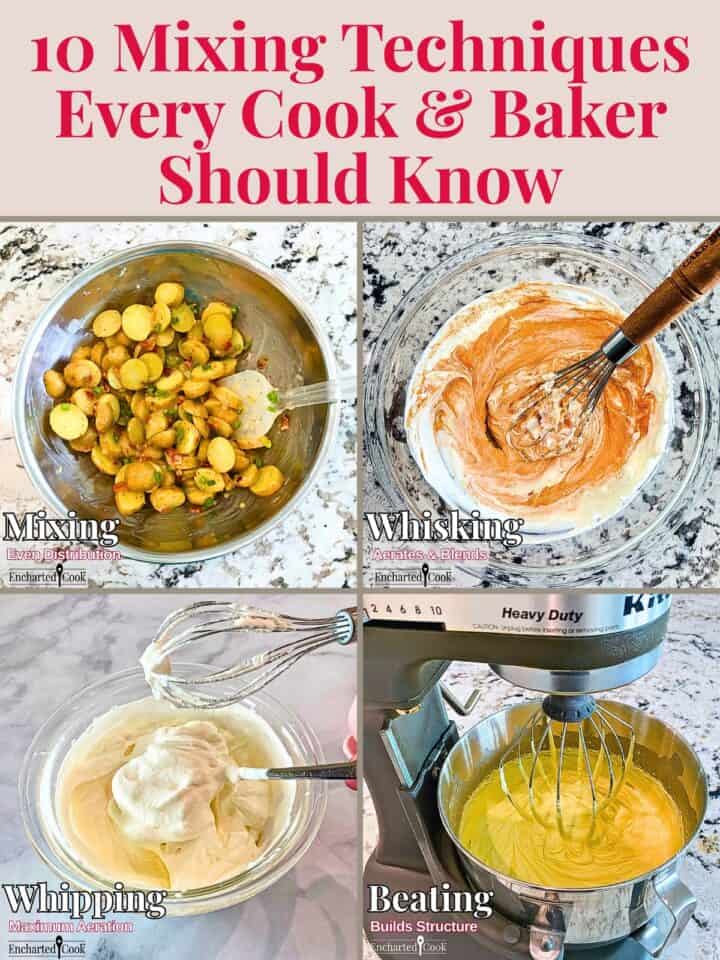
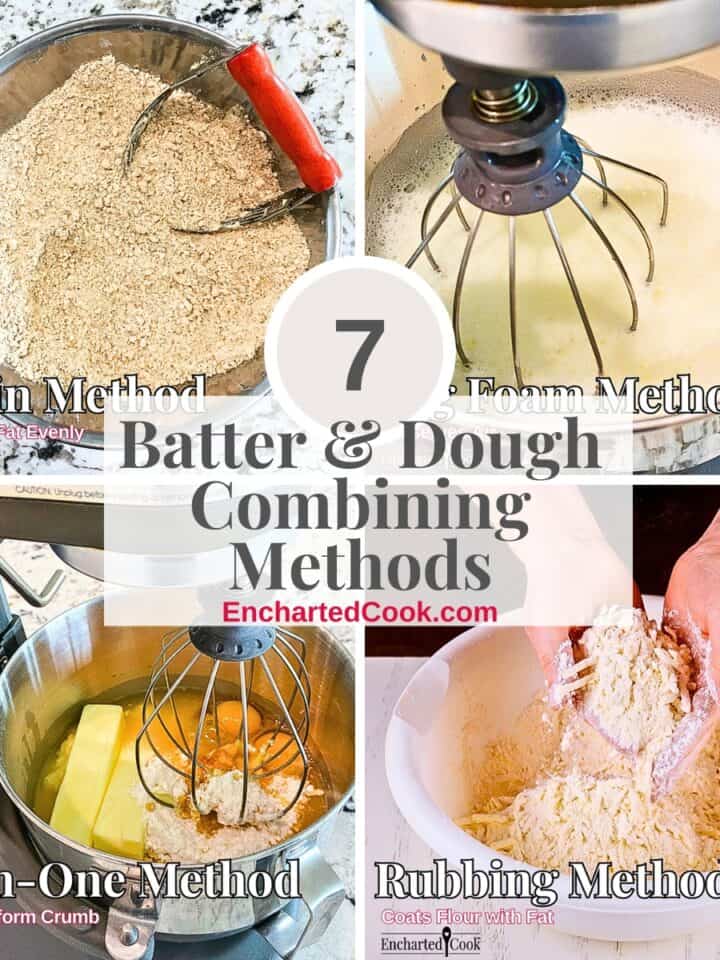
So, if you find a recipe that states to mix by hand, it is very likely an early recipe using either the creaming method, the cut-in method, or rubbing method.
As you read through recipe titles, their ingredients, and mixing order, you will get a feel for what type of mixing is meant by "Mix by Hand"... and for some (not all) recipes, you'll never want to use an electric mixer again.
Mix by Hand Meaning #1 - The Creaming Method
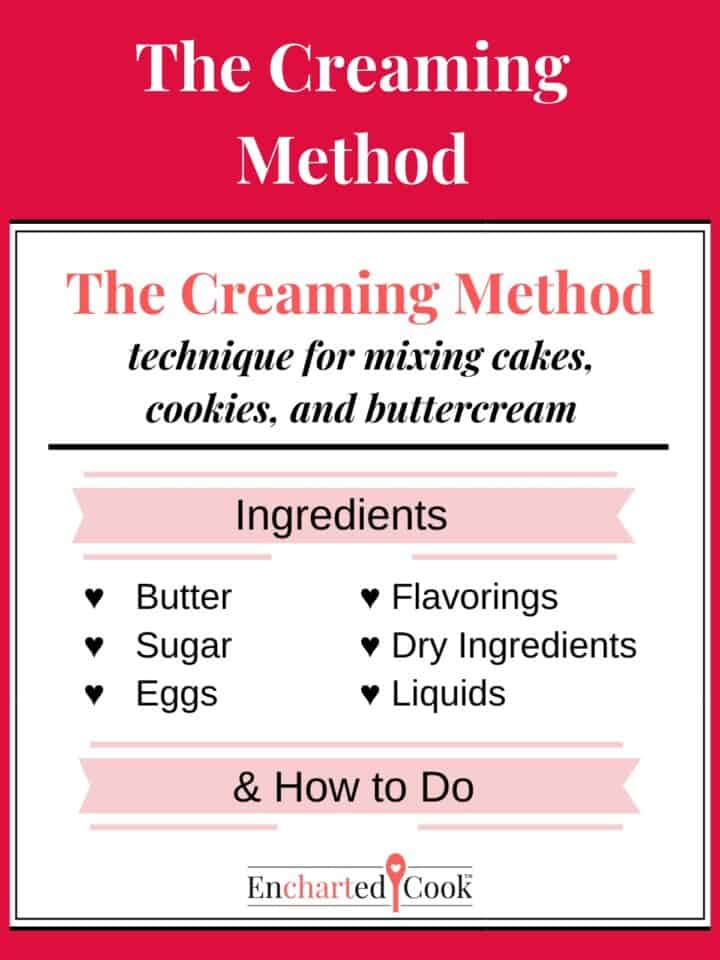
But what is the Creaming Method? It is a method and order of combining ingredients. You beat fat and sugar together and then add your additional ingredients. The technical purpose of the creaming method is to incorporate air into your batter as you prepare it, which makes a more tender crumb and fluffier frosting.
For me, it was the first leavening method I learned for combining baking ingredients, and I still use it in most of the cakes and cookies I make from scratch. It is easy to master, and once you've read a recipe that utilizes it, you will recognize it over and over again in other recipes.
Yay electric mixers!
These days we are very fortunate to have electric mixers, which makes the process of creaming very easy. The steps are simple and the same as my Mom wrote more than 80 years ago.
- Beat together the butter and sugar until the mixture is light in color and the texture is fluffy.
- Continue to beat and add eggs one at a time until each is fully incorporated and add any flavoring.
- Sift together flour and other dry ingredients and measure liquids.
- Alternately add the flour mixture and liquids to the creamed mixture until all is incorporated.
- Add any stir-ins such as chopped nuts, coconut, and flavored chips.
Using a mixer always makes this task easier, as it quickly incorporates air to make the mixture light and fluffy. If you take your time and let your mixer work the butter and sugar for at least 5 minutes, you will see the mixture become lighter in color and fluffier in texture. If you do not have a mixer, you can use a spoon followed by a whisk. It will just take a little longer... and provide a good workout.
If you choose to go completely old school and mix by hand, follow up with a whisk to get some air incorporated. Just be aware that the texture of your bake will be denser, but just as delicious!
Mix by Hand Meaning #2 - The Cut-In Method
However, there is another meaning to Mix by Hand. Mix by Hand can also mean to "cut in" fat into dry ingredients. A good example of this is the making of scones.
For scones, like my Peanut Butter Scones, the fat is cut into small cubes, tossed with the dry ingredients, and then cut into the dry ingredients using a pastry blender or two forks. The goal is to get a mixture that contains small pieces of fat intact.
This method produces flaky layers and a delicate crumb and works well for scones, simple biscuits, and pie crusts.
Mix by Hand Meaning #3 - The Rubbing Method
However, there is another meaning to Mix by Hand. Mix by Hand can also mean to rub the fat into dry ingredients. A good example of this is the making of Southern Biscuits.
The very best biscuit you will ever have is one where the fat is cut into small cubes, tossed with the dry ingredients and then rubbed into the dry ingredients using your hands. In this case, the trick is to do this quickly, so as not to melt the fat with the warmth of your hands.
The goal is to get a mixture that has the fat uniformly coated with the dry ingredients, like coarse sand. This type of mixing gives a beautiful, rich flaky texture to biscuits, scones, and pie crusts.
Mix by Hand Meaning #4 - Use a Wooden Spoon!
But wait! There's one more meaning to this term. Occasionally, it meant to take a wooden spoon and beat the mixture vigorously! Very, very vigorously!




Comments
No Comments