
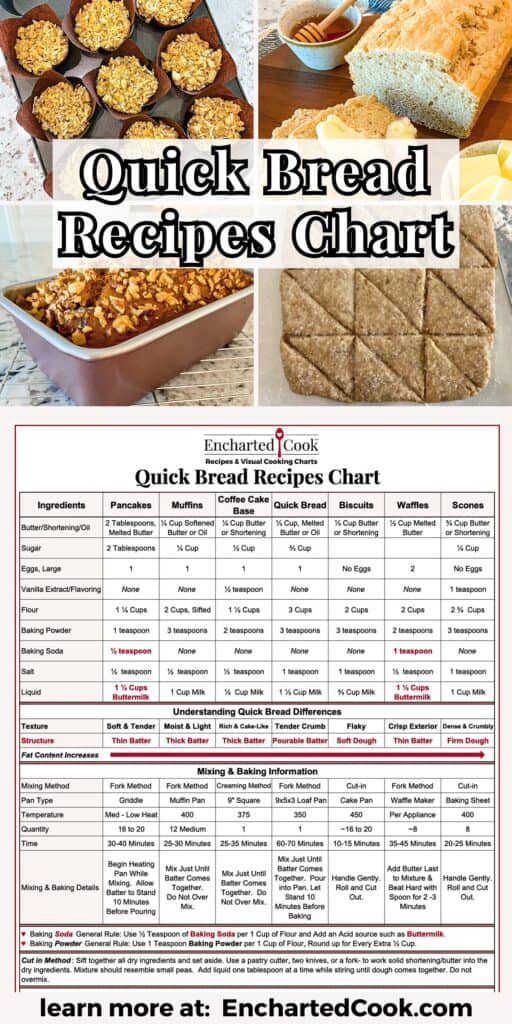
Learn how pancakes, muffins, biscuits, waffles, scones, and quick breads differ with this Quick Bread Recipes Chart featuring ingredient ratios, textures, and mixing methods.
Use this visual baking guide to compare seven popular quick breads side by side. You'll see how changes in fat, liquid, mixing methods, and leavening affect texture, structure, and overall baking results.
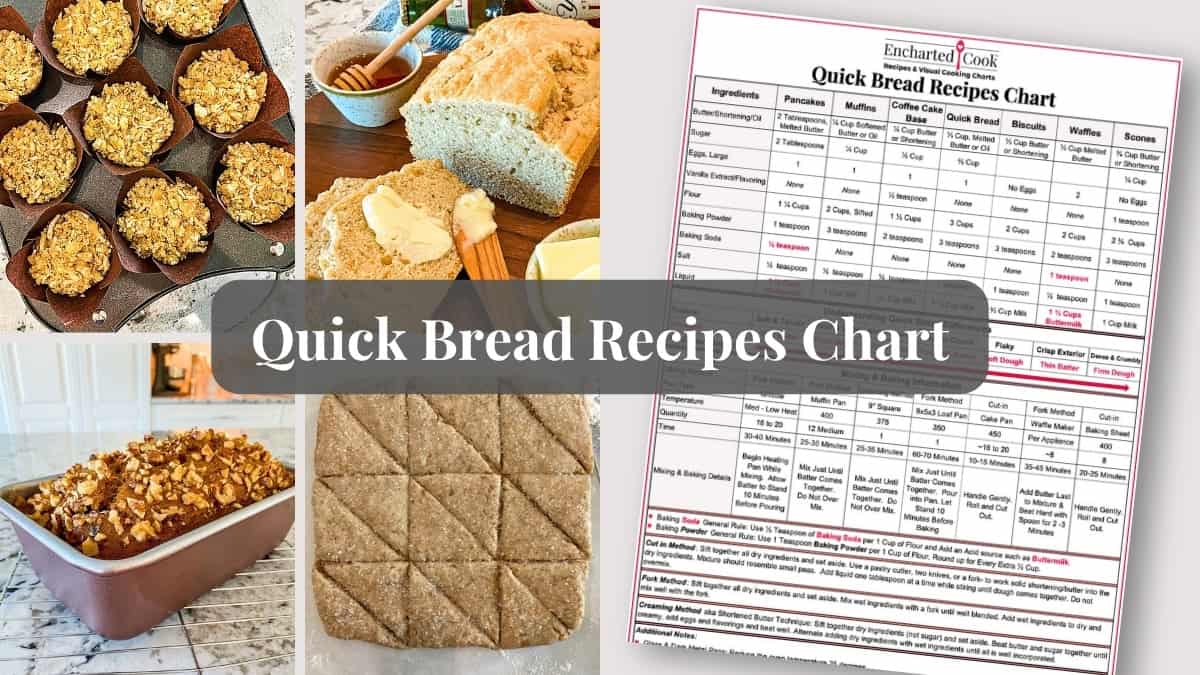
Quick breads are some of the easiest and most versatile baked goods you can make at home. From fluffy pancakes and tender muffins to buttery biscuits and rich coffee cake, they all rely on the same basic baking principles but use different ingredient ratios and mixing methods.
Compare ingredient ratios, textures, batter consistency, mixing methods, and baking techniques for Pancakes, Muffins, Coffee Cake, Quick Bread, Biscuits, Waffles, and Scones all in one easy-to-read chart.
🔍 Quick Look: Quick Bread Recipes Chart
- Includes: Pancakes, Muffins, Coffee Cake, Quick Bread, Biscuits, Waffles, and Scones
- Learn: Ingredient ratios, mixing methods, and baking science
- Best For: Beginning bakers, baking students, and recipe comparisons
- Key Concepts: Baking powder vs. baking soda, fat content, and mixing techniques
- Skill Level: Beginner
- Why You'll Love It: Easily see how small changes in ingredients create completely different quick breads.
What Is a Quick Bread?
Quick breads are baked goods that use chemical leaveners such as baking powder or baking soda instead of yeast. Because they do not require rising time, they can be mixed and baked immediately. Common examples include muffins, biscuits, pancakes, waffles, coffee cakes, and loaf-style quick breads.
Quick Bread Recipes Chart
Use the chart to see how changes in flour, fat, eggs, liquid, and mixing methods affect the texture and structure of each recipe. The bright red arrow highlights the progression from lower-fat batters to richer doughs, making it easier to understand why each quick bread has its own unique texture.
You'll also find tips for choosing between baking powder and baking soda, along with step-by-step explanations of the three basic quick bread mixing methods: the Cut-In Method, the Wet-Into-Dry Method, aka the Fork Method, and the Creaming Method.
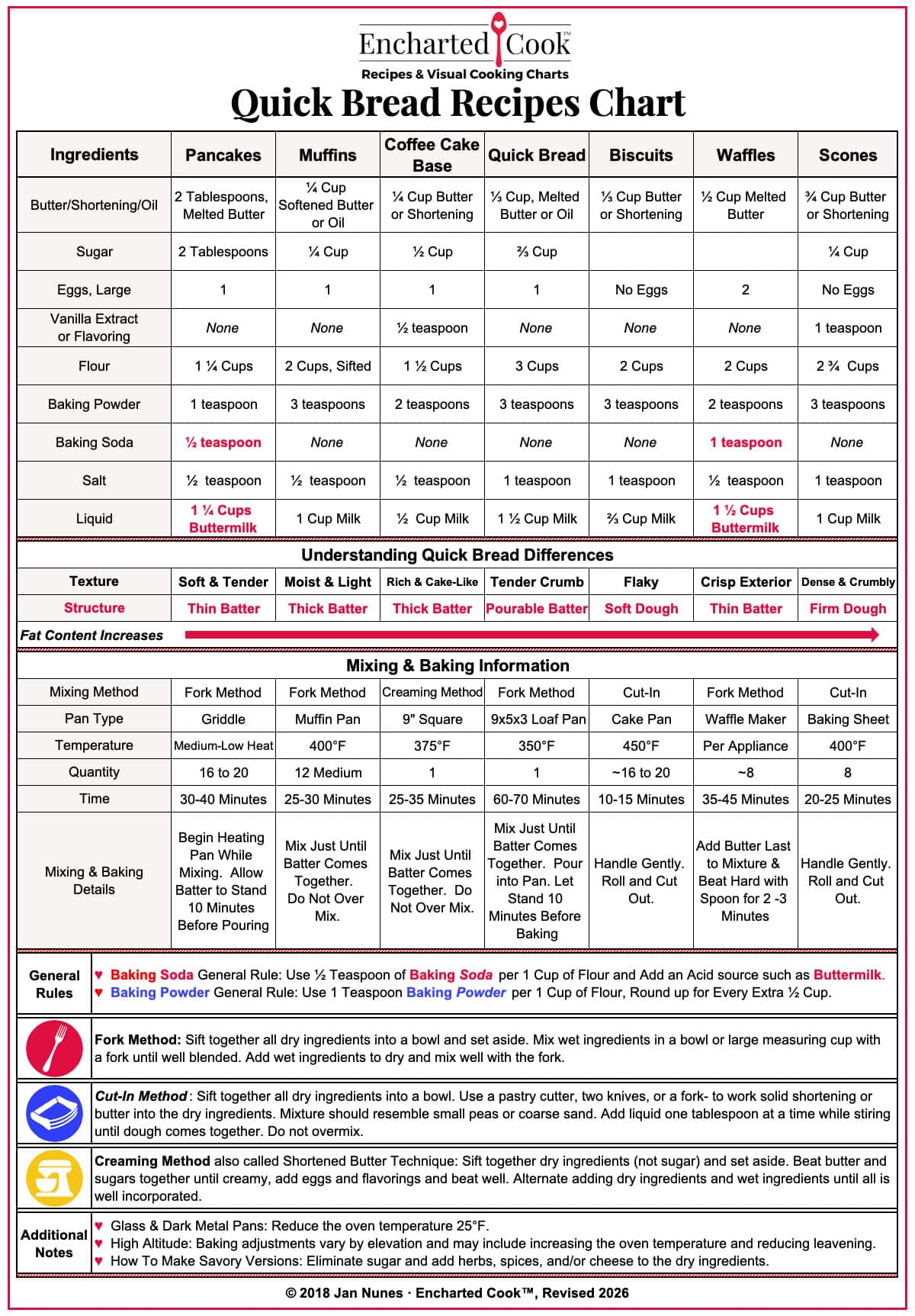
This chart breaks down the ingredient ratios, textures, and baking details for seven quick breads side by side. You'll see how fat content shapes everything; from pancakes' thin, pourable batter to scones' firm, crumbly dough. Plus, why pancakes and waffles both use buttermilk while most other quick breads use regular milk.
The chart also covers mixing method, pan type, baking temperature, quantity, and timing for each bread, plus general rules for when to use baking powder versus baking soda.
Additional notes cover adjustments for glass and dark pans, high altitude baking, and how to make savory versions of any quick bread.
Did you know?
Not all quick breads are baked in an oven. Pancakes, waffles, griddle cakes, corn cakes, and Welsh cakes are all quick breads that are cooked on a hot griddle, skillet, or waffle iron. What they have in common is that they are leavened with baking powder or baking soda rather than yeast.
Common Mixing Methods for Quick Breads
Quick breads use three basic mixing methods. The method you choose depends on the type of fat in the recipe and the texture you want to achieve.
Cut-in Method
Sift together all dry ingredients into a bowl. Use a pastry cutter, two knives, or a fork to work solid shortening or butter into the dry ingredients. The mixture should resemble small peas or coarse sand. Add liquids one tablespoon at a time while stirring until the dough comes together. Do not overmix.
Fork Method
Sift together all dry ingredients into a bowl and set aside. In another bowl or large mixing cup, mix all wet ingredients with a fork. Add the wet ingredients to the dry and mix with the fork.
Creaming Method - aka Shortened Butter Technique
Sift together the dry ingredients, excluding sugar, and set aside. Beat butter and sugars together until light and creamy. Add eggs and flavorings and beat well. Alternate adding dry ingredients with wet ingredients until all are well incorporated. For more detailed instructions that include images, see my article "The Creaming Method".
Quick Bread Recipes FAQs
The biggest differences come down to fat content, liquid ratio, and mixing method. Pancakes start with just 2 tablespoons of butter and a thin, pourable batter, while scones use ¾ cup of butter and a firm dough - and every quick bread in between falls along that spectrum. See the full ingredient ratios and texture comparisons in the Quick Bread Recipes Chart above.
A general rule is to use ½ teaspoon of baking soda per cup of flour when your recipe includes an acid like buttermilk, and 1 teaspoon of baking powder per cup of flour when it doesn't. The chart above shows exactly which leavener each quick bread uses and why - including which ones use both.
Biscuits and scones use the Cut-In Method, working cold, solid butter into the dry ingredients, which creates pockets of fat that produce their signature flaky, crumbly layers. Muffins use the Fork Method, which combines wet and dry ingredients quickly for a tender, moist crumb. The mixing method section above explains all three quick bread methods in detail.
Most quick breads adapt beautifully to savory flavors. Simply eliminate the sugar and add herbs, spices, cheese, or other savory ingredients to the dry ingredients. Biscuits, scones, muffins, and quick bread loaves all work particularly well as savory variations. Check the chart above for the base ingredient ratios to start from.
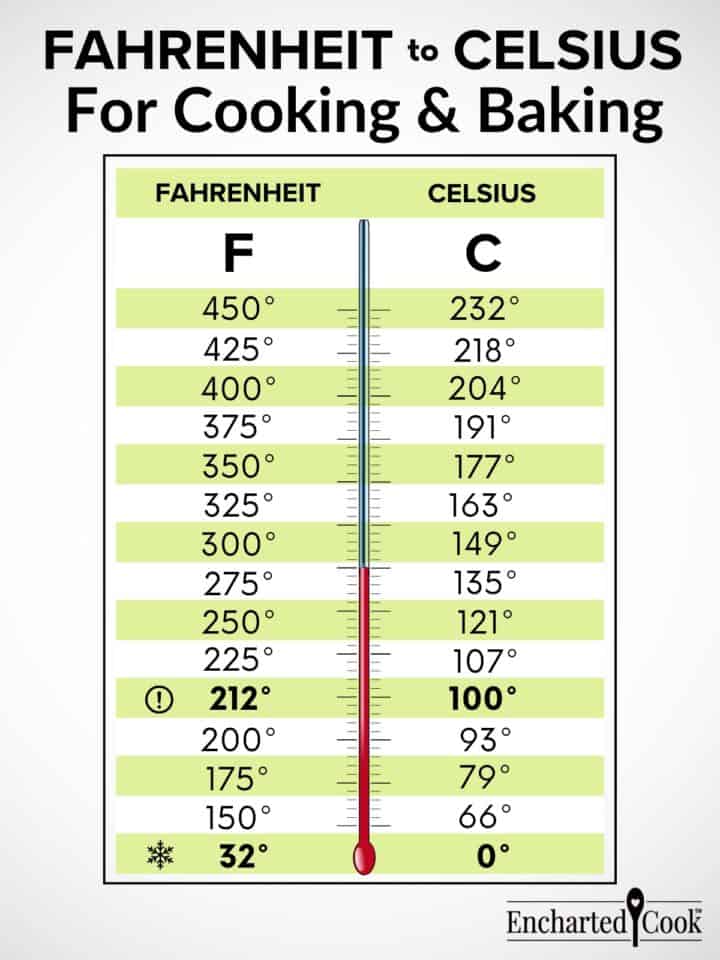
Yes, but you'll need to make two adjustments: decrease the oven temperature by 25 degrees and reduce the baking time by 5 to 10 minutes. The chart above includes this and other helpful baking notes including adjustments for glass and dark metal pans.

More Baking Charts and Kitchen Reference Guides




Comments
No Comments