
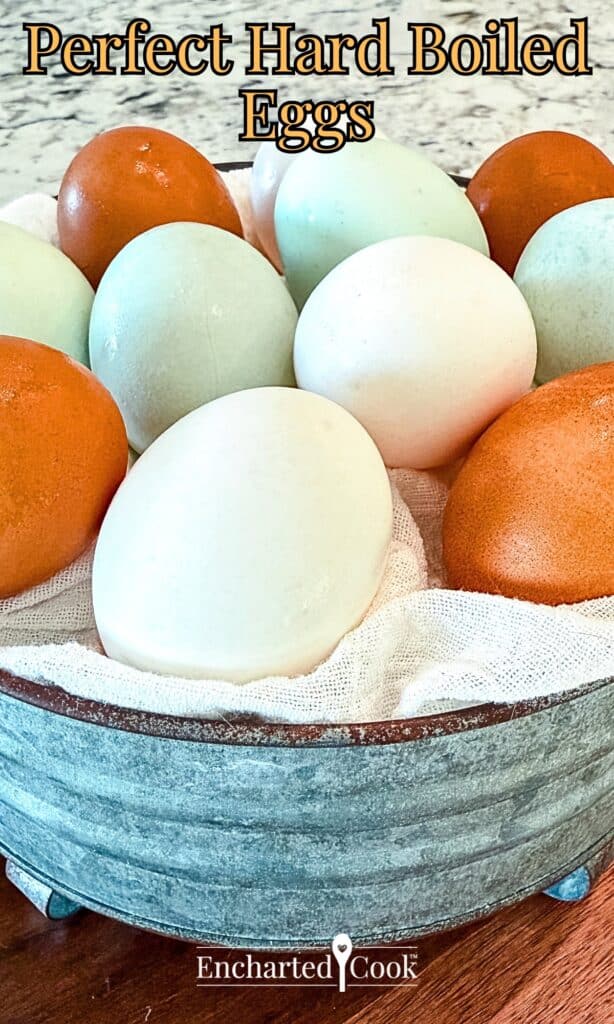
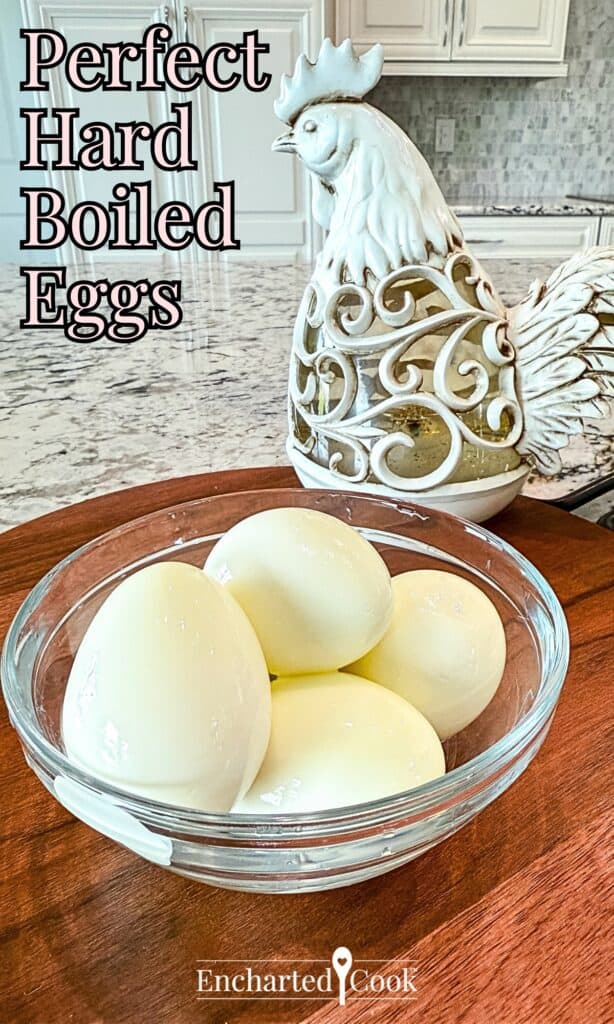
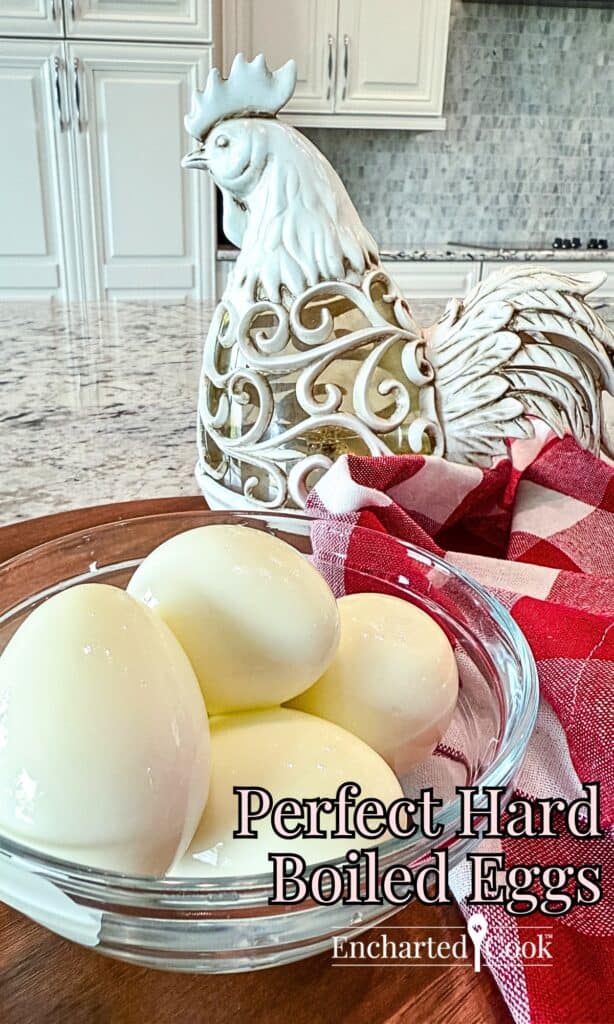
Perfect Hard Boiled Eggs are easy to peel when you follow a few simple steps, use eggs that at least a week old, and an egg piercer tool.
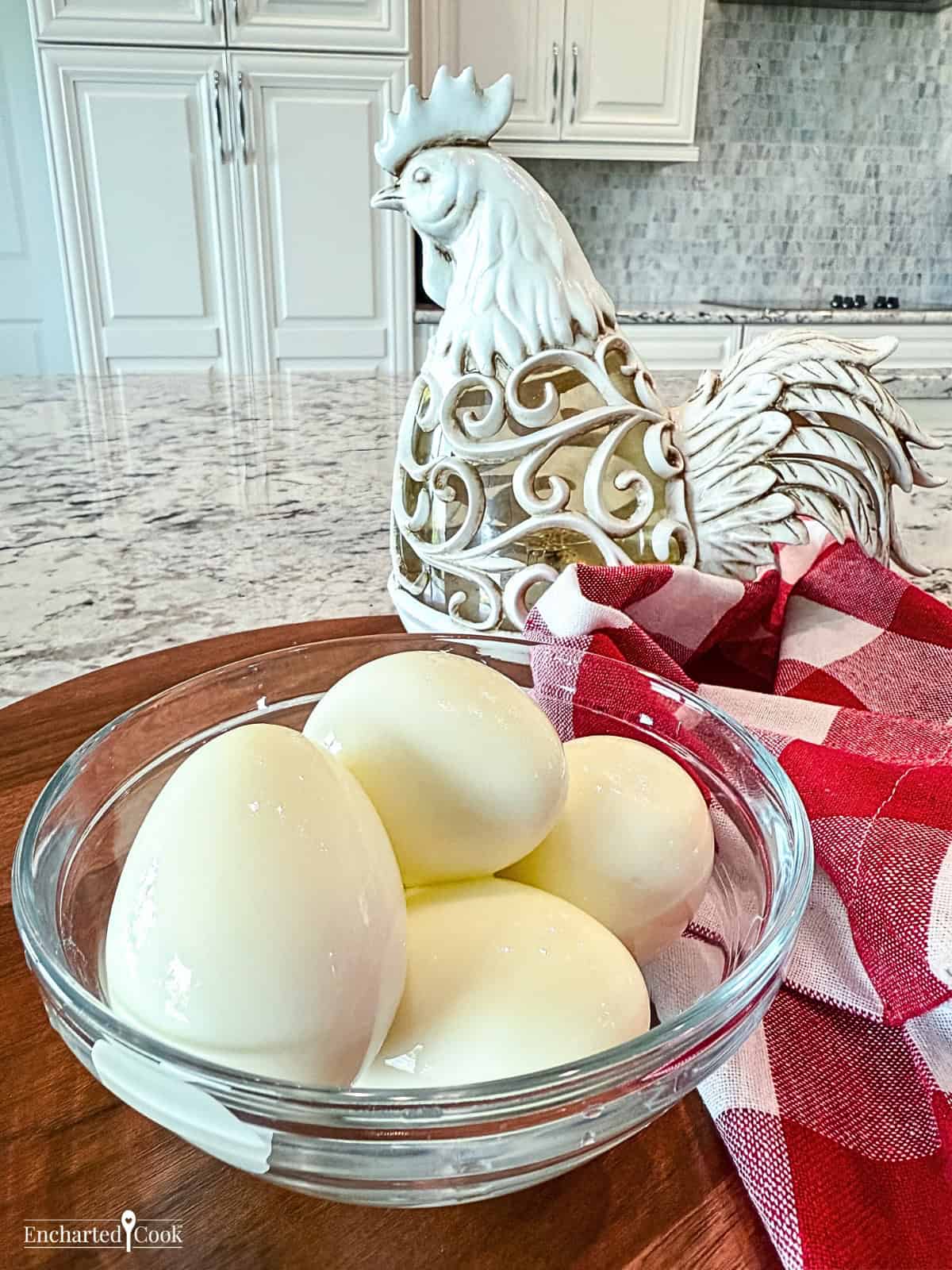
If you have tried every tip for making hard boiled eggs and still have trouble with getting them to peel easily, I've got a solid method for you to get that perfectly cooked hard boiled egg.
There is nothing to add to the water, just a few simple steps, and handy, dandy tool that is Julia Child approved to make a perfect hard boiled egg that peels easily.
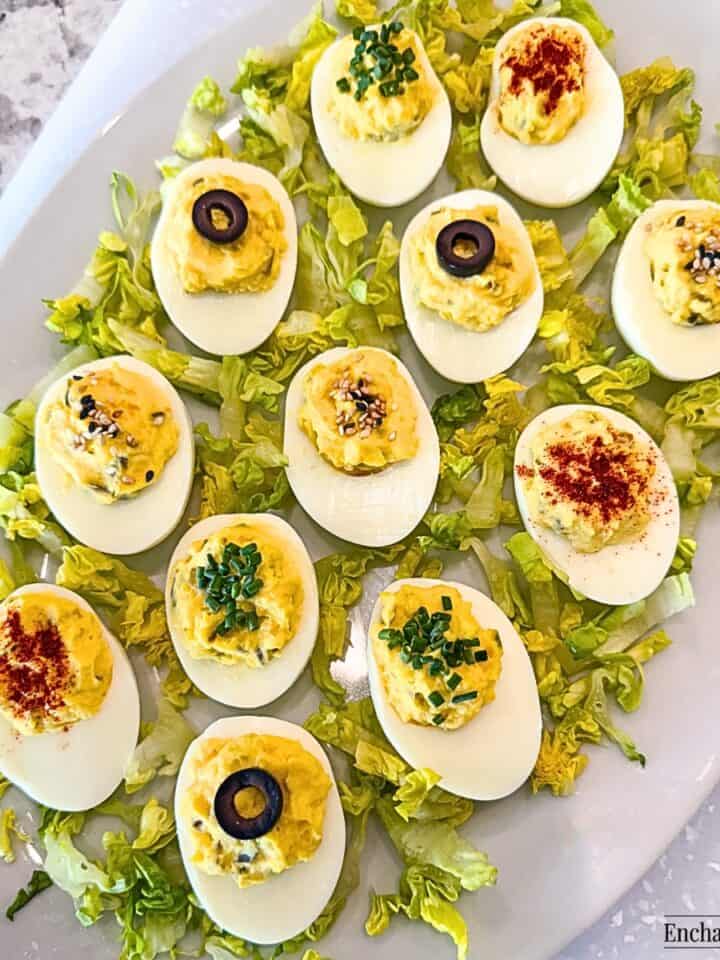
These hard boiled eggs are perfect for snacking, cut up for salads, or used for making deviled eggs that are always a hit at potlucks and get-togethers for family and friends.
Jump to:
- What Eggs Can I Use?
- About This Method
- Ingredient Notes
- Step-by-Step Instructions
- How to Peel Hard Boiled Eggs
- How Long to Boil Eggs for Hard Boiled Eggs
- Hard Boiled Eggs: Problems and Solutions
- My Top Tips
- Ways to Use Hard Boiled Eggs
- Equipment
- Make-Ahead & Storage
- More Recipes with Eggs You'll Love
- 📖 Recipe
- 💬 Comments
What Eggs Can I Use?
These directions are for large-sized chicken eggs. But, I've also listed the cooking times for medium and extra-large eggs down below.
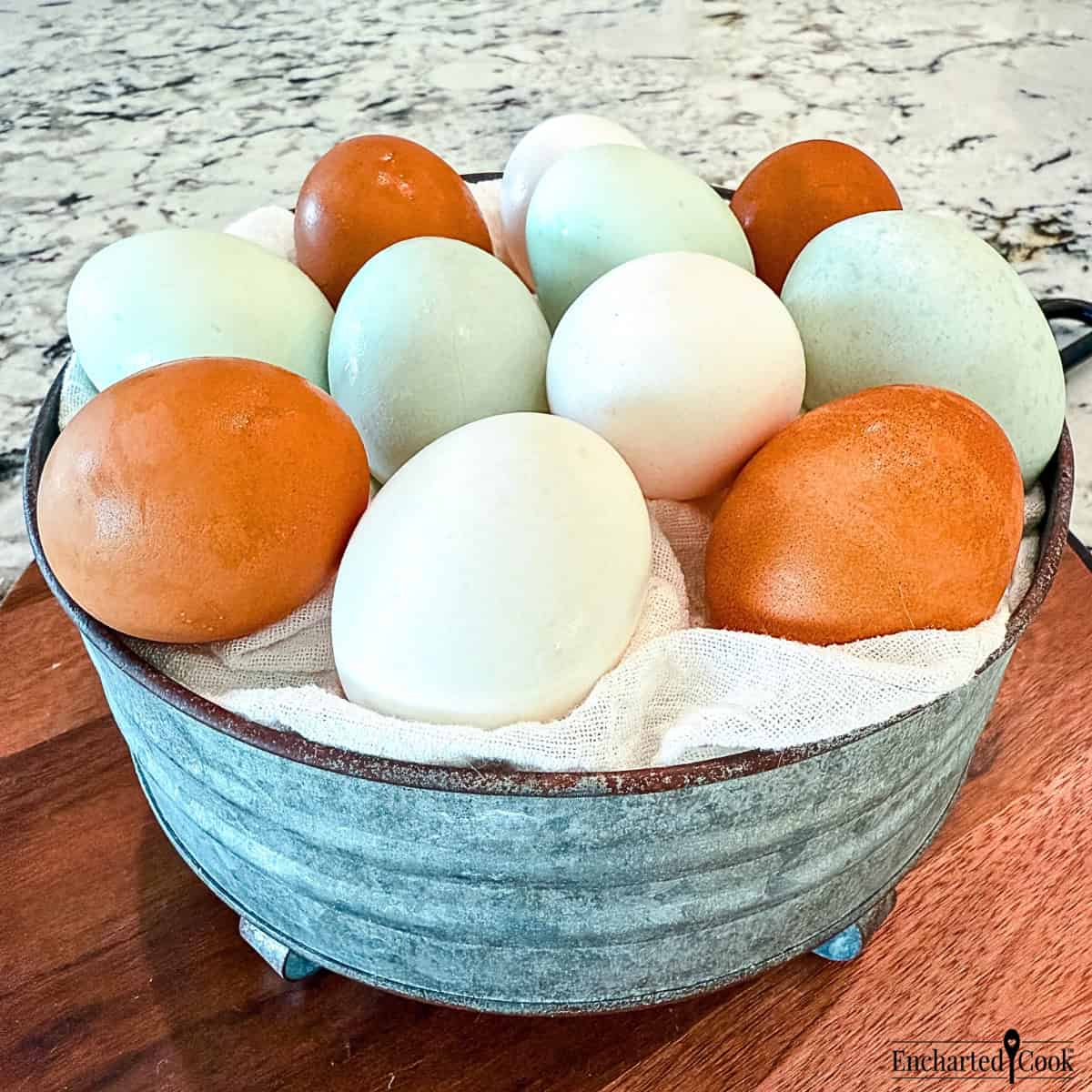
Also note, the color of the shell does not matter, as the egg inside is the same across all types of chickens and will cook the same way.
About This Method
I think every home cook has struggled with finding a foolproof method that will yield a perfectly cooked hard boiled egg that has a tender white and fluffy yolk, and will also peel easily. In essence, we are challenged with two problems:
- Overcooking the Eggs. Which causes an unattractive green ring around the yolk, makes the whites rubbery, and dries out the yolk.
- The Eggs Resist Peeling. Which causes pits and divots in the whites, making ugly deviled or filled eggs, or plain halved eggs for salads.
Over the years I've seen all sorts of advice about cooking eggs to the hard boiled stage. Like adding various substances like baking soda or vinegar to the water, cooking the eggs from a cold water start, and various timings of boiling the eggs and then letting them sit in hot water. For me none of these worked.
My mom's method was to add eggs to a pot of simmering whole potatoes and let the eggs cook with the potatoes when she was making potato salad. It was time-efficient, but often created overcooked, rubbery eggs with the green ring. To her, it didn't matter since the eggs were going to be used for potato salad. In short, we never had deviled eggs.
When I was learning the basics of cooking, I was lucky to see Julia Child sometime in the 1960s on her PBS show "The French Chef" use the method I'm sharing in this post. The key take-aways in that episode were the following:
- Eggs can be straight from the refrigerator or room temperature.
- Put a tiny whole in the large end of the eggshell.
- Add the eggs to rapidly boiling water and adjust the heat to maintain a continuous simmer.
- After cooking the eggs, quickly stop the cooking process by rinsing the eggs in cool water and let them rest in ice water.
This method is nearly foolproof.
So, let's cook!
Ingredient Notes
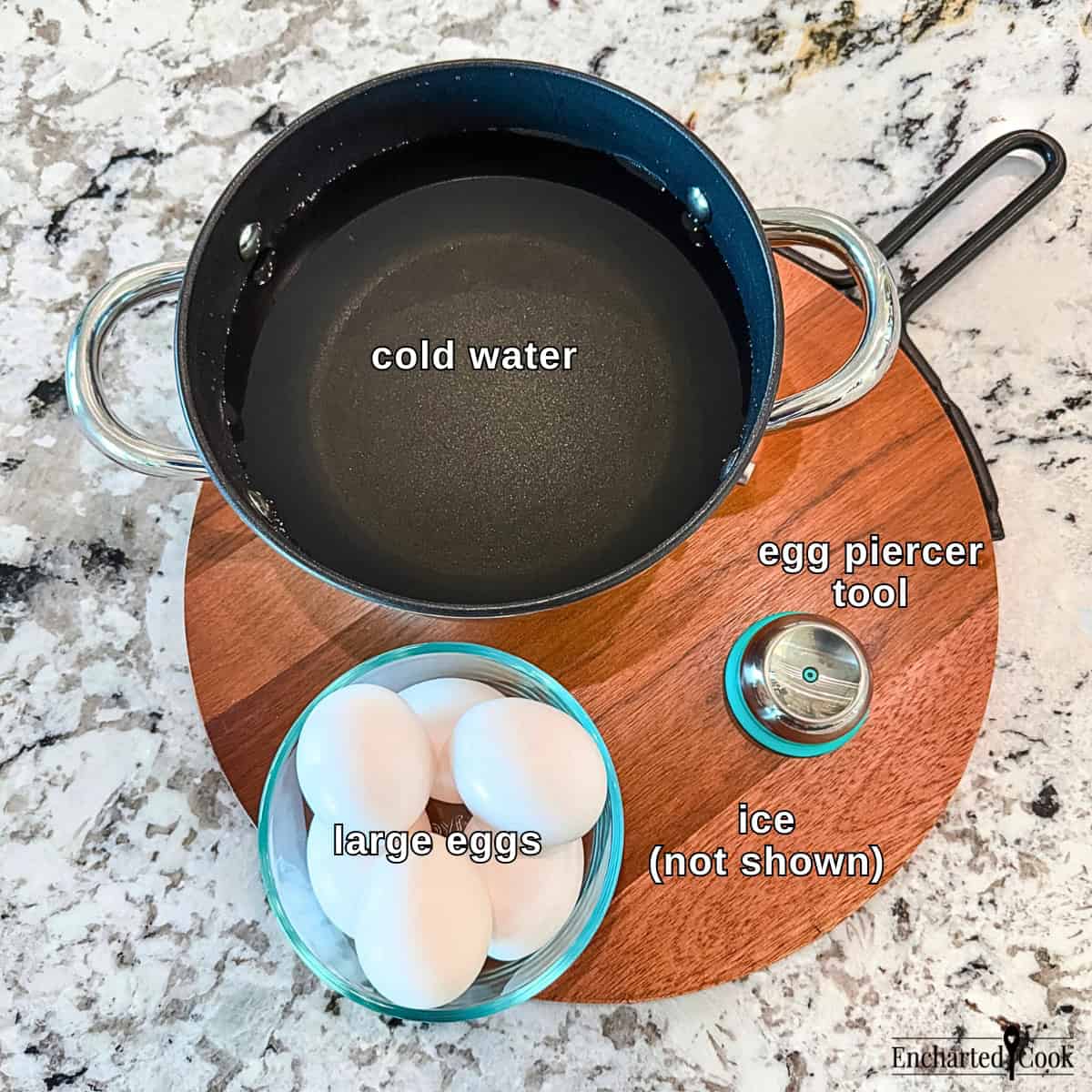
Here's what you need for Perfect Hard Boiled Eggs:
- Large Eggs - For these cooking directions, use large eggs. See the directions below for the cooking times of other sizes of eggs.
- Cold Water - You will need cold water that is heated to a boil to cook the eggs, and you will need additional cold water to rinse them after cooking to stop the cooking process.
- Ice - Ice is needed to thoroughly chill down the eggs after cooking.
Please see the recipe card for the exact quantities.
Step-by-Step Instructions
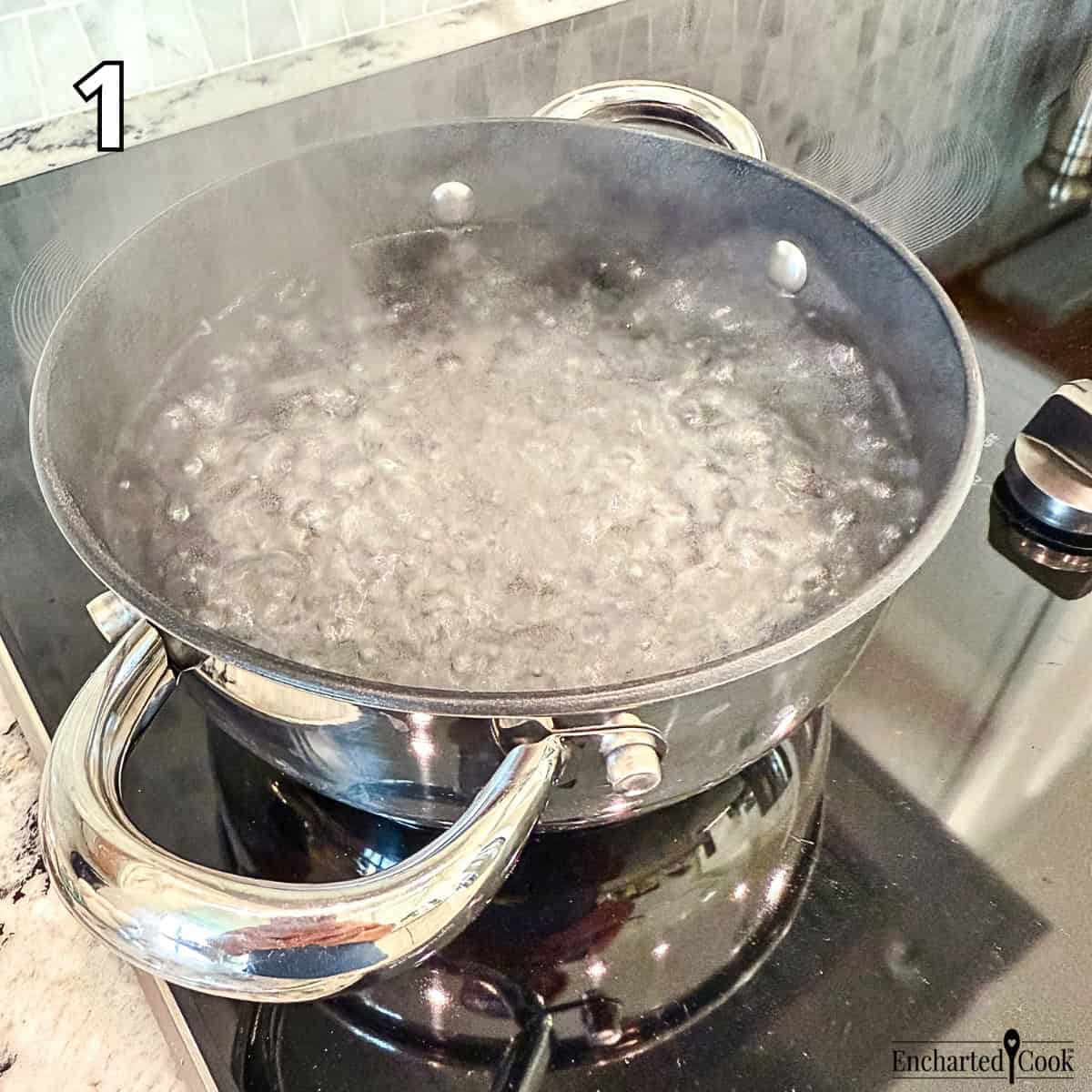
Boil Water. Add water to a large saucepan and bring to a full boil.
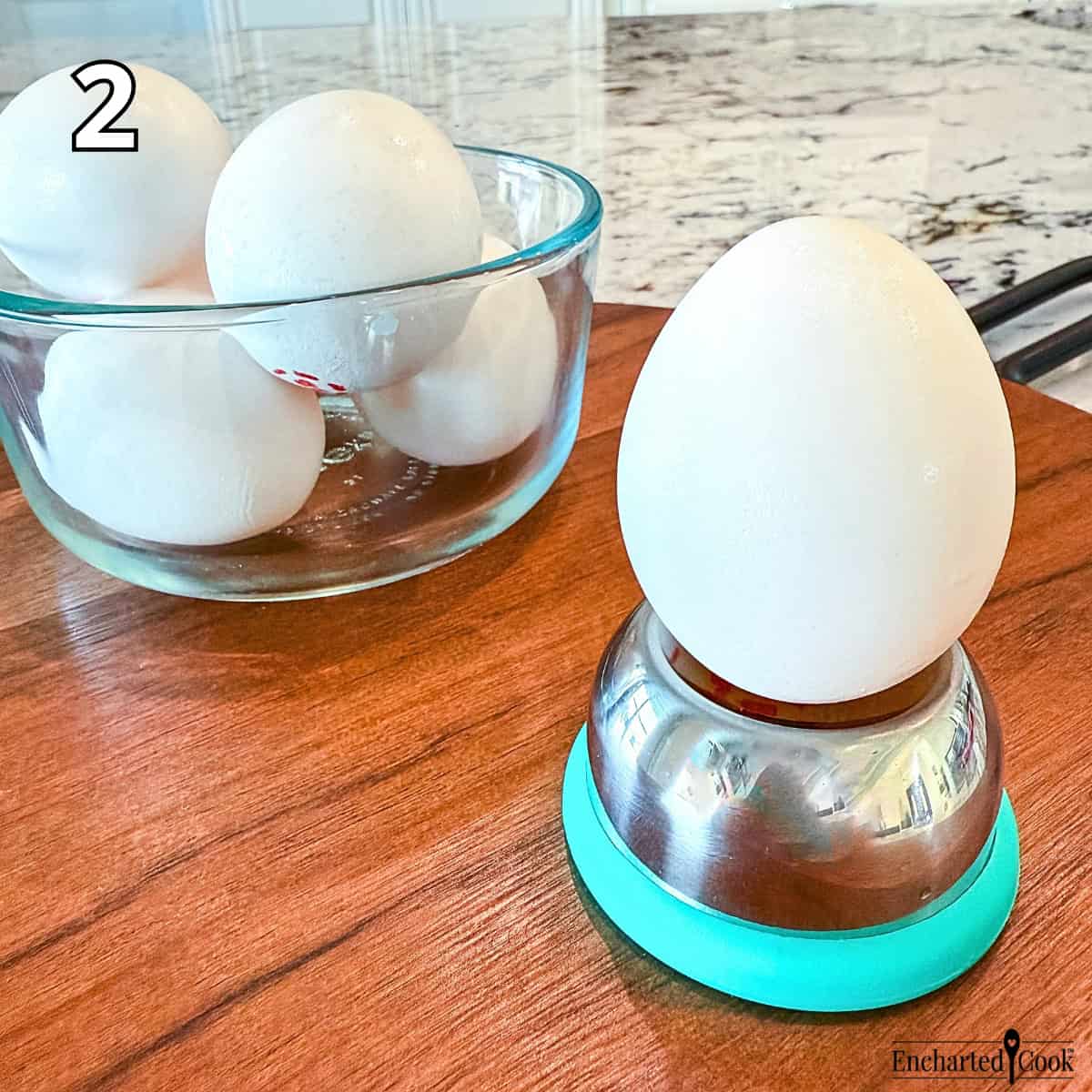
Prepare the Eggs. Make a tiny hole in the large end of each egg with an egg piercer.
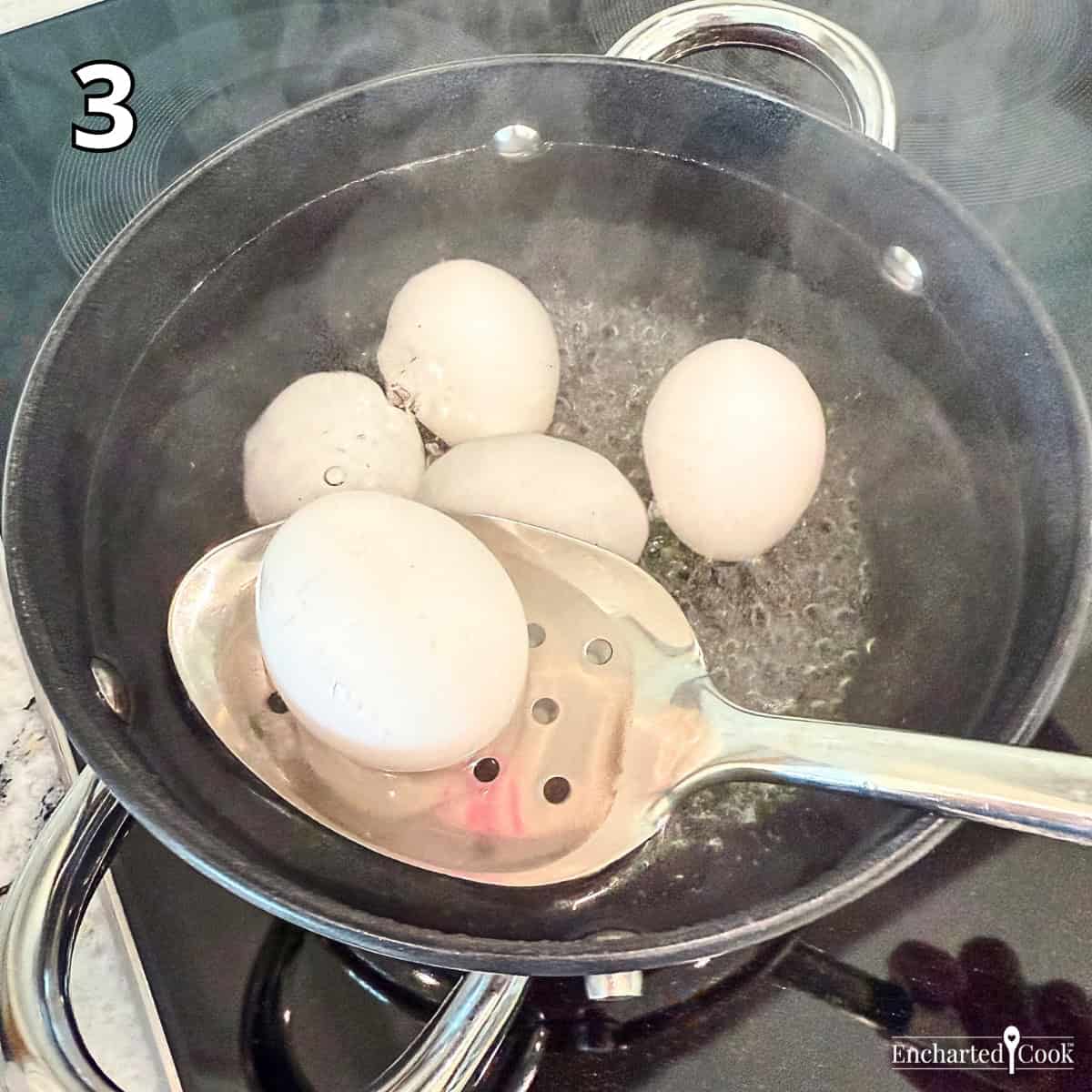
Add Eggs. Using a slotted spoon or an egg basket, place the pierced eggs in the boiling water. Only have a single layer of eggs and do not over-crowd the pan.
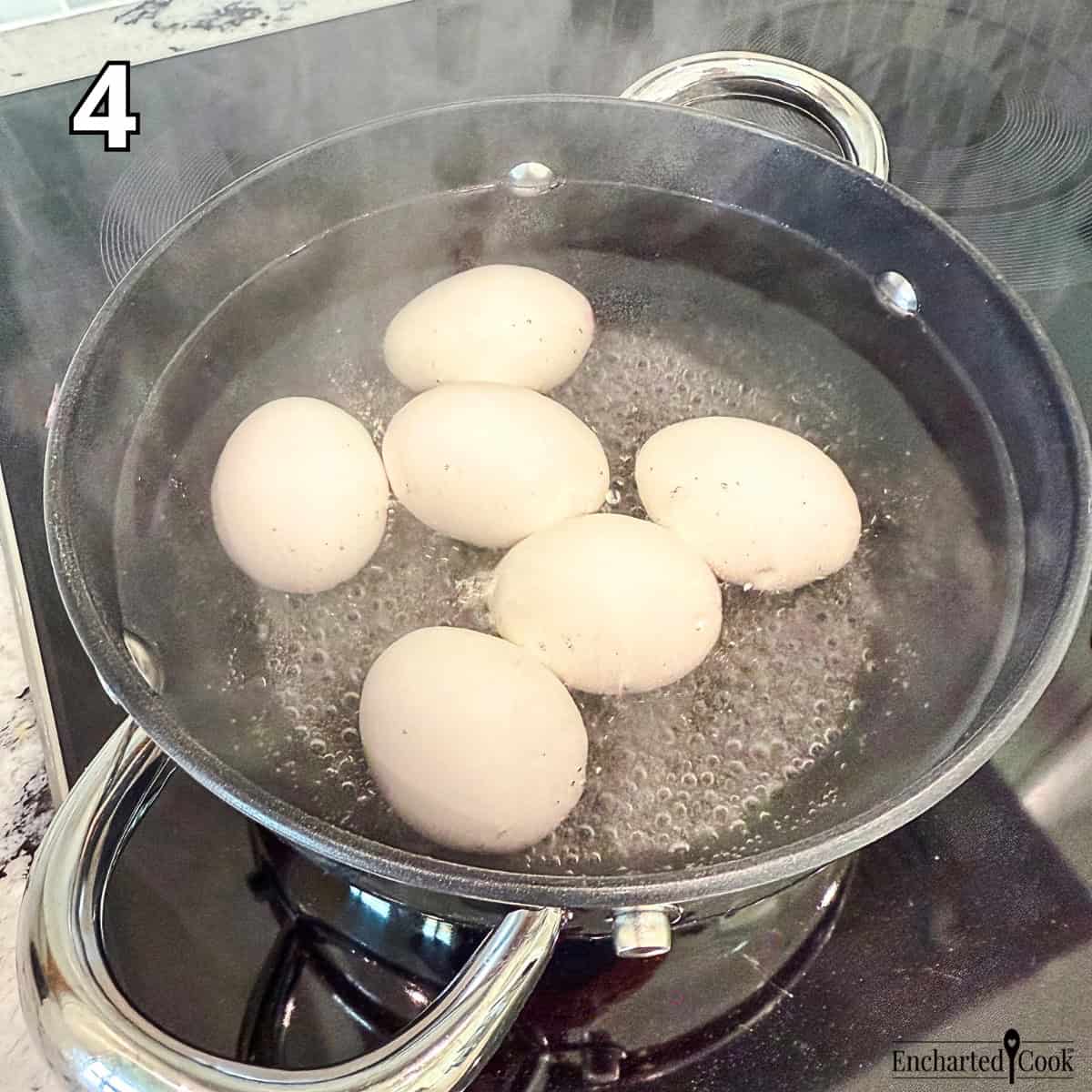
Reduce Heat. Reduce heat to medium to medium-high and let the eggs simmer, uncovered, for 12 minutes. Do not cook the eggs at a rolling boil.
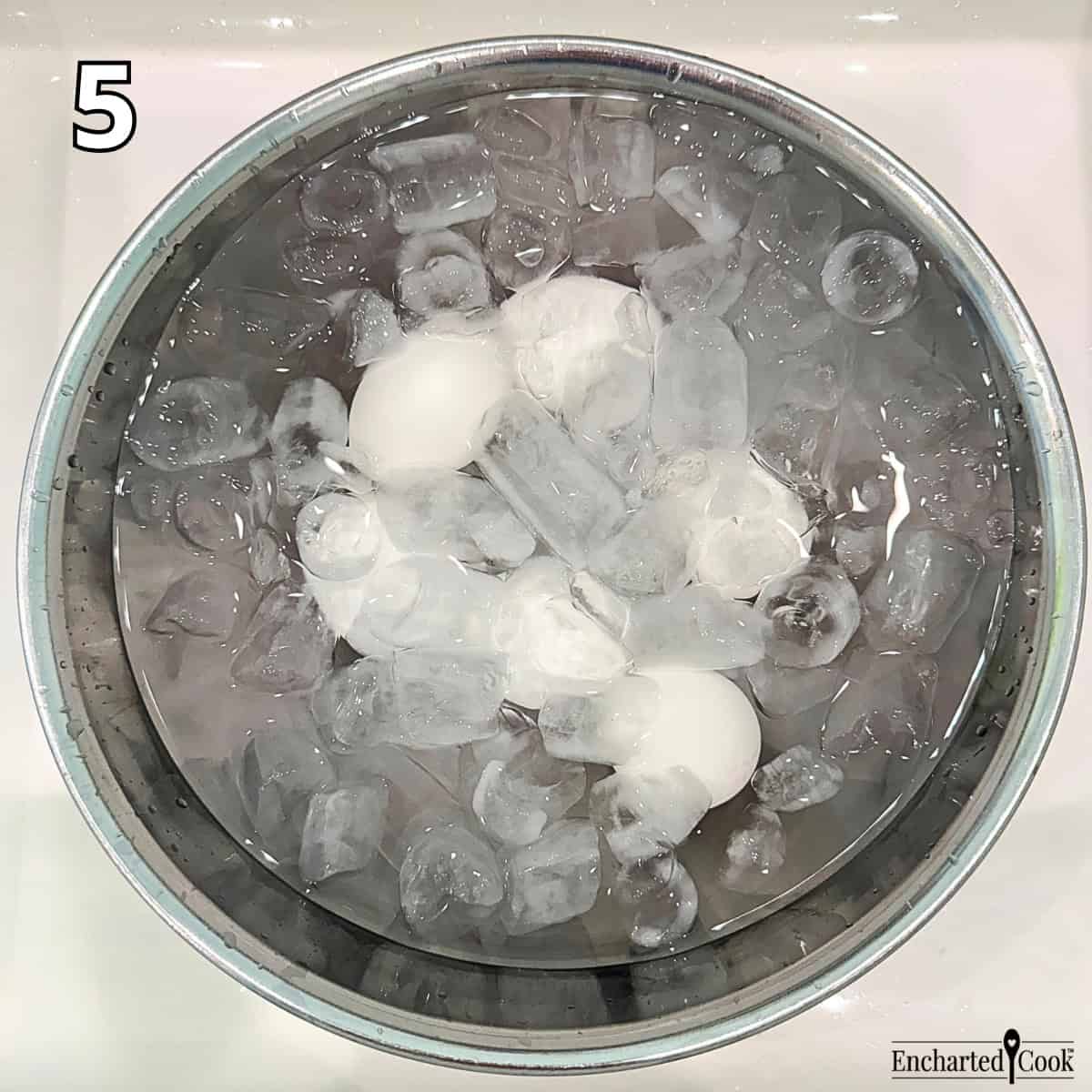
Drain and Ice. Drain eggs and rinse well with cold water. Then, cover the eggs with ice and cold water and allow eggs to cool for 12 minutes.
Use Immediately. If using the eggs immediately, peel the eggs by tapping the large end of the shell against a hard surface. Then lightly roll the egg on a hard surface to crack the sides of the eggshell. Peel the shell away from the cooked egg under a slow stream of cold water from the tap.
Storage. Eggs come with their very own storage, the shell. If you plan to use the hard boiled eggs later, place the cooked eggs, still in the shell, in a small bowl and refrigerate them. The shell will protect the eggs from any odors in your fridge. Hard boiled eggs will keep up to 5 days in the refrigerator.
How to Peel Hard Boiled Eggs
Eggs typically have an airspace at the large end between the shell and the egg inside and it is easier to peel the shell from that end.
It is also important to find the membrane that covers the egg. Being able to peel the membrane with the shell makes it easier to peel hard boiled eggs.
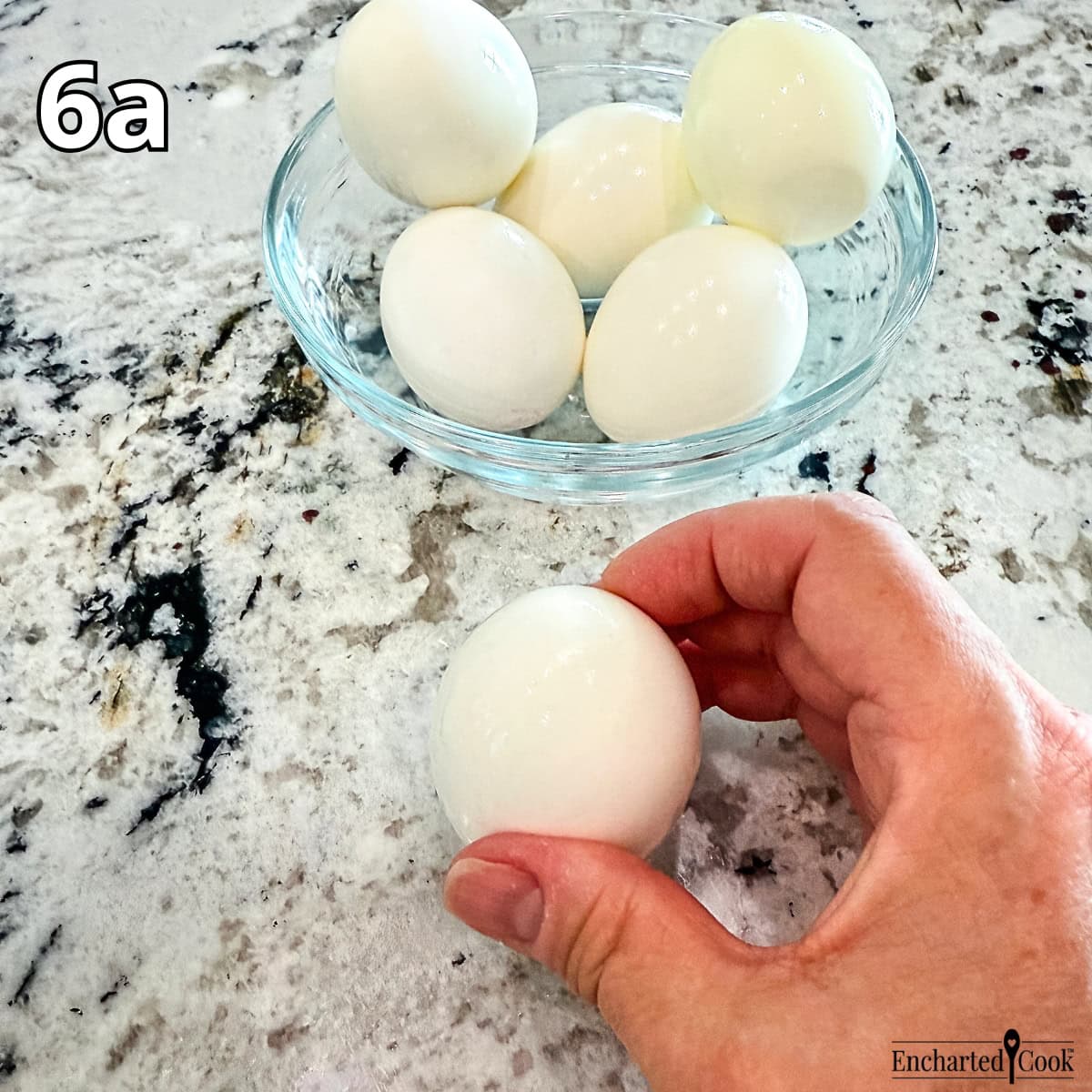
Tap the large end of the shell against a hard surface.

Then lightly roll the egg on a hard surface to crack the sides of the eggshell and loosen it from the cooked egg.

Starting at the large end, peel the shell away from the cooked egg under a slow stream of cold water from the tap.
How Long to Boil Eggs for Hard Boiled Eggs
For hard boiled eggs that are tender and not rubbery, use the following cooking times:
| Egg Size | Boiling Time |
|---|---|
| Medium Eggs | 9 Minutes |
| Large Eggs | 12 Minutes |
| Extra Large Eggs | 15 Minutes |
After boiling any size of eggs to the hard-boiled stage, rinse them thoroughly in cold water and let them soak in an ice bath for a minimum of 5 minutes to stop the cooking process and prevent carryover cooking.
I have found that 12 minutes in an ice bath is the perfect length of time to stop the cooking and make it easier to peel the cooked eggs.
Hard Boiled Eggs: Problems and Solutions
| Problem | Solution |
|---|---|
| The white is rubbery. | The eggs are overcooked. Simmer rather than boil the eggs and for less time. |
| The yolk is very dry and crumbly. | The eggs are overcooked. Simmer the eggs for less time. |
| The yolk is ringed in green. | The eggs are overcooked. Simmer the eggs for less time. |
| The white is too soft and easily tears during peeling. | The eggs are undercooked. Simmer the eggs for a longer time. |
| The yolk is sticky. | The eggs are undercooked. Simmer the eggs for a longer time. However, this is a great boiled egg for a bowl of ramen! |
| The eggs crack while cooking. | Either the shell is damaged, or the eggs were boiled too violently. Inspect the eggs for any damage to the shell, and simmer the eggs at a lower temperature. |
| The eggs don't peel easily. | Use eggs that are at least 7 to 10 days old. The egg contents of aged eggs shrink from the eggshell, making them easier to peel. Also, peel eggs soon after chilling for an easier time peeling them. Lastly, use an egg piercer tool to allow some water from cooking the egg to seep between the eggshell and the egg contents. |
My Top Tips
♡ Invert the Eggs. Want perfectly centered yolks? Before cooking, place the eggs upside down in the fridge overnight to center the yolks. Placing them upside down will allow the yolk to become more centered in the egg before you cook them.
♡ Older Eggs are Best. Eggs that are 7 to 10 days old peel the easiest.
♡ Avoid the Green Ring. Cook the eggs for 12 minutes for a perfectly cooked hard boiled egg. This gives a beautiful, golden, and semi-dry yolk without the dreaded green ring.
Ways to Use Hard Boiled Eggs
- Classic Potato Salad
- Egg Salad Sandwiches
- Green Salads like a Chef Salad, Cobb Salad, Green Goddess Salad, or Salad Niçoise
- Pickled Deviled Eggs
Equipment
Egg Piercer. An egg piercer is a small device that lets you put a small hole in the eggshell. This small hole allows water to seep into the shell around the egg contents, which cushions the cooked egg from the shell as it cooks.

You place the egg large end down, press lightly down, and a small pinhole is made in the bottom of the egg. If you do not have an egg piercer, you can also use a pushpin to make a small hole in an eggshell. Be careful not to push the pin in beyond the shell.
The American Egg Board does not recommend using an egg piercer that is unsterilized because it could introduce bacteria into the egg. So, the best practice is to sterilize an egg piercer before and after using it. Simply, place the piercer in a heat-safe bowl and cover it with boiling water for 5 minutes to sterilize it.
Foldable Metal Basket. A foldable metal steamer/fry/egg basket is incredibly handy to lower all of the eggs at once into the boiling water.


I don't consider it essential, because you can use a large slotted or plain spoon, but if you are making hard boiled eggs often you may find it to be a time saver. An additional benefit is that all of the eggs get exactly the same amount of cooking time!
Make-Ahead & Storage
- Once cooked, iced, and drained, you can store hard-boiled eggs still in the shell in the refrigerator for up to 5 days.
- Once peeled, they are best if eaten on the same day.
- Hard boiled eggs can lose moisture and will become misshapen if you store them peeled for more than several hours. So, storing them in the shell is better than removing the egg from the shell.

More Recipes with Eggs You'll Love

♡ Did you love this method for Perfect Hard Boiled Eggs? Please leave a 🌟 star rating and let me know how things went in the ✍ comments below. Thanks for visiting!
📖 Recipe

Perfect Hard Boiled Eggs
Want to save this recipe?
Ingredients
- 6 Large Eggs, Cold from the Fridge
- Water
- Ice
Instructions
- Boil Water. Add water to a large saucepan and bring to a full boil.Water
- Prepare the Eggs. While the water comes to a boil, make a tiny hole in the large end of each egg with an egg piercer.6 Large Eggs
- Add Eggs. Using a slotted spoon or an egg basket, place the pierced eggs in the boiling water. Only have a single layer of eggs and do not over-crowd the pan.
- Reduce Heat. Reduce heat to medium to medium-high and let the eggs simmer, uncovered, for 12 minutes. Do not cook the eggs at a rolling boil.
- Drain and Ice. Drain eggs and rinse well with cold water. Then, cover the eggs with ice and cold water and allow eggs to cool for 12 minutes.Ice
- Use Immediately. If using the eggs immediately, peel the eggs by tapping the large end of the shell against a hard surface. Then lightly roll the egg on a hard surface to crack the sides of the eggshell. Peel the shell away from the cooked egg under a slow stream of cold water from the tap.
Notes
Nutrition
Per 1 serving. All nutritional information on this site is an estimate. Your results may vary.
Encharted Cook™ or Jan Nunes shall not be liable for adverse reactions or any other outcome resulting from the use of recipes or recommendations on this website or actions you take as a result.
© 2018-2026 Encharted Cook, Jan Nunes. All rights reserved.




Jan Nunes says
We love having hard boiled eggs on hand in the fridge for a quick high protein snack!