
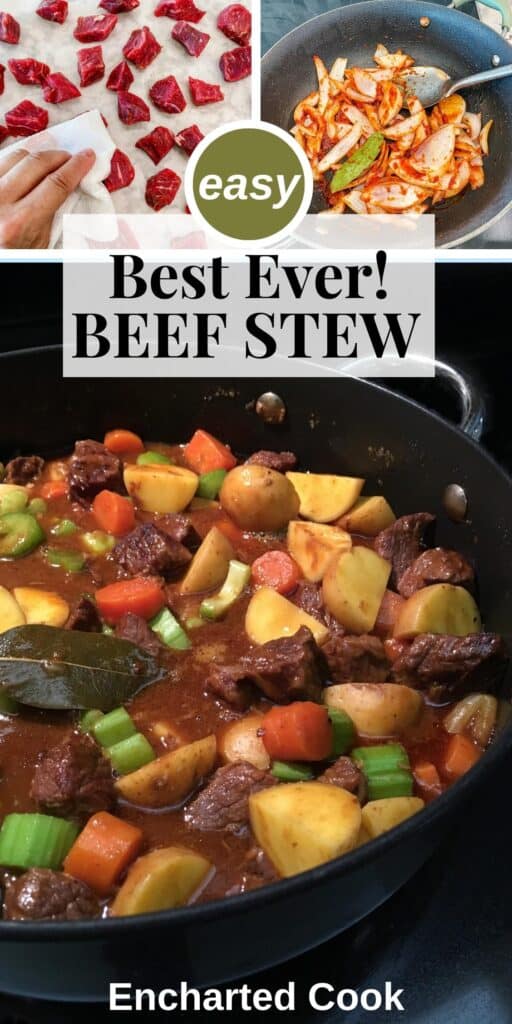

Sunday Best Beef Stew is an old-fashioned stovetop stew with tender pieces of beef, carrots, potatoes, and celery in a rich brown gravy. It takes nearly four hours to make, but most of that time is a gentle, hands-off simmer.
The deep, savory flavor comes from building the stew in stages. The beef is seasoned, lightly dredged in Wondra flour, and browned in batches. The onion is sautéed in the beef drippings, and the pan is deglazed so none of those flavorful browned bits are left behind.
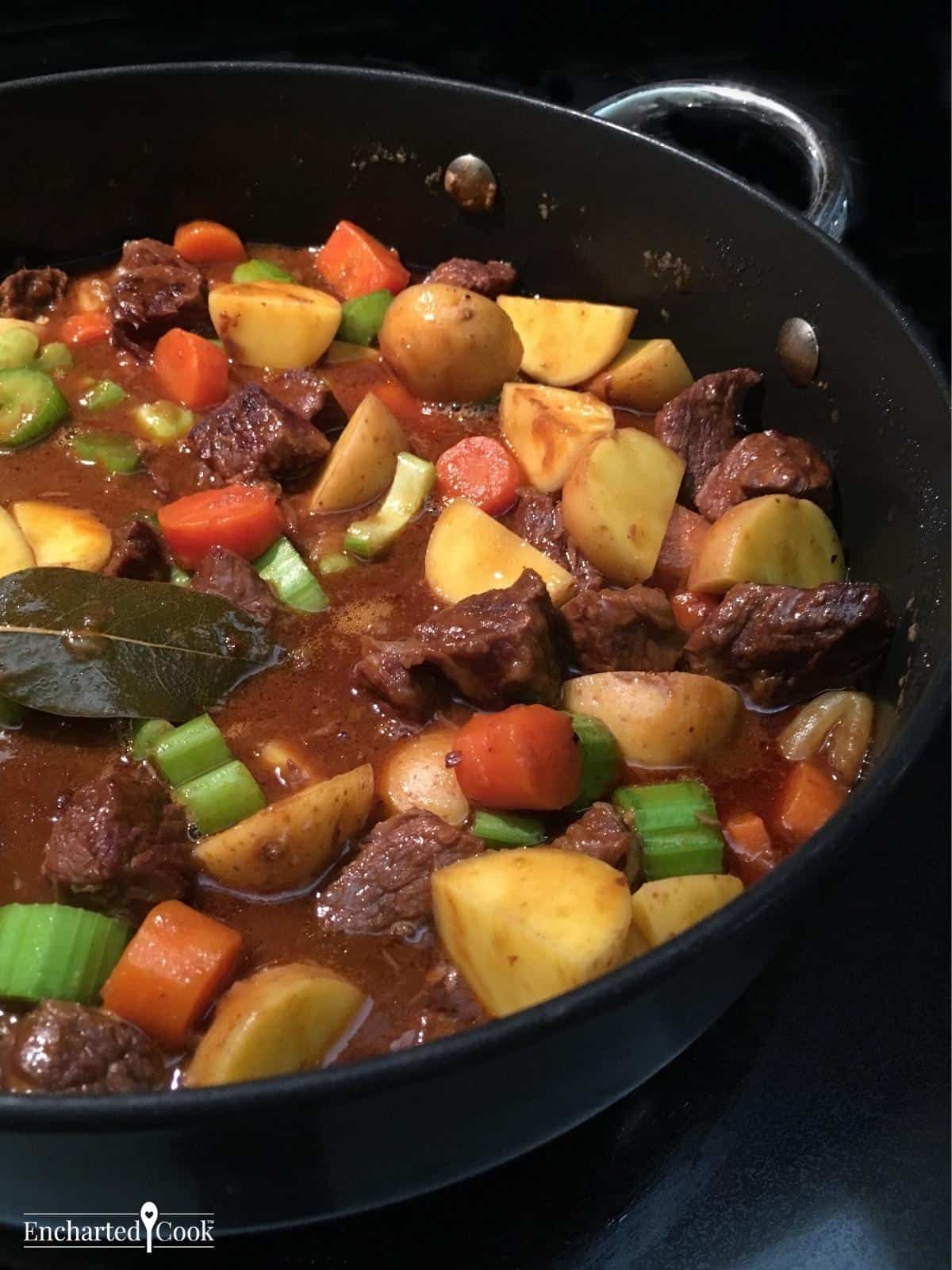
Then the beef simmers slowly until nearly fork-tender before the vegetables are added in stages. The result is a hearty one-pan supper made with time, care, and sound cooking technique.
🔍 Quick Look: Sunday Best Beef Stew Recipe
- Ready In: Prep time 20 minutes; Cook time 3 hours 30 minutes
- Time to Allow: About 4 hours from start to serving
- Servings: 8
- Calories: 402 kcal
- Main Ingredients: Beef stew meat, yellow onion, beef stock, carrots, potatoes, celery, and Wondra flour
- Flavor Profile: Rich • Savory
- Cooking Techniques: Sear (Brown) • Sauté • Deglaze • Simmer
- Mixing Techniques: Stirring
- Difficulty: Easy, using foundational flavor-building techniques
- Why You'll Love It: It's a hearty one-pot meal with tender beef and vegetables in a rich gravy developed through browning and slow simmering.
- Perfect For: Cozy autumn and winter dinners, Sunday supper and relaxed family meals
Jump to:
- 🔍 Quick Look: Sunday Best Beef Stew Recipe
- Why You'll Love This Beef Stew
- About This Recipe
- How This Beef Stew Recipe Builds Flavor
- Ingredient Notes
- Substitutions & Variations
- How to Make Sunday Best Beef Stew
- My Top Tip
- What to Serve with Beef Stew
- Equipment
- Make-Ahead & Storage
- More Recipes That Build Flavor
- 📖 Recipe
- 💬 Comments
Why You'll Love This Beef Stew
- It's a complete one-pot supper. Beef, potatoes, carrots, celery, and rich gravy make a satisfying meal in one pan.
- The gravy thickens naturally as it simmers. Wondra flour clings to the beef and gradually thickens the reducing stock, so no last-minute thickener is needed.
- It teaches foundational cooking skills. Seasoning, searing, sautéing, deglazing, and simmering build layers of flavor-and the same sequence can be used in many other recipes.
About This Recipe
I would love to attribute this recipe to someone special in my past, but I honestly don't remember where I found the original basic recipe. It may have come from a neighbor or from one of my mom's old cookbooks. I only know that I have made this same beef stew since I was 16. The only significant change I've made is buying good beef stock instead of making it myself.
For me, beef stew is the kind of cozy meal made for a cold, drizzly day, when something can simmer gently on the back of the stove without needing constant attention. It scents the house with savory, home-cooked goodness while you spend time with family, catch up on chores, or settle in with a book.
A good stew requires time-not hours of hands-on work, but time for the beef to become tender and the flavors to deepen. When I make it for family and friends, that time is part of what the dish means to me:
time & care spent = love
~ Jan
How This Beef Stew Recipe Builds Flavor
The rich, savory flavor in this beef stew does not come from one special ingredient. It is built layer by layer through six deliberate steps:
Season → Dredge → Sear → Sauté → Deglaze → Simmer
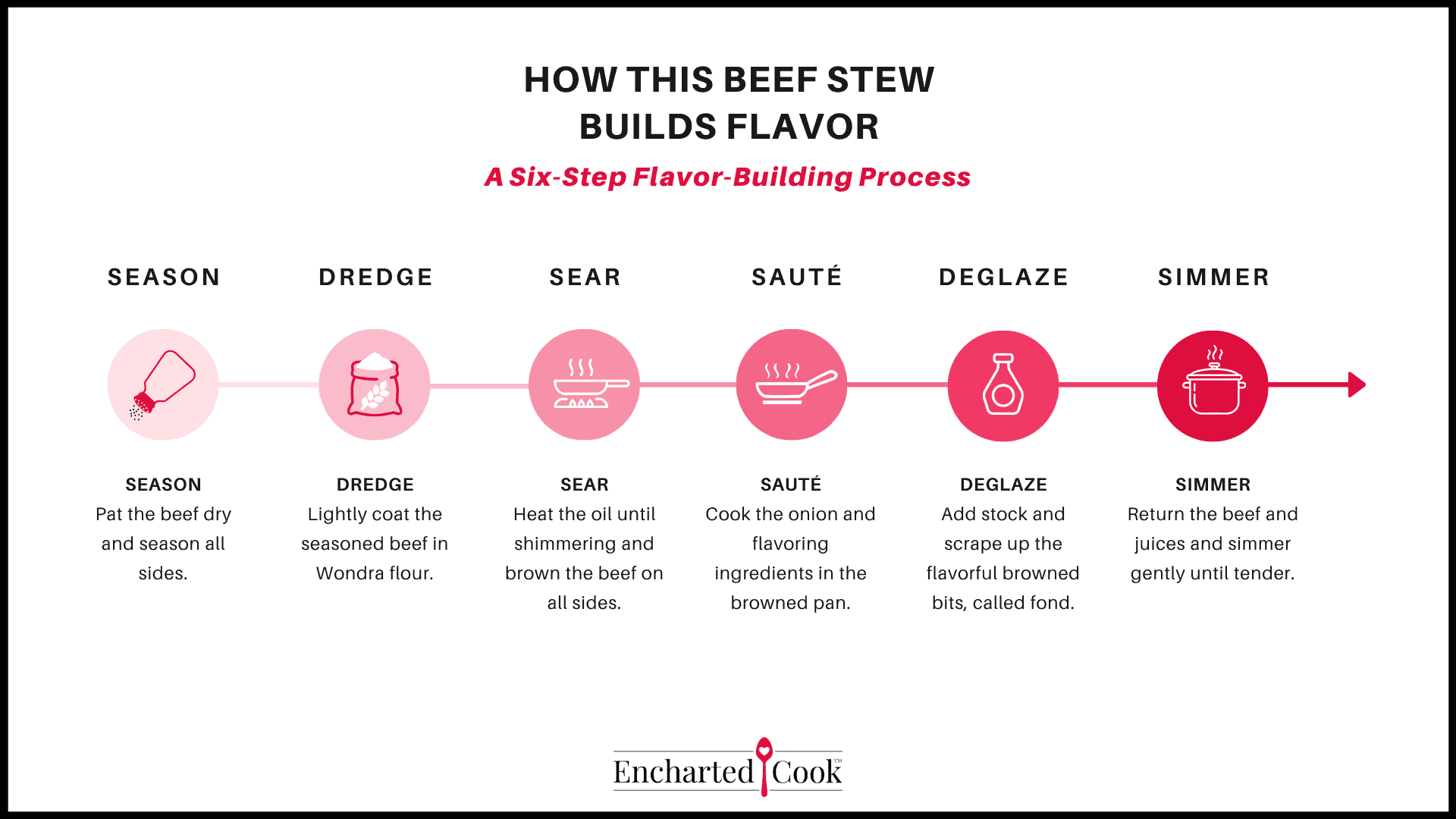
- SEASON. Patting the beef dry prepares its surface for browning, while seasoning it with salt begins building flavor from the very first step.
- DREDGE. A light coating of Wondra flour browns along with the beef and later thickens the reducing stock into a smooth gravy.
- SEAR. Browning the beef creates complex savory flavor through the Maillard reaction and leaves flavorful browned bits in the pan.
- SAUTÉ. Cooking the onion in the beef drippings and briefly cooking the tomato paste mixture adds another layer of flavor.
- DEGLAZE. Adding stock and scraping the pan releases the browned bits, called fond, so their concentrated flavor becomes part of the gravy.
- SIMMER. A long, gentle simmer tenderizes the beef and melds the ingredients, while the partially covered pan allows the stock to reduce, concentrating its flavors.
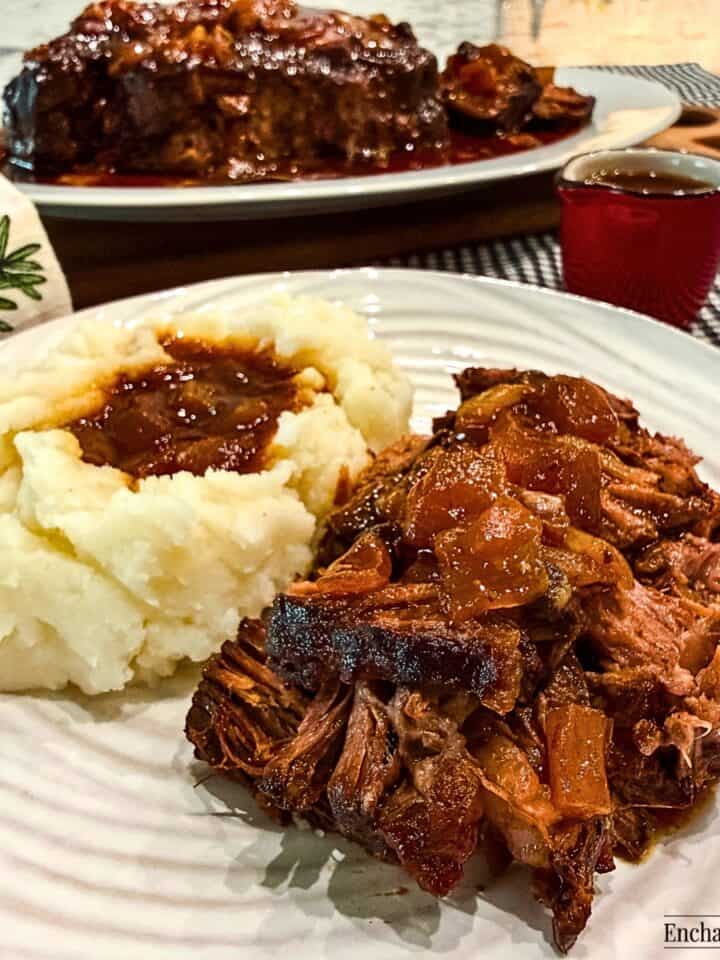
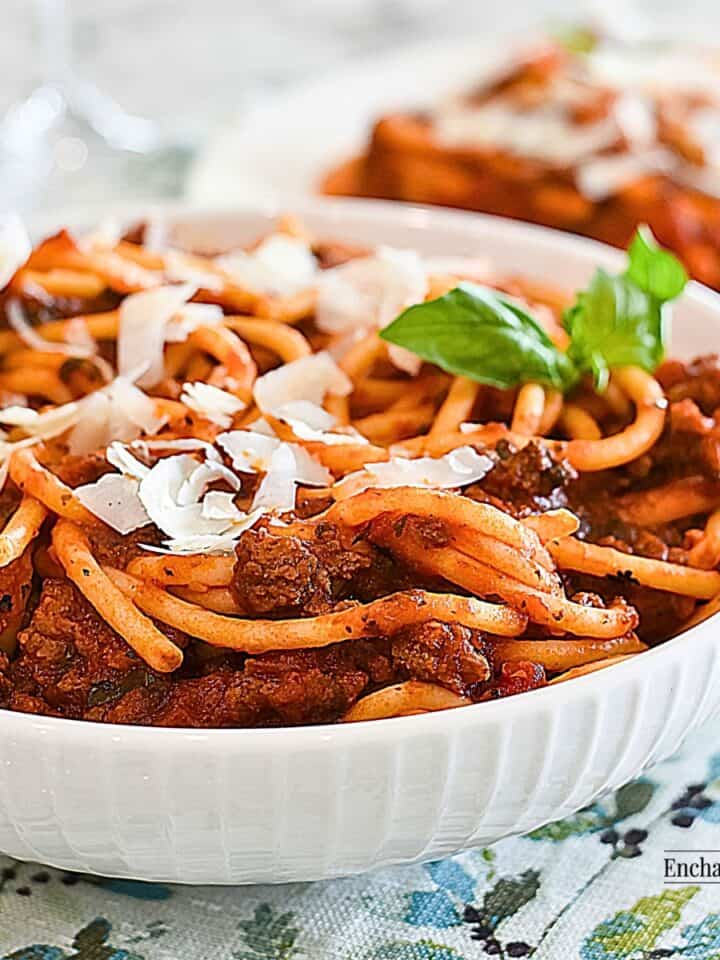
You'll see this same foundational sequence used in recipes like Italian Meat Sauce and Slow Cooker Barbecue Chuck Roast, where browning the meat and sautéing the onion build flavor before the long, slow cook.
Ingredient Notes
Here's everything you'll need to make this Sunday Best Beef Stew. Please see the recipe card for the exact quantities.

- Beef Stew Meat - Chuck is the best choice for this stew because its connective tissue becomes tender during long, slow cooking. You can cut a chuck roast into ¾- to 1-inch cubes or purchase packaged stew meat and cut any unusually large pieces smaller. Packaged stew meat may contain more than one cut of beef.
- Salt - I use plain iodized salt from the round blue box.
- Wondra Flour - This special sauce and gravy flour will make a smooth gravy. You can also use all-purpose flour if you don't have Wondra on hand.
- Safflower Oil - I prefer safflower oil, which has a high smoke point and lets me get a good sear on the beef. But you can use any neutral-flavored cooking oil with a high smoke point.
- Yellow Onion - One large sweet yellow onion is all you need. I like to use Vidalia or Maui onions, but any type of yellow onion will have a sweet, mild flavor.
- Brown Sugar - This gives the gravy caramel notes that go very well with the beef. You only need a little, and you can use light or dark brown sugar.
- Tomato Paste - Tomato paste contributes concentrated tomato flavor, color, and subtle acidity to the gravy.
- Worcestershire Sauce - One word... Umami. Worcestershire sauce brings that "something extra" that makes the stew gravy delicious.
- Bay Leaf - A dried bay leaf is what is added to most stewed and braised beef dishes. This herb pairs well with beef.
- Beef Stock - I prefer to control the amount of salt and add salt to my taste. So I prefer to use a "No Salt Added" or "Low Sodium" beef stock.
- Black Pepper (Optional) - Freshly ground black pepper has a fuller, more aromatic flavor than preground pepper. It is entirely optional in this stew.

- Small Golden Potatoes - The best potatoes for beef stew are new potatoes. Fresh, small golden potatoes are my favorite. But you can also use other new potato varieties like red or white. Save your russet potatoes for baking as they will break down too much and not hold their shape when cooked in a stew.
- Carrots - Use fresh carrots that are peeled or scraped and then cut into large 1-inch chunks. This makes a very hearty stew.
- Celery - Clean the celery well and cut it in 1-inch pieces. It adds a bright flavor to the stew.
Substitutions & Variations
- Add Red Wine. Add 1 cup of good dry red wine to the pan after cooking the onion. Red wine adds wonderful flavor and it has some acidity that helps make the meat tender. Always use a wine you like to drink and don't use "cooking wine". Good choices are single varietals or blends of Cabernet Sauvignon, Merlot, Malbec, Zinfandel, and, of course, Bordeaux.
- Add Fresh Thyme. Thyme goes very well with beef and with bay leaves. If thyme is an herb you like add a small bundle of fresh thyme when you add the bay leaf.
- Substitute Balsamic Vinegar. Instead of using brown sugar, you can substitute one tablespoon of balsamic vinegar. It will add both sweetness and acidity to the stew.
How to Make Sunday Best Beef Stew
♡ So, let's cook!
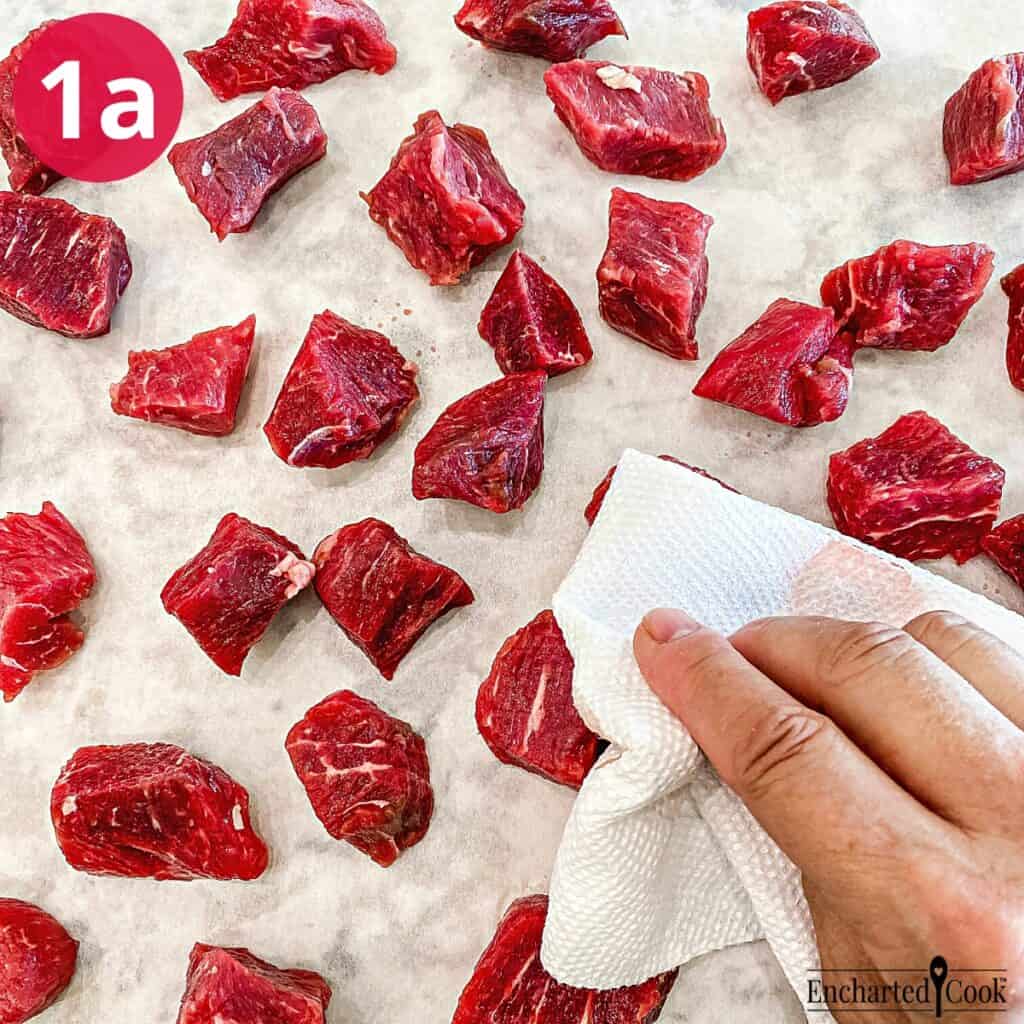
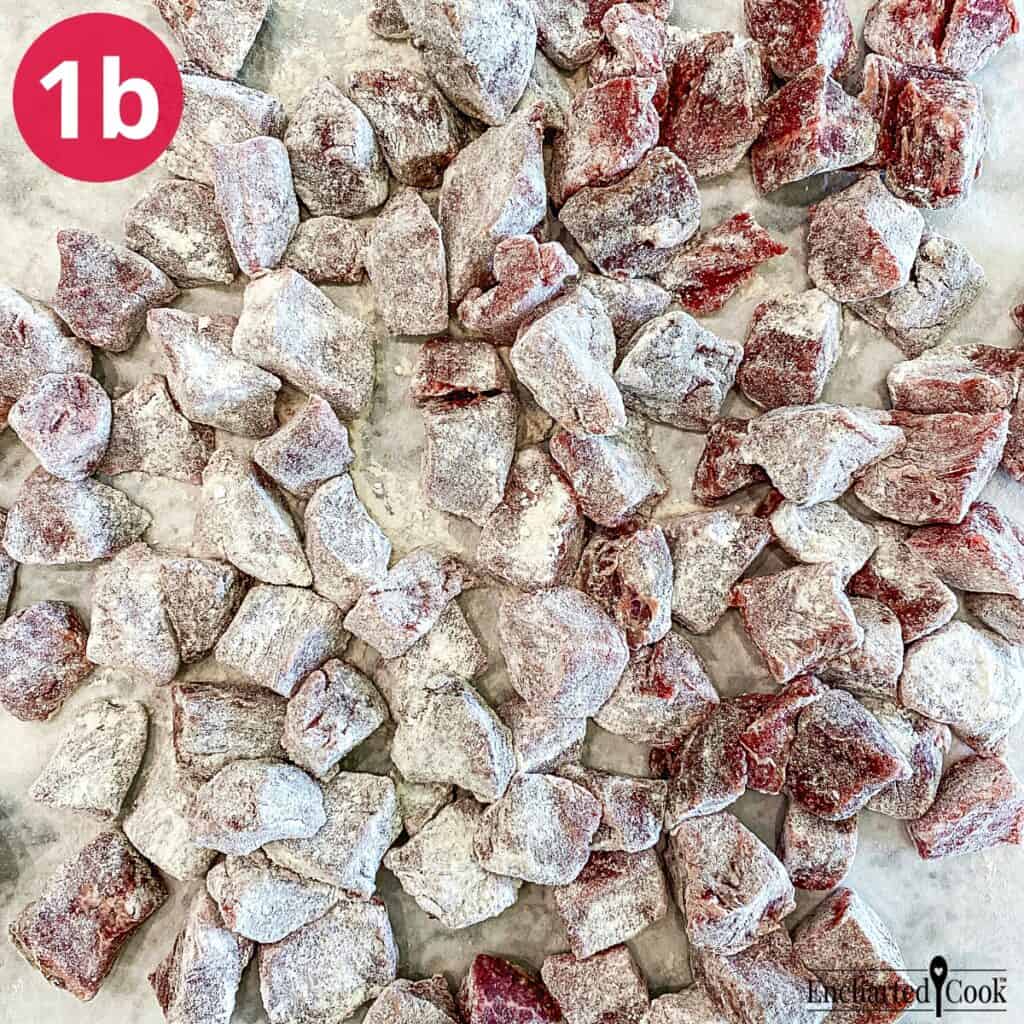
- Step 1 - Dry and Dredge the Beef. Remove the beef from the packaging and dry it well with a paper towel or clean kitchen towel. Drying the meat is essential for achieving deep browning when the meat is seared. Cut any unusually large pieces into ¾- to 1-inch cubes so the beef cooks evenly. Sprinkle the meat with salt and Wondra Flour, coating all sides. Shake off excess flour.
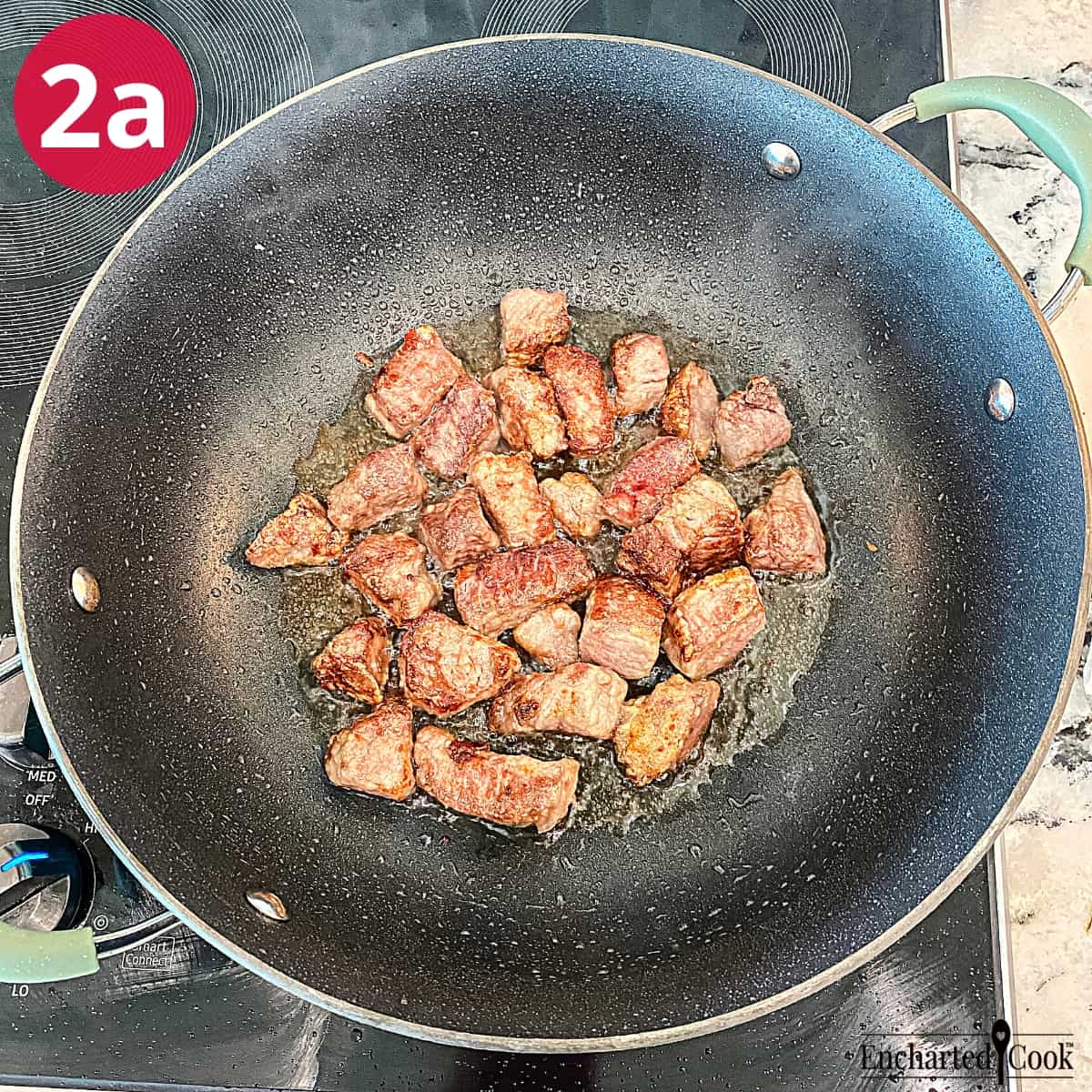
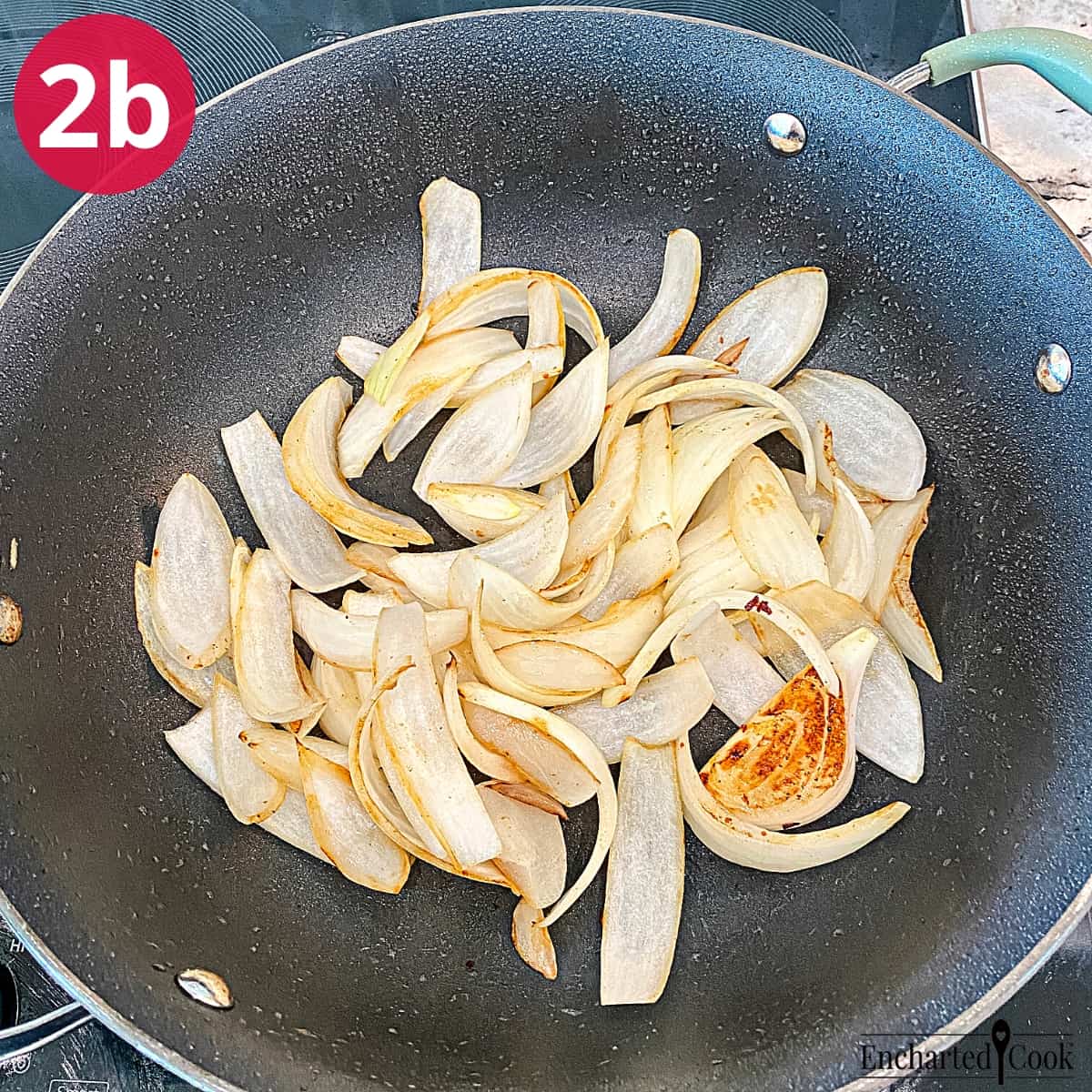
- Step 2 - Brown the Beef and Onion. In a 6 to 8-quart heavy-bottomed pot or deep pan, heat about half of the oil over medium heat. When the oil is shimmering, add the beef in a single, uncrowded layer. Brown the beef in batches, turning the pieces to brown all sides and adding more oil as needed between batches. Transfer each browned batch to a plate. Set the browned beef aside for later.
Add the onion wedges to the remaining oil and beef drippings, adding a little more oil only if the pan is dry. Cook 5 to 7 minutes or until the onion is lightly browned and translucent.
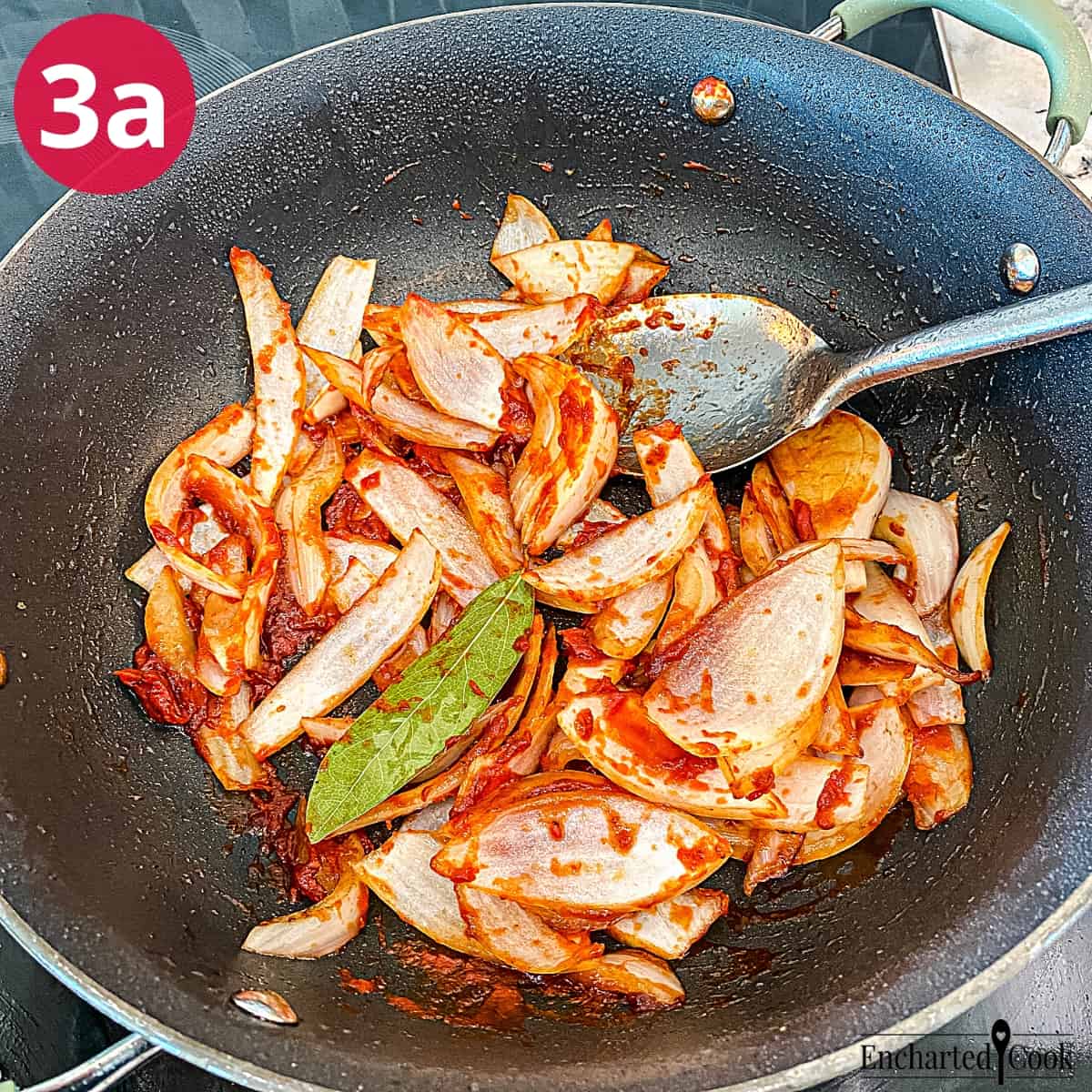
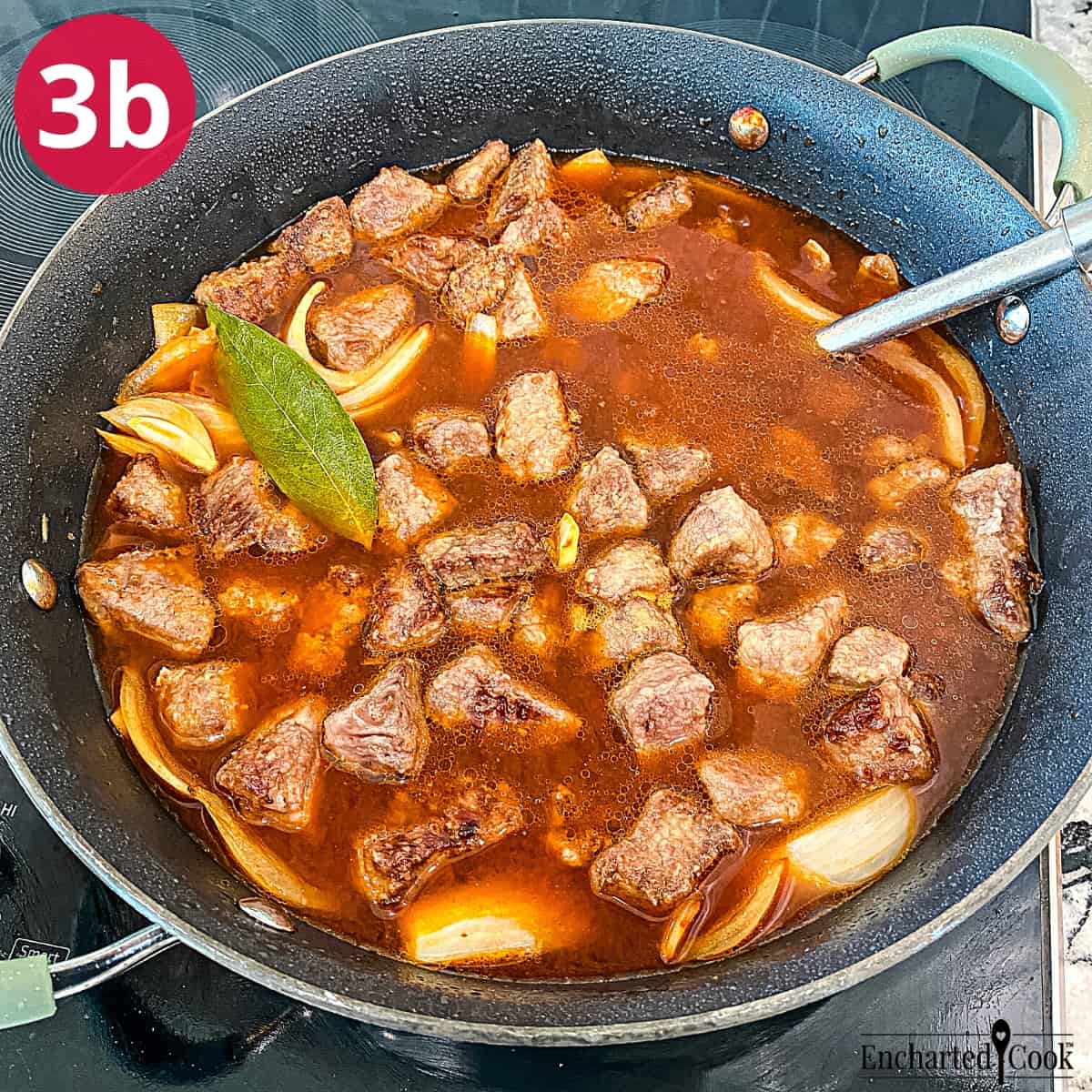
- Step 3 - Make the Gravy Base. Add the brown sugar, tomato paste, Worcestershire sauce, and bay leaf. Cook, stirring constantly, for 1 to 2 minutes, until the tomato paste darkens slightly and the mixture is fragrant. Slowly add the beef stock while scraping the bottom of the pan to loosen the flavorful browned bits.
Return the browned beef and all accumulated juices to the pan. Bring to a boil, reduce the heat to maintain a gentle simmer, and set the lid slightly ajar. Simmer for 2 hours, stirring occasionally, until the meat is nearly fork-tender and the stock has reduced by approximately half. Taste the gravy and add more salt if needed and black pepper if desired.
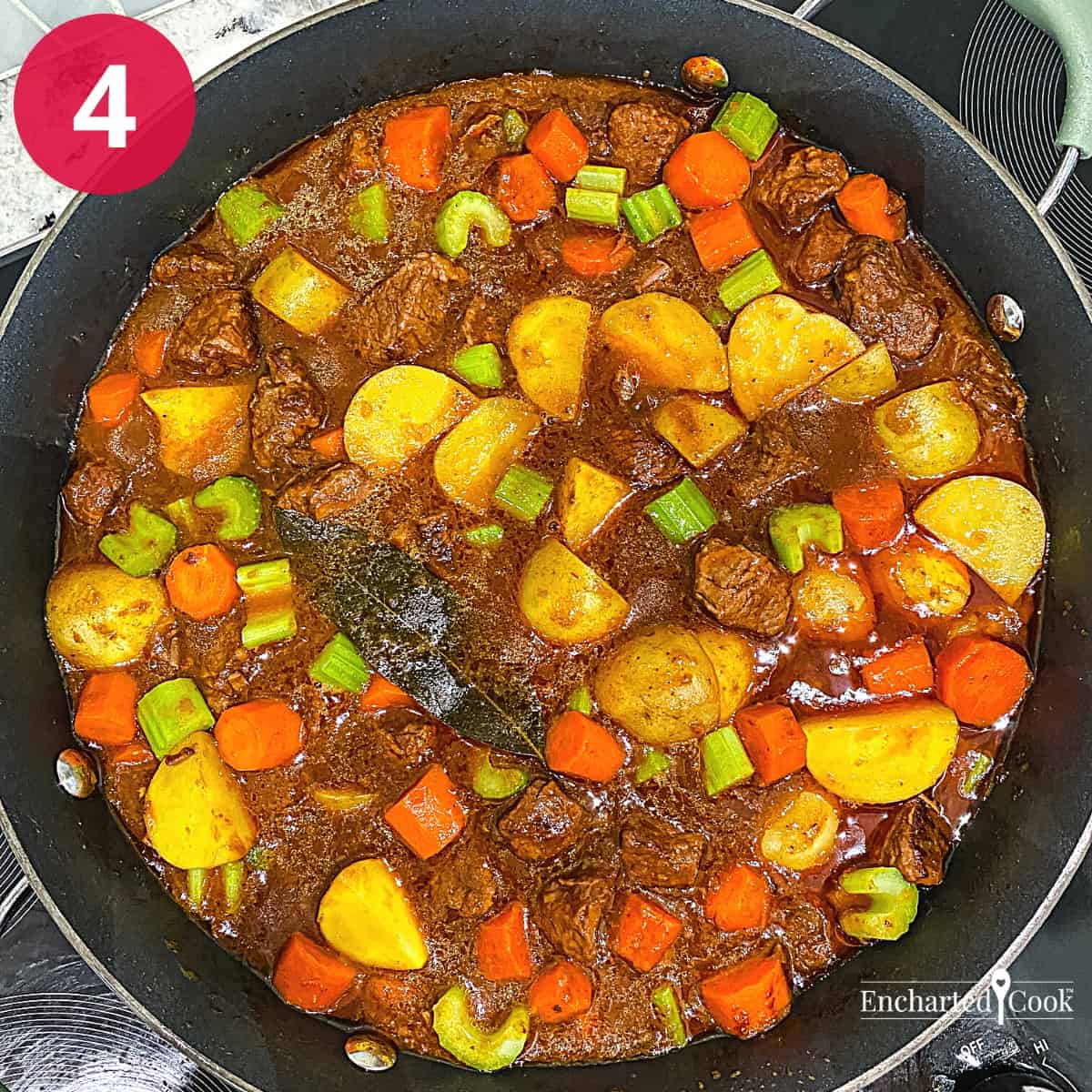
- Step 4 - Add the Vegetables. Add the carrots and simmer for 30 minutes. Add the potatoes and simmer for another 15 minutes. Add the celery and continue simmering for about 15 minutes, until all the vegetables are tender and the celery is still bright green.
It is important to add the vegetables in stages. The carrots require the longest cooking time and the celery the shortest. Adding them in stages allows each vegetable to become tender without overcooking the others.
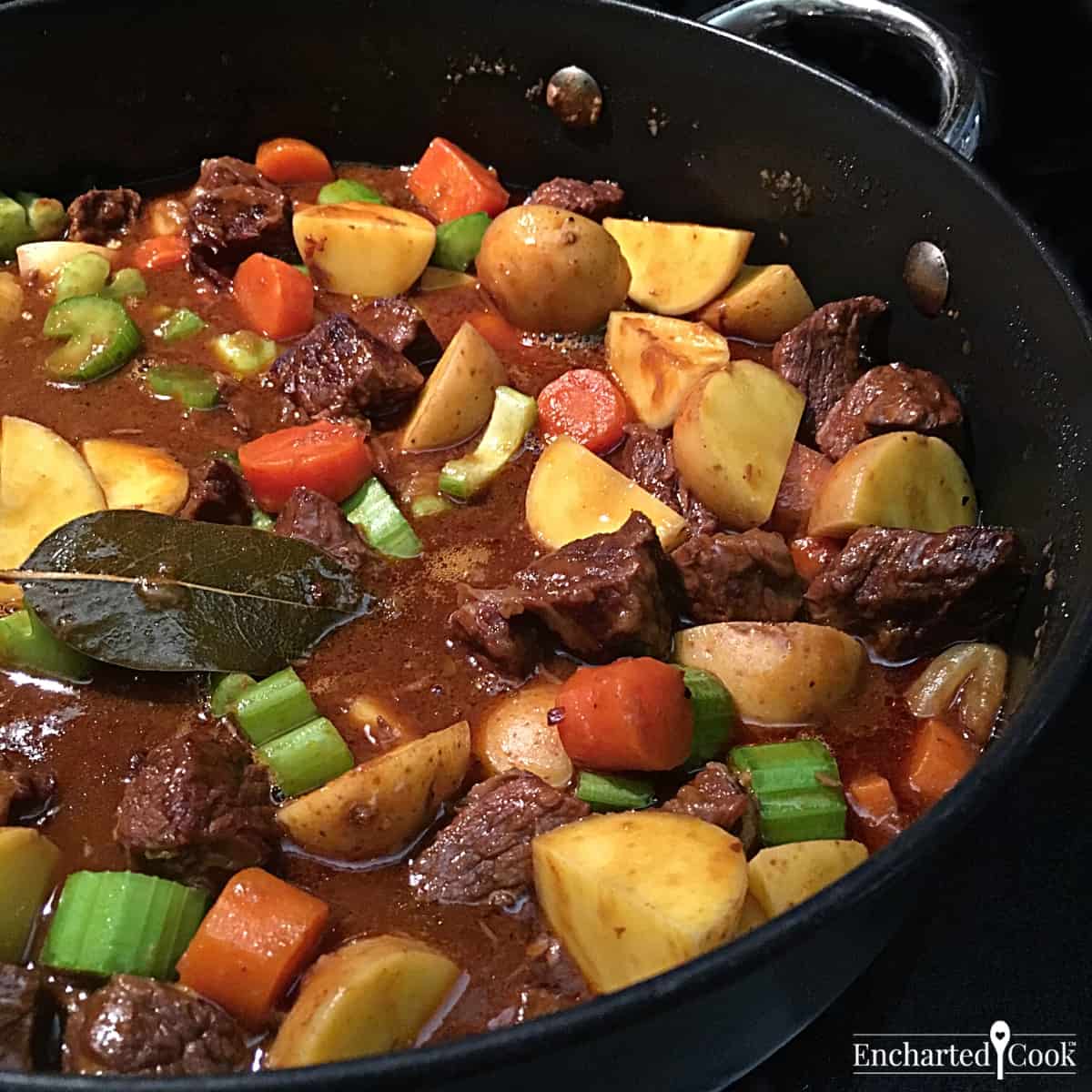
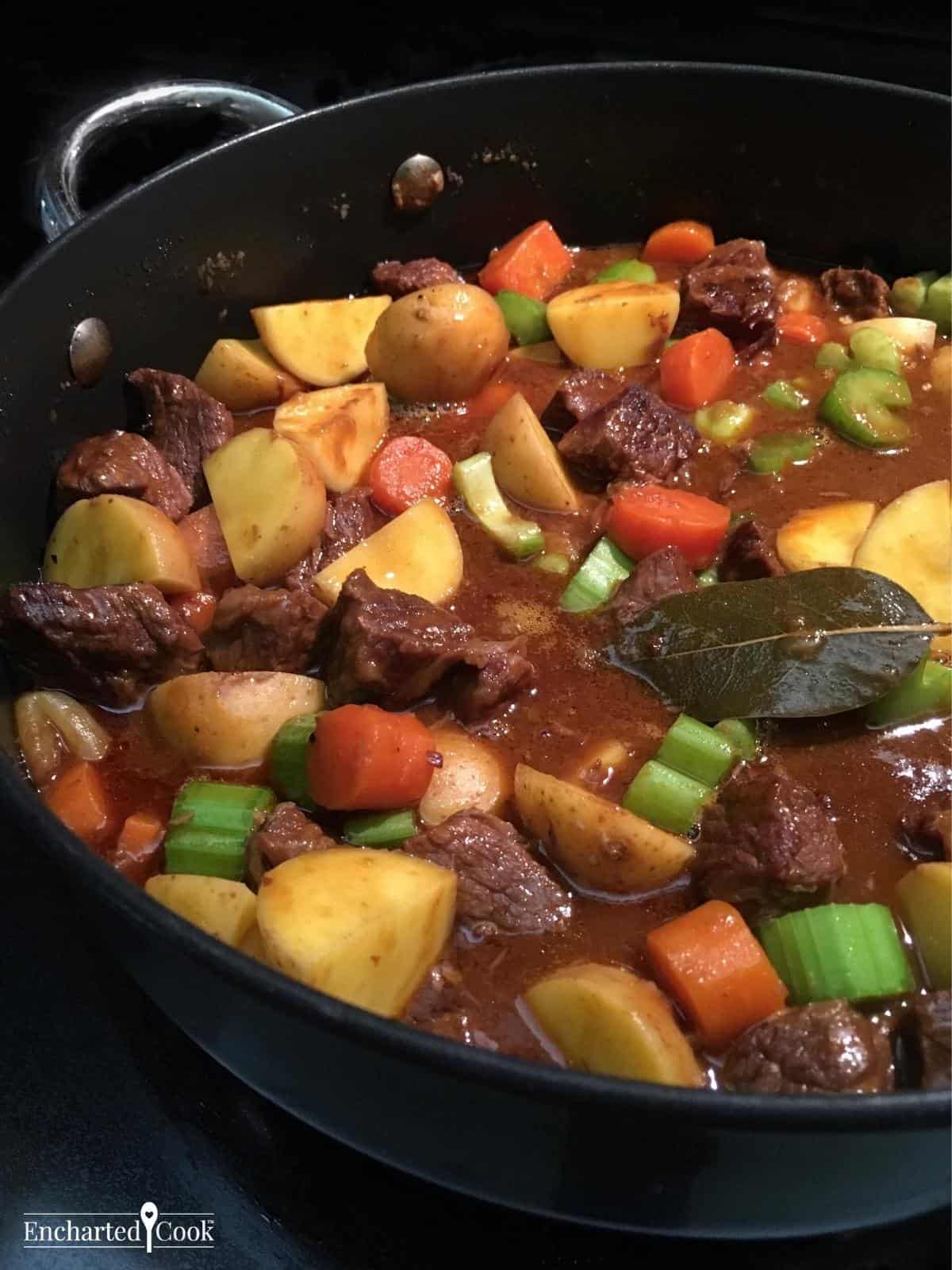
- Step 5 - Serve. Remove the bay leaf. Taste once more and add additional salt only if needed. Serve and enjoy!
My Top Tip
♡ Be sure to pat the beef dry. This encourages a good sear and the foundation of great flavor.
What to Serve with Beef Stew
Beef stew is already a full meal in one pot, but to make the meal even more filling, you can serve it with or over any of the following:
- Flaky Biscuits
- Dinner Rolls
- Saltine Crackers
- Rustic Mashed Potatoes
Equipment
Use a 6 to 8-quart heavy-bottomed pot or deep pan with tall sides and a lid. A nonstick everything pan or enameled cast-iron pot works well.
Do not use bare cast iron. The acidic tomato paste-and optional wine-can react with the iron during the long simmer and damage the pan's seasoning.
Make-Ahead & Storage
- Make-Ahead: This beef stew tastes even better the following day, after its flavors have had time to meld. Make it one day ahead, cool it promptly, and store it covered in the refrigerator.
- Storage: Store the stew in a sealed airtight container in the refrigerator for up to 4 days or in the freezer for up to 6 weeks.
More Recipes That Build Flavor
♡ Did you love this recipe for Sunday Best Beef Stew? Please leave a star rating and a comment below. Thanks for visiting!
📖 Recipe

Sunday Best Beef Stew
Want to save this recipe?
Equipment
- 6 to 8-Quart Heavy-Bottomed Pot or Deep Pan with a Lid, such as a Nonstick Everything Pan or Enameled Cast-Iron Pot
Ingredients
- 3 Pounds Beef Stew Meat, Preferably Chuck, Cut into ¾- to 1-inch cubes
- 1 Teaspoon Salt
- ¼ Cup Wondra Flour, Sauce and Gravy Flour
- ¼ Cup Safflower Oil, Divided, Plus More If Needed
- 1 Large Sweet Yellow Onion, Peeled, Cut in Half and each Half Cut into 6 Wedges
- 1 Tablespoon Brown Sugar
- 2 Tablespoons Tomato Paste
- 1 Tablespoon Worcestershire Sauce
- 1 Bay Leaf
- 1 Quart Beef Stock, No Salt Added or Low Sodium
- ½ Teaspoon Freshly Ground Black Pepper, Optional
- 3 Cups Carrots, Peeled and Cut in 1" Chunks
- 3 Cups Small Golden or Red Potatoes, Cut into Bite-Size Pieces
- 1 ½ Cups Celery, Cut in 1" Chunks
Instructions
- Dry and Dredge the Beef. Remove the beef from the packaging and dry it well with a paper towel or clean kitchen towel. Drying the meat is essential for achieving deep browning when the meat is seared. Cut any unusually large pieces into ¾- to 1-inch cubes so the beef cooks evenly. Sprinkle the meat with salt and Wondra Flour, coating all sides. Shake off excess flour.3 Pounds Beef Stew Meat, 1 Teaspoon Salt, ¼ Cup Wondra Flour
- Brown the Beef and Onion. In a 6 to 8-quart heavy-bottomed pot or deep pan, heat about half of the oil over medium heat. When the oil is shimmering, add the beef in a single, uncrowded layer. Brown the beef in batches, turning the pieces to brown all sides and adding more oil as needed between batches. Transfer each browned batch to a plate. Set the browned beef aside for later.Add the onion wedges to the remaining oil and beef drippings, adding a little more oil only if the pan is dry. Cook 5 to 7 minutes or until the onion is lightly browned and translucent.¼ Cup Safflower Oil, 1 Large Sweet Yellow Onion
- Make the Gravy Base. Add the brown sugar, tomato paste, Worcestershire sauce, and bay leaf. Cook, stirring constantly, for 1 to 2 minutes, until the tomato paste darkens slightly and the mixture is fragrant. Slowly add the beef stock while scraping the bottom of the pan to loosen the flavorful browned bits. Return the browned beef and all accumulated juices to the pan. Bring to a boil, reduce the heat to maintain a gentle simmer, and set the lid slightly ajar. Simmer for 2 hours, stirring occasionally, until the meat is nearly fork-tender and the stock has reduced by approximately half.Taste the gravy and add more salt if needed and black pepper if desired.1 Tablespoon Brown Sugar, 2 Tablespoons Tomato Paste, 1 Tablespoon Worcestershire Sauce, 1 Bay Leaf, 1 Quart Beef Stock, ½ Teaspoon Freshly Ground Black Pepper
- Add the Vegetables. Add the carrots and simmer for 30 minutes. Add the potatoes and simmer for another 15 minutes. Add the celery and continue simmering for about 15 minutes, until all the vegetables are tender and the celery is still bright green.It is important to add the vegetables in stages. The carrots require the longest cooking time and the celery the shortest. Adding them in stages allows each vegetable to become tender without overcooking the others.3 Cups Carrots, 3 Cups Small Golden or Red Potatoes, 1 ½ Cups Celery
- Serve. Remove the bay leaf. Taste once more and add additional salt only if needed. Serve and enjoy!
Notes
Nutrition
Per 1 serving. All nutritional information on this site is an estimate. Your results may vary.
Encharted Cook™ or Jan Nunes shall not be liable for adverse reactions or any other outcome resulting from the use of recipes or recommendations on this website or actions you take as a result.
© 2018-2026 Encharted Cook, Jan Nunes. All rights reserved.




Comments
No Comments