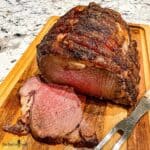
How to Cook a Standing Rib Roast
Learn how to cook a showstopper Standing Rib Roast with just salt and pepper, a few minutes of prep time, and these pro tips for roasting.

Equipment
- 1 Large-Rimmed Baking Sheet and Roasting Rack or a Roasting Pan with Rack
- Parchment Paper
- Aluminum Foil
- Meat Thermometer either Instant Read or In-Meat
Ingredients
- 1 Standing Rib Roast Small End - 3 to 4 Bones - 4 ½ to 5 Pounds
- 1 ½ Tablespoons Garlic Salt
- 1 ½ Tablespoons Freshly Ground Black Pepper
Instructions
- Preheat and Prepare. Preheat oven to 325°F/163°. Remove the roast from the refrigerator and let it come to room temperature. Line a rimmed baking sheet and place a roasting rack on it or use a roasting pan with a rack.
- Dry. Remove the roast from its packaging and dry it thoroughly with paper towels or a clean kitchen towel. Drying the meat is essential to getting a good oven sear.1 Standing Rib Roast
- Season. Cover a clean working surface with enough parchment paper to wrap around the roast and sprinkle it with the garlic salt and freshly ground black pepper.Roll the roast in the salt and pepper so that all sides including the ends are covered.1 ½ Tablespoons Garlic Salt, 1 ½ Tablespoons Freshly Ground Black Pepper
- Place on Rack. Place the roast ribs side down and fat side up, on the prepared roasting rack, and insert a meat thermometer into the center of the roast. For the most accurate reading do not let the thermometer touch the bone. You can also use an instant-read thermometer to check the roast as it cooks.
- Roast. Place the roast in the oven and cook uncovered until the internal temperature of the meat reaches your desired doneness. You will need to pull the roast from the oven at 15° under the target internal temperature because the roast will continue to cook after it has been pulled from the oven and allowed to rest.Rare - 20 to 25 min/lb - Pull Temp 125°F/54°C - Target Temp 140°F/60°CMedium-Rare - 20 to 25 min/lb.-Pull Temp 130°F/57°C-Target Temp 145°F/63°CMedium - 25 to 30min/lb. - Pull Temp 145°/65°C - Target Temp 160°F/71°CMedium-Well - 25 to 30 min/lb. - Pull Temp 150°/68°C - Target Temp 165°F/74°C Well - 30 to 35 min/lb. - Pull Temp 155°/71°C - Target Temp 170°F/77°CIf the roast is cooking too quickly cover it with a tent of aluminum foil and reduce the oven temperature to 300°F/149°C.PRO TIP - Once the internal temperature of the roast reaches 100°F it will cook faster.
- Rest. Remove the roast from the oven and cover it with aluminum foil. Let the meat rest for 15 minutes, which will allow the juices to be reabsorbed and moisten the meat.
- Carve and Serve. Transfer the roast to a carving or cutting board to cut. Begin by removing the string that ties the roast to the rib rack. Then remove the roast from the rib rack and set the ribs aside. Slice the meat and cut the rib bones apart. Place the sliced meat and rib bones onto a serving platter. Serve and Enjoy!
Notes
My Top Tips
♡ For the best oven sear, dry the beef well on all sides before seasoning it.
♡ The cooking of a standing rib roast is not linear and once a roast reaches 100°F/38°C it will cook at a faster rate. Checking the internal temperature often after reaching 100°F ensures the roast doesn't become overcooked beyond your desired temperature.
♡ When roasting a rib roast, insert the thermometer into the center of the roast, then cook and rest the meat to your desired temperature. However, the outer slices will always be more well-done because the meat's exterior cooks faster. These slices are perfect for a guest who wants their meat well done.
Make-Ahead & Storage
Make-Ahead. You can season the standing rib roast up to 24 hours in advance of roasting.
Storage. Store any leftover roast in the refrigerator wrapped in aluminum foil or plastic wrap. Unsliced roast in a single piece stays juicy and won't dry out. So it is best to cut only what you know will be eaten.
My neighbor has a cutie-pie dog that loves the bones. So, I like to individually wrap the rib bones in aluminum foil and then place them in a plastic bag that can be frozen.
Nutrition
Calories: 679kcal | Carbohydrates: 1g | Protein: 31g | Fat: 60g | Saturated Fat: 25g | Polyunsaturated Fat: 2g | Monounsaturated Fat: 26g | Cholesterol: 137mg | Sodium: 1409mg | Potassium: 516mg | Fiber: 0.3g | Sugar: 0.01g | Vitamin A: 6IU | Calcium: 23mg | Iron: 3mg

Scan the QR code or visit us at https://EnchartedCook.com